


Unraveling oxidative stress response in the cestode parasite Echinococcus granulosus
Supporting Files
Public Domain

-
November 04 2019
-
File Language:
English
Details
-
Alternative Title:Sci Rep
-
Personal Author:
-
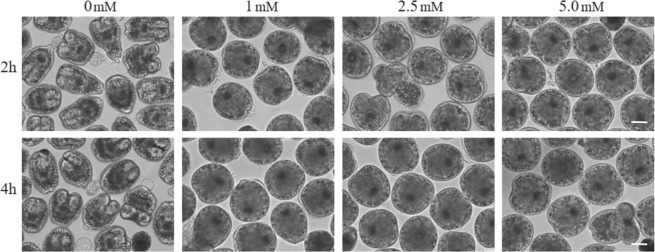
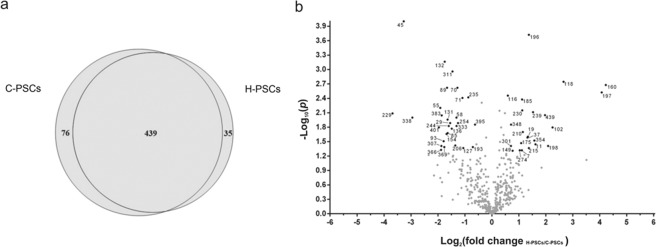
Description:Cystic hydatid disease (CHD) is a worldwide neglected zoonotic disease caused by Echinococcus granulosus. The parasite is well adapted to its host by producing protective molecules that modulate host immune response. An unexplored issue associated with the parasite's persistence in its host is how the organism can survive the oxidative stress resulting from parasite endogenous metabolism and host defenses. Here, we used hydrogen peroxide (H|O|) to induce oxidative stress in E. granulosus protoescoleces (PSCs) to identify molecular pathways and antioxidant responses during H|O| exposure. Using proteomics, we identified 550 unique proteins; including 474 in H|O|-exposed PSCs (H-PSCs) samples and 515 in non-exposed PSCs (C-PSCs) samples. Larger amounts of antioxidant proteins, including GSTs and novel carbonyl detoxifying enzymes, such as aldo-keto reductase and carbonyl reductase, were detected after H|O| exposure. Increased concentrations of caspase-3 and cathepsin-D proteases and components of the 26S proteasome were also detected in H-PSCs. Reduction of lamin-B and other caspase-substrate, such as filamin, in H-PSCs suggested that molecular events related to early apoptosis were also induced. We present data that describe proteins expressed in response to oxidative stress in a metazoan parasite, including novel antioxidant enzymes and targets with potential application to treatment and prevention of CHD.
-
Subjects:
-
Source:Sci Rep. 9
-
Pubmed ID:31685918
-
Pubmed Central ID:PMC6828748
-
Document Type:
-
Volume:9
-
Collection(s):
-
Main Document Checksum:urn:sha256:02d8dbfeca65de36ec7020f3421e3c0d3766031123680969775f0946affff8e2
-
Download URL:
-
File Type:
 [PDF
- 2.14 MB
]
[PDF
- 2.14 MB
]
Supporting Files


File Language:
English
ON THIS PAGE


CDC STACKS serves as an archival repository of CDC-published products including
scientific findings,
journal articles, guidelines, recommendations, or other public health information authored or
co-authored by CDC or funded partners.
As a repository, CDC STACKS retains documents in their original published format to ensure public access to scientific information.
As a repository, CDC STACKS retains documents in their original published format to ensure public access to scientific information.
You May Also Like
COLLECTION
CDC Public Access