



Facile Preparation of Peptides for Mass Spectrometry Analysis in Bottom-Up Proteomics Workflows
Supporting Files

-
3 2021 ; 3-2021
-
Available in CDC Stacks on 2022-03-01T00:00:00Z

File Language:
English
Details
-
Alternative Title:Curr Protoc
-
Personal Author:
-
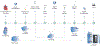
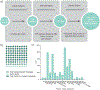
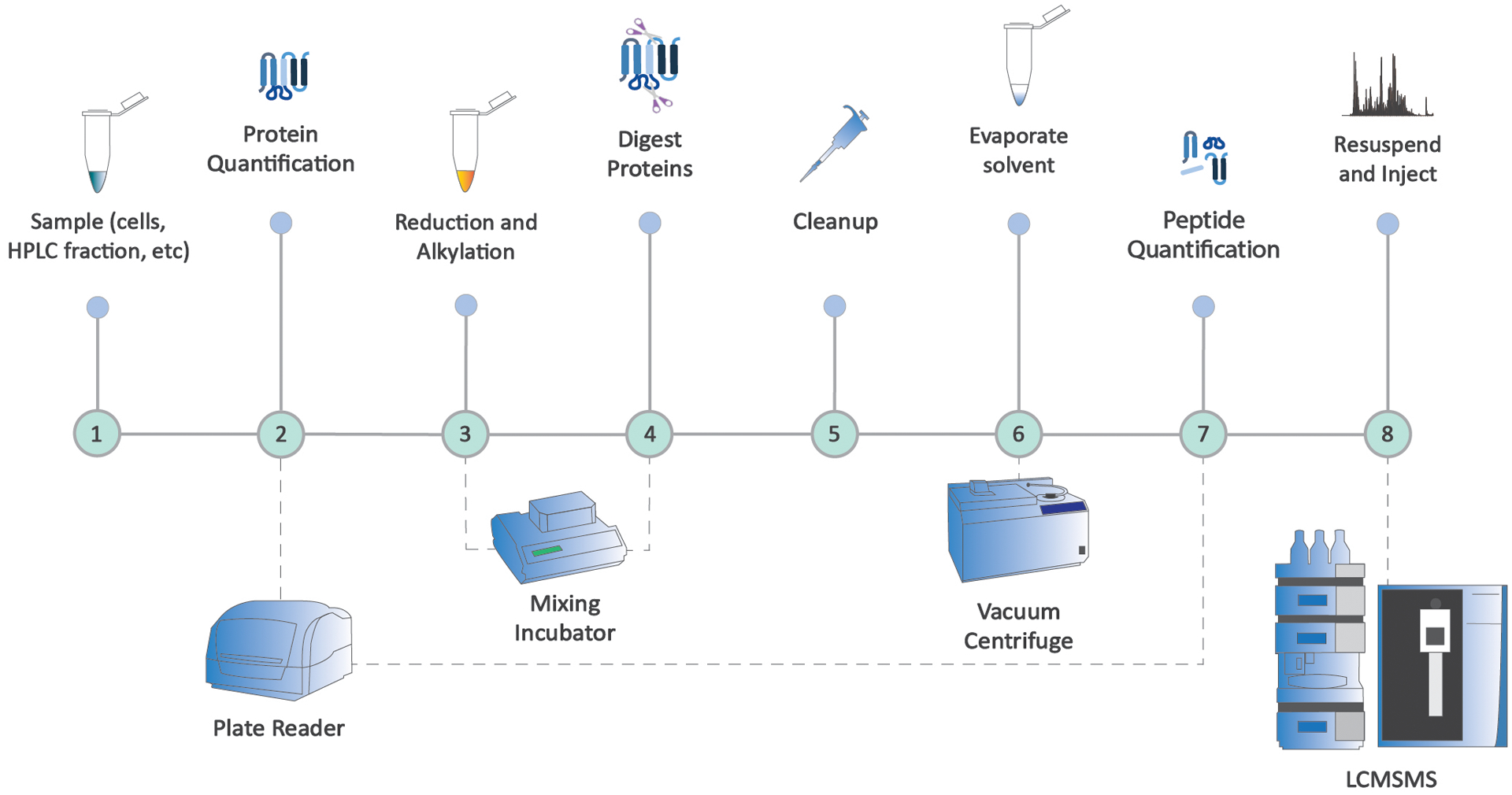
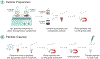
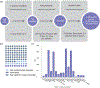
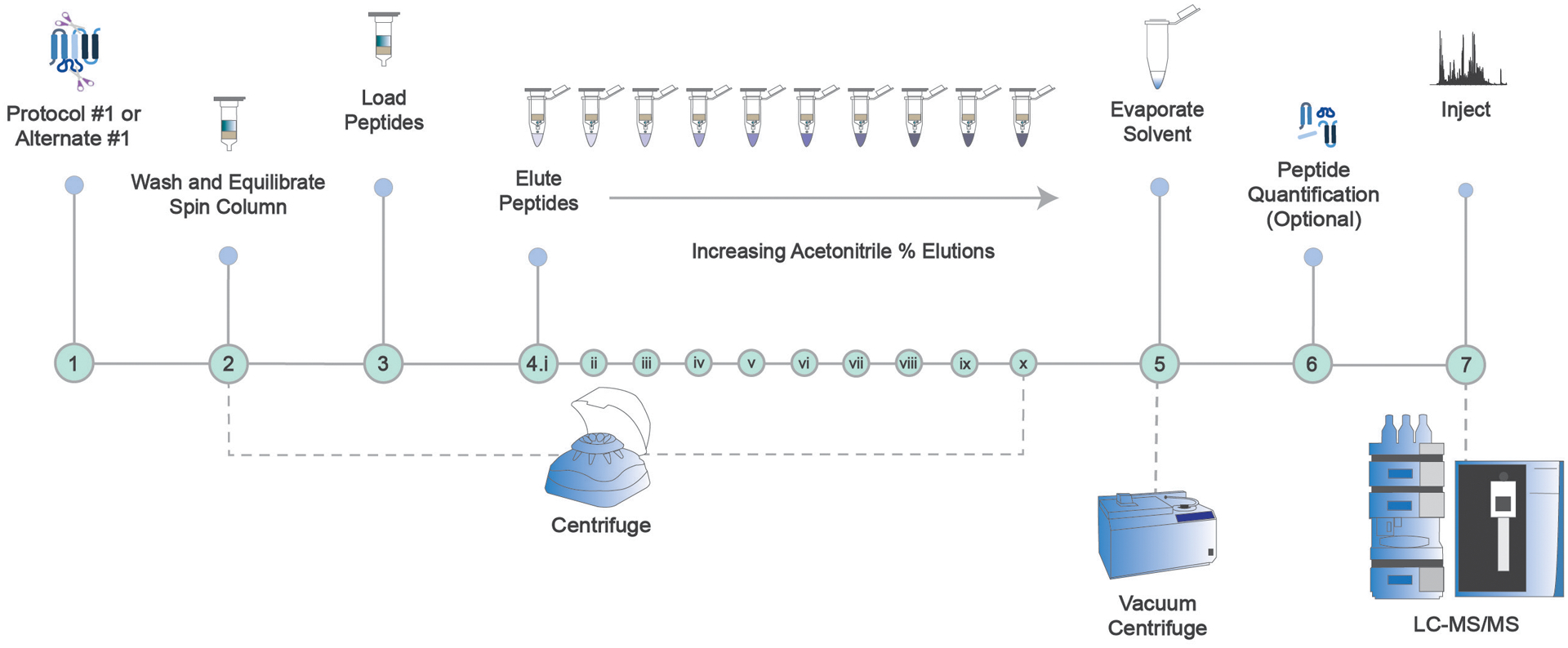
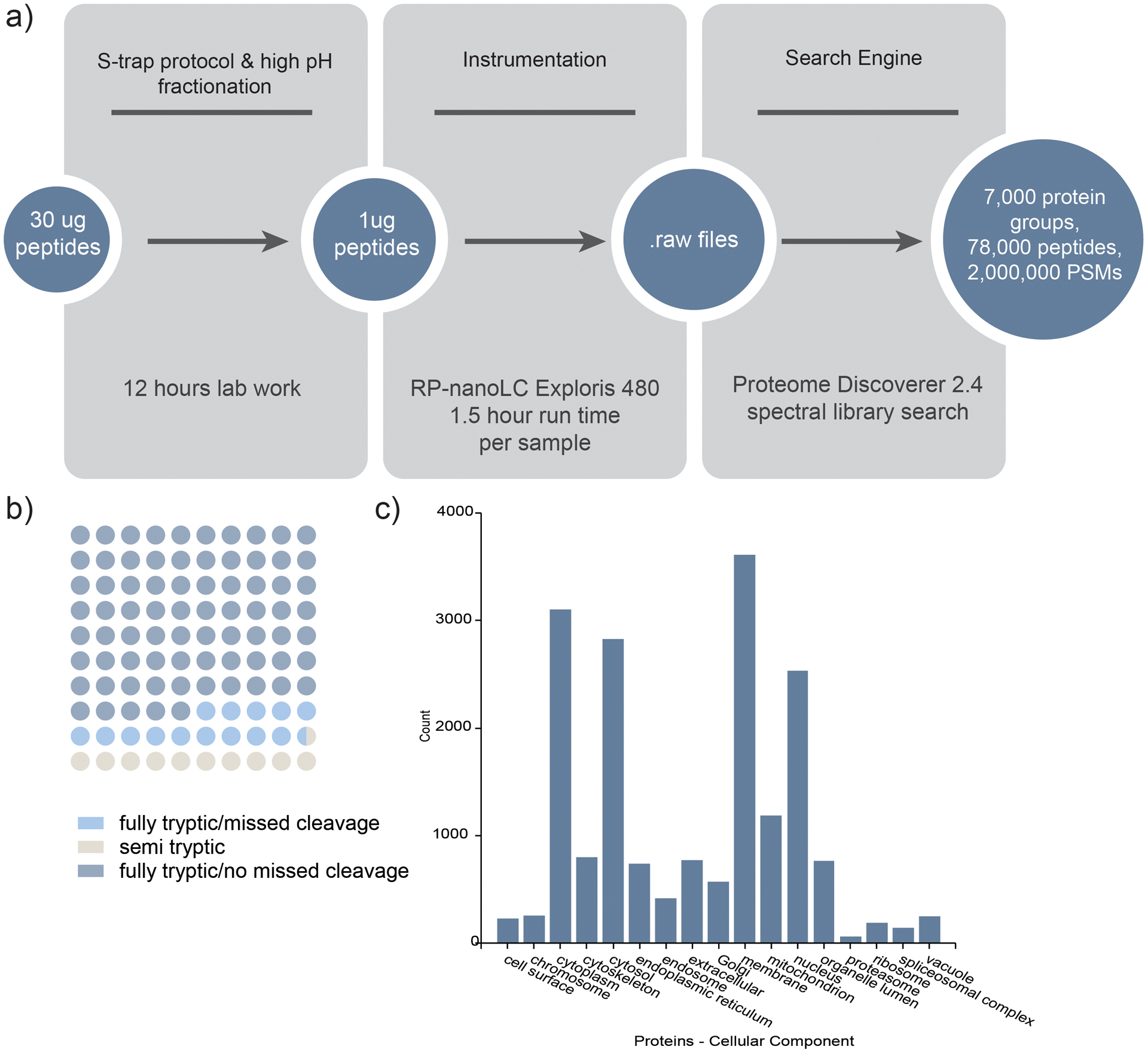
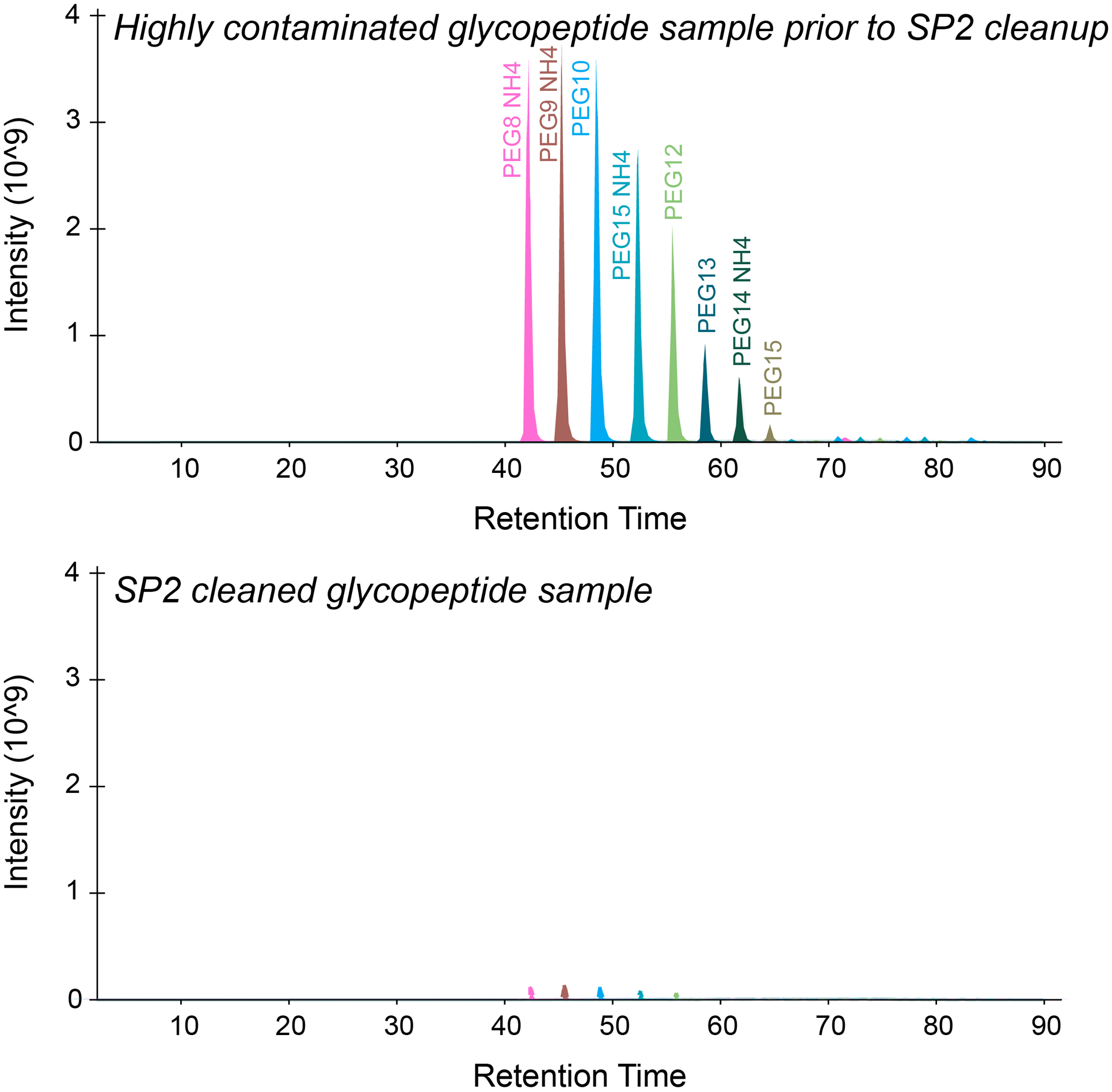
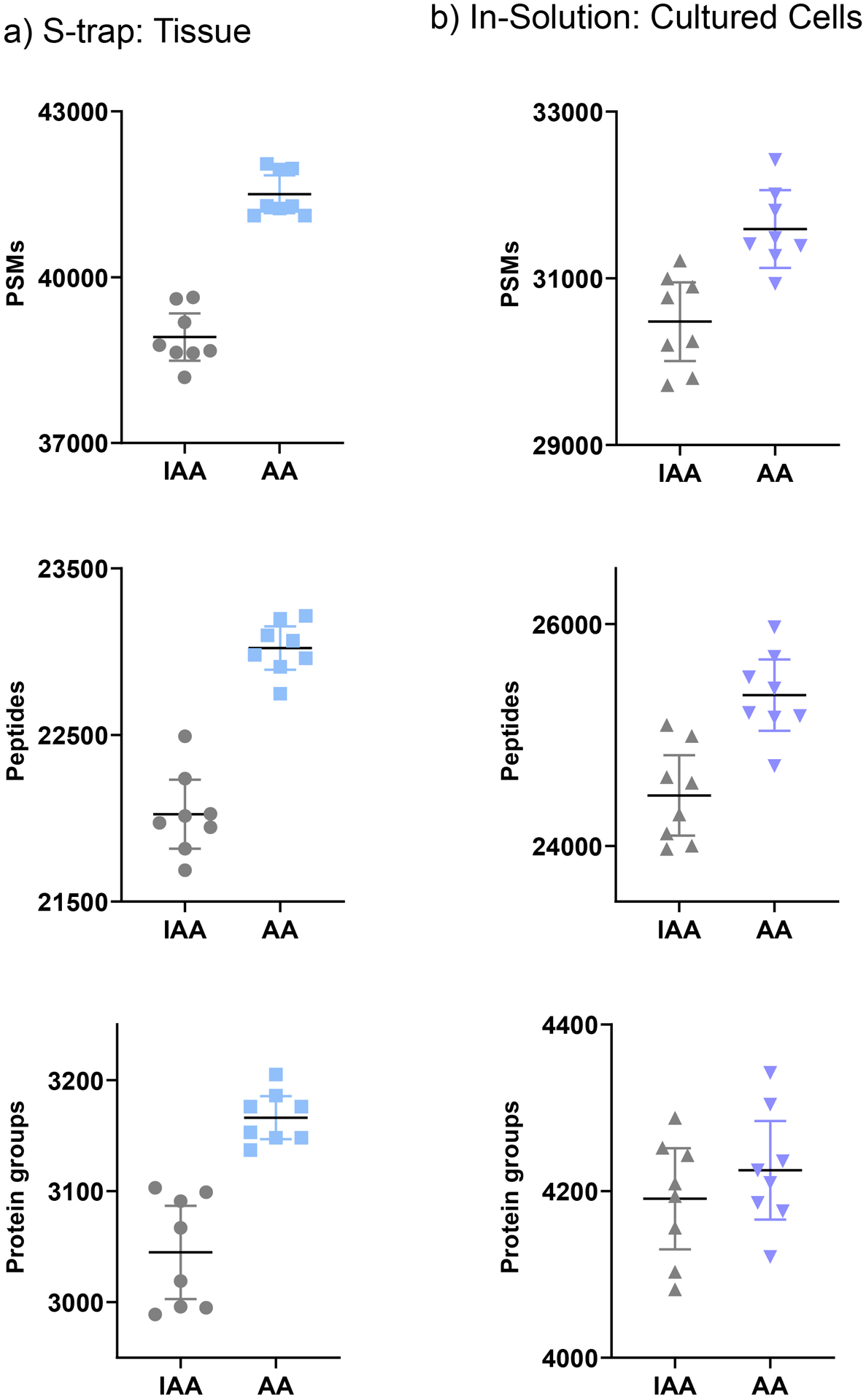
Description:Mass spectrometry (MS) is routinely used to identify, characterize, and quantify biological molecules. For protein analysis, MS-based workflows can be broadly categorized as top-down or bottom-up, depending on whether the proteins are analyzed as intact molecules or first digested into peptides. This article outlines steps for preparing peptide samples for MS as part of a bottom-up proteomics workflow, providing versatile methods suitable for discovery and targeted analyses in qualitative and quantitative workflows. Resulting samples contain peptides of suitable size for analysis by MS instrumentation generally available to modern research laboratories, including MS coupled to either liquid chromatography (LC) or matrix-assisted laser desorption/ionization (MALDI) interfaces. This article incorporates recent developments in methodologies and consumables to facilitate sample preparation. The protocols are well-suited to users without prior experience in proteomics and include methods for universally applicable suspension trap processing and for alternate in-solution processing to accommodate a range of sample types. Cleanup, quantification, and fractionation procedures are also described. © 2021 The Authors. Basic Protocol: Preparation of high-complexity peptide samples for mass spectrometry analysis using S-Trap™ processing Alternate Protocol 1: Preparation of low- to moderate-complexity peptide samples for mass spectrometry analysis using in-solution processing Alternate Protocol 2: Detergent, polymer, and salt removal from peptide samples before mass spectrometry analysis using SP2 processing Support Protocol 1: Protein quantification using Pierce 660 nm assay Support Protocol 2: Peptide quantification using Pierce quantitative fluorometric peptide assay Support Protocol 3: High-pH fractionation of complex peptide samples.
-
Subjects:
-
Keywords:
-
Source:Curr Protoc. 1(3):e85
-
Pubmed ID:33750040
-
Pubmed Central ID:PMC8011989
-
Document Type:
-
Funding:TL1 TR001437/TR/NCATS NIH HHSUnited States/ ; 2-SRA-2019-829-S-B/JDRF/Juvenile Diabetes Research FoundationUnited States/ ; R01-HL126785/NH/NIH HHSUnited States/ ; R01 HL126785/HL/NHLBI NIH HHSUnited States/ ; UL1TR001436/NH/NIH HHSUnited States/ ; TL1TR001437/NH/NIH HHSUnited States/ ; U01 CE002944/CE/NCIPC CDC HHSUnited States/ ; 20PRE35200049/American Heart Association/ ; T32 GM080202/GM/NIGMS NIH HHSUnited States/ ; R01-HL134010/NH/NIH HHSUnited States/ ; UL1 TR001436/TR/NCATS NIH HHSUnited States/ ; U01 NS088034/NS/NINDS NIH HHSUnited States/ ; R01 HL134010/HL/NHLBI NIH HHSUnited States/ ; GM080202/GM/NIGMS NIH HHSUnited States/
-
Volume:1
-
Issue:3
-
Download URL:
-
File Type:
 [PDF - 2.81 MB]
 -
Collection(s):
-
Main Document Checksum:urn:sha256:963837b215c8785e7184af3ae0d4e7b42ec89f3ca6d500f754d017dd4ed1da59
Supporting Files


File Language:
English
 Was this page helpful?
 Found an issue?










CDC STACKS serves as an archival repository of CDC-published products including
scientific findings, journal articles, guidelines, recommendations, or other public health information authored or
co-authored by CDC or funded partners.
As a repository, CDC STACKS retains documents in their original published format to ensure public access to scientific information.
As a repository, CDC STACKS retains documents in their original published format to ensure public access to scientific information.
You May Also Like
COLLECTION
CDC Public Access