



Estimated time-varying exposures to air emissions from animal feeding operations and childhood asthma
Supporting Files

-
September 19 2019
-
File Language:
English
Details
-
Alternative Title:Int J Hyg Environ Health
-
Personal Author:
-
Description:Background/Aim:
Industrial-scale animal feeding operations (AFOs) have adverse impacts on regional air quality. Air emissions include endotoxins and other pro-inflammatory components, and exposure may cause airway inflammation and respiratory effects in susceptible individuals residing nearby. We aimed to develop and validate metrics for estimating time-varying exposure to AFO air pollution in surrounding communities and, secondly, to determine whether exposure is associated with health effects in children with asthma.
Methods:
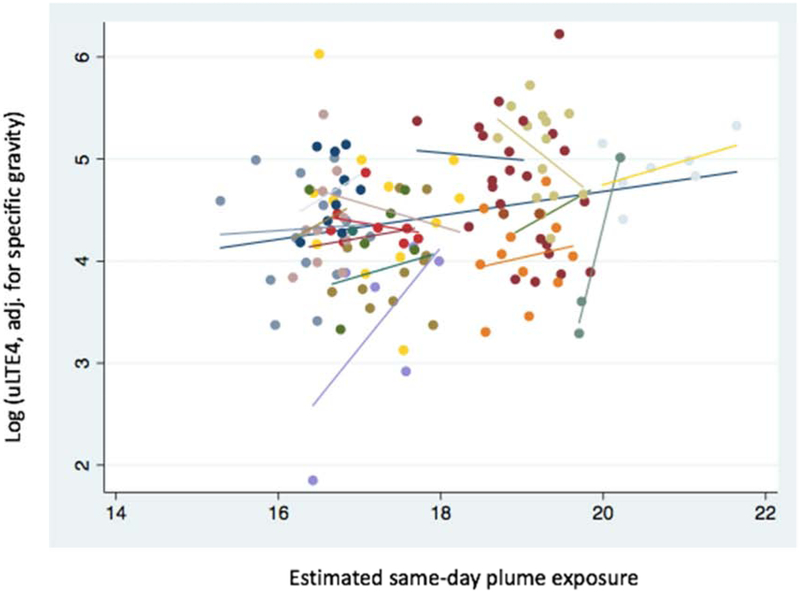
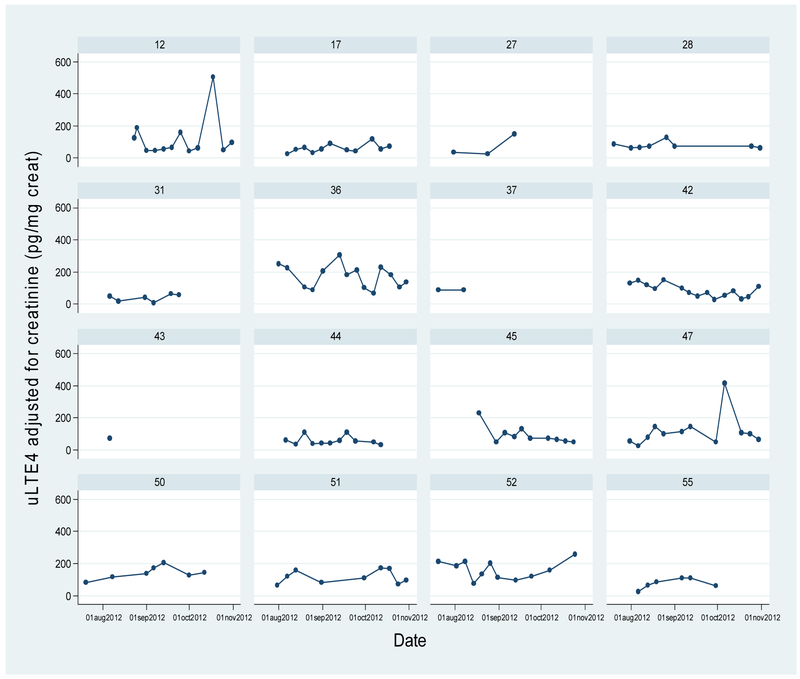
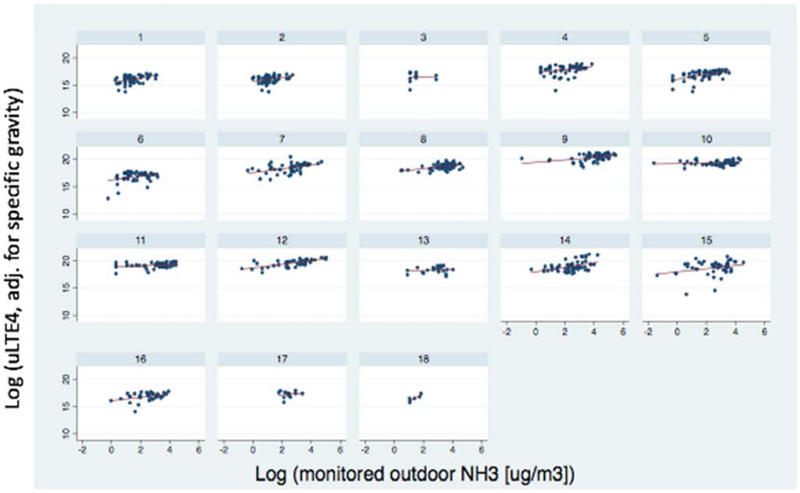
We conducted a longitudinal panel study of N=58 children with asthma in an agricultural region of Washington State with a high density of dairy AFOs. Children were followed for up to 26 months with repeated measures of respiratory health (N=2023 interviews; N=3853 lung function measurements); urine was collected in a subcohort (N=16) at biweekly intervals over three months and analyzed for leukotriene E4 (LTE4), a biomarker of systemic inflammation (N=138 measurements). We developed an approach to estimate daily exposure to AFO airborne emissions based on distance to AFOs, AFO size, and daily wind speed and direction, and validated the estimates against direct measurements of ammonia, a chemical marker of AFO emissions, measured biweekly at 18 sites across the region for 14 months. Short-term relationships between AFO pollutant exposure and outcomes were assessed using regression models accounting for within-participant correlation and several potential confounders.
Results:
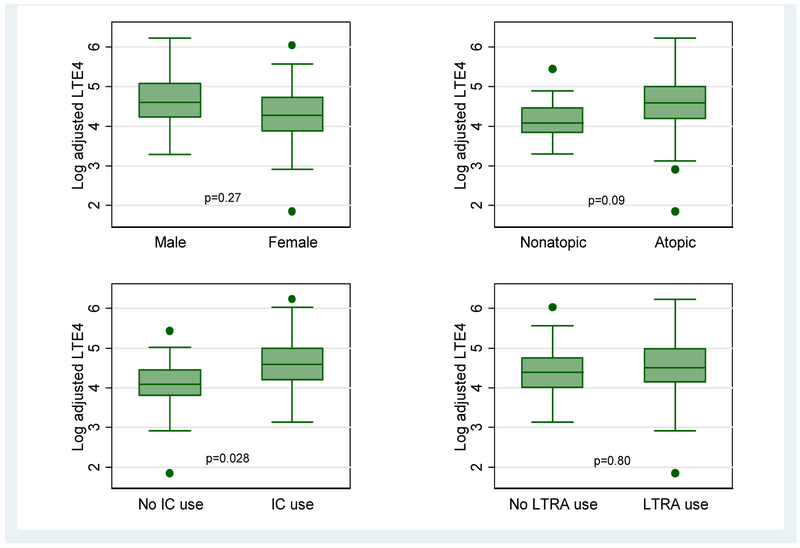
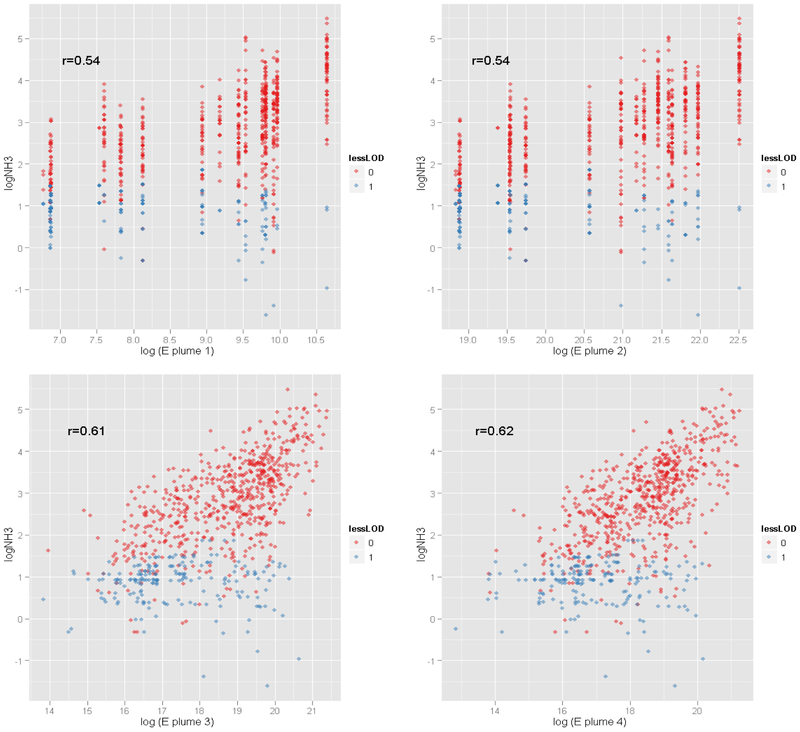
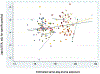
Estimates of daily AFO air pollution correlated moderately well with outdoor ammonia measurements (N=842; r=0.62). Forced expiratory volume in one second (FEV1) as percent of predicted was 2.0% (95% CI: 0.5, 3.5) lower with each interquartile increase in previous day exposure, but no associations with asthma symptoms were observed. There was suggestive evidence that LTE4 concentrations were higher following days of elevated exposure to AFO emissions (p=0.07).
Conclusions:
A simple metric of time-varying exposure to AFO emissions was correlated with daily outdoor ammonia levels. Children with asthma may be adversely affected by exposure to AFO emissions.
-
Subjects:
-
Source:Int J Hyg Environ Health. 223(1):187-198
-
Pubmed ID:31543304
-
Pubmed Central ID:PMC7020853
-
Document Type:
-
Funding:
-
Volume:223
-
Issue:1
-
Collection(s):
-
Main Document Checksum:urn:sha256:8bdd30759b295fa273f907d7ddbd19b6e9c64cd30c05f44dfcd0a613eb20acb1
-
Download URL:
-
File Type:
 [PDF
- 1003.38 KB
]
[PDF
- 1003.38 KB
]
Supporting Files


File Language:
English
 Was this page helpful?
 Found an issue?






CDC STACKS serves as an archival repository of CDC-published products including
scientific findings,
journal articles, guidelines, recommendations, or other public health information authored or
co-authored by CDC or funded partners.
As a repository, CDC STACKS retains documents in their original published format to ensure public access to scientific information.
As a repository, CDC STACKS retains documents in their original published format to ensure public access to scientific information.
You May Also Like
COLLECTION
CDC Public Access