



High Pathogenicity of Nipah Virus from Pteropus lylei Fruit Bats, Cambodia
Supporting Files
Public Domain

-
Jan 2020
-
File Language:
English
Details
-
Alternative Title:Emerg Infect Dis
-
Personal Author:
-
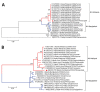
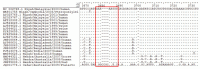
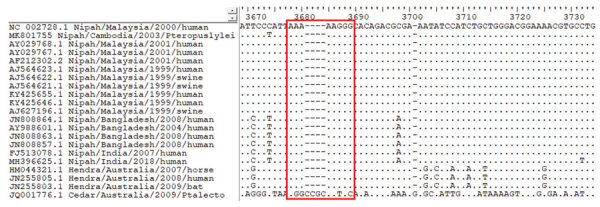
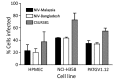
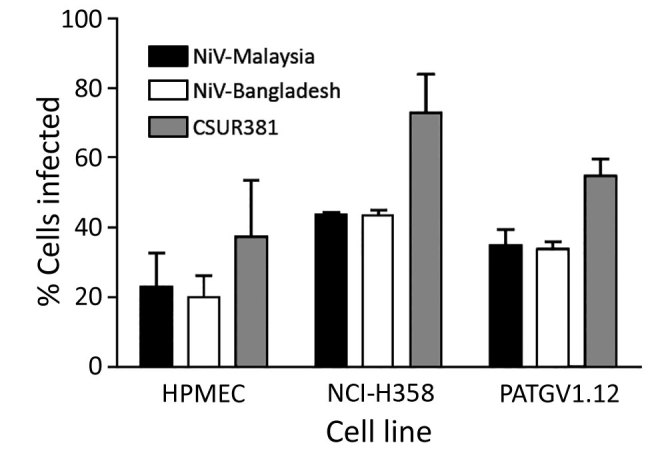
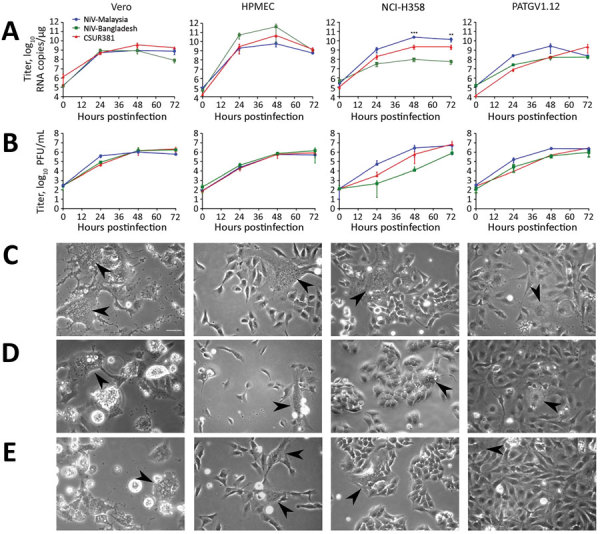
Description:We conducted an in-depth characterization of the Nipah virus (NiV) isolate previously obtained from a Pteropus lylei bat in Cambodia in 2003 (CSUR381). We performed full-genome sequencing and phylogenetic analyses and confirmed CSUR381 is part of the NiV-Malaysia genotype. In vitro studies revealed similar cell permissiveness and replication of CSUR381 (compared with 2 other NiV isolates) in both bat and human cell lines. Sequence alignments indicated conservation of the ephrin-B2 and ephrin-B3 receptor binding sites, the glycosylation site on the G attachment protein, as well as the editing site in phosphoprotein, suggesting production of nonstructural proteins V and W, known to counteract the host innate immunity. In the hamster animal model, CSUR381 induced lethal infections. Altogether, these data suggest that the Cambodia bat-derived NiV isolate has high pathogenic potential and, thus, provide insight for further studies and better risk assessment for future NiV outbreaks in Southeast Asia.
-
Subjects:
-
Source:Emerg Infect Dis. 26(1):104-113
-
Pubmed ID:31855143
-
Pubmed Central ID:PMC6924896
-
Document Type:
-
Place as Subject:
-
Location:
-
Volume:26
-
Issue:1
-
Collection(s):
-
Main Document Checksum:urn:sha256:adcbe3b6d45007e680016d6190f01488e3b00a64f6dbeb2b6f1426e3a54e8cb4
-
Download URL:
-
File Type:
 [PDF
- 3.50 MB
]
[PDF
- 3.50 MB
]
Supporting Files


File Language:
English
 Was this page helpful?
 Found an issue?

CDC STACKS serves as an archival repository of CDC-published products including
scientific findings,
journal articles, guidelines, recommendations, or other public health information authored or
co-authored by CDC or funded partners.
As a repository, CDC STACKS retains documents in their original published format to ensure public access to scientific information.
As a repository, CDC STACKS retains documents in their original published format to ensure public access to scientific information.
You May Also Like
COLLECTION
Emerging Infectious Diseases