



Health and economic burden of influenza‐associated illness in South Africa, 2013‐2015
Supporting Files

-
June 11 2019
File Language:
English
Details
-
Alternative Title:Influenza Other Respir Viruses
-
Personal Author:
-
Description:Background
Economic burden estimates are essential to guide policy‐making for influenza vaccination, especially in resource‐limited settings.
Methods
We estimated the cost, absenteeism, and years of life lost (YLL) of medically and non‐medically attended influenza‐associated mild and severe respiratory, circulatory and non‐respiratory/non‐circulatory illness in South Africa during 2013‐2015 using a modified version of the World Health Organization (WHO) worksheet based tool for estimating the economic burden of seasonal influenza. Additionally, we restricted the analysis to influenza‐associated severe acute respiratory illness (SARI) and influenza‐like illness (ILI; subsets of all‐respiratory illnesses) as suggested in the WHO manual.
Results
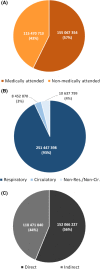
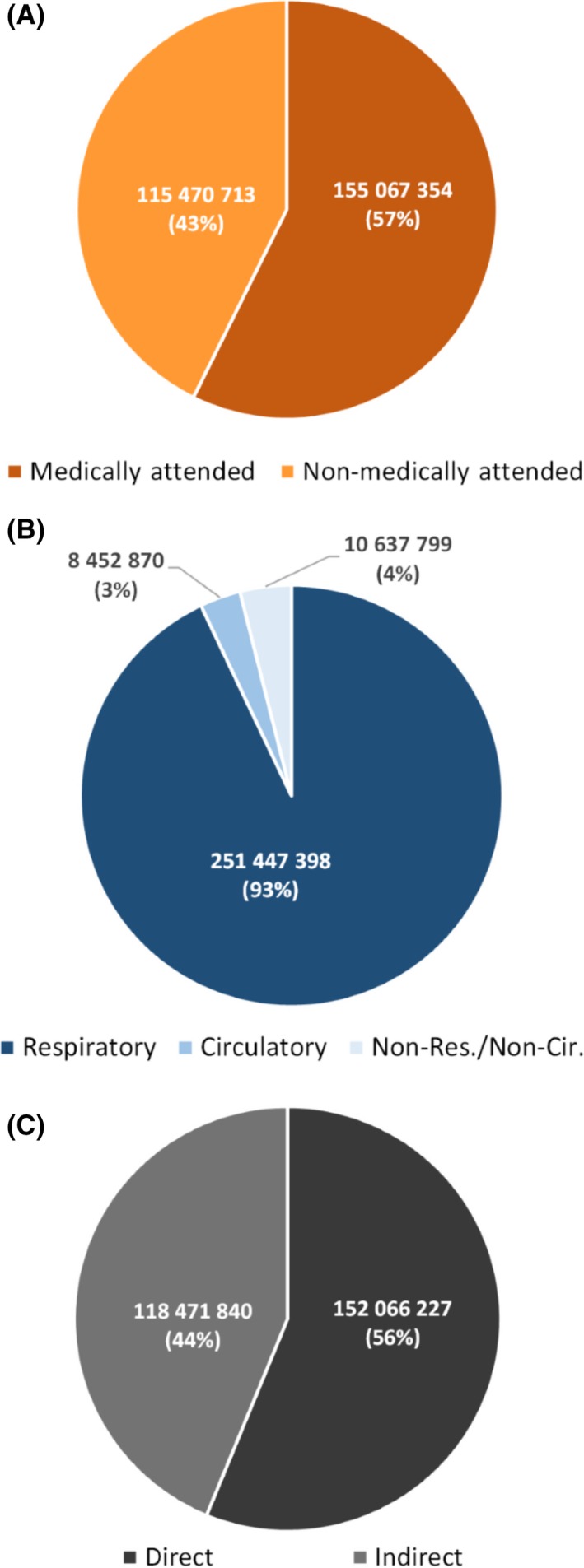
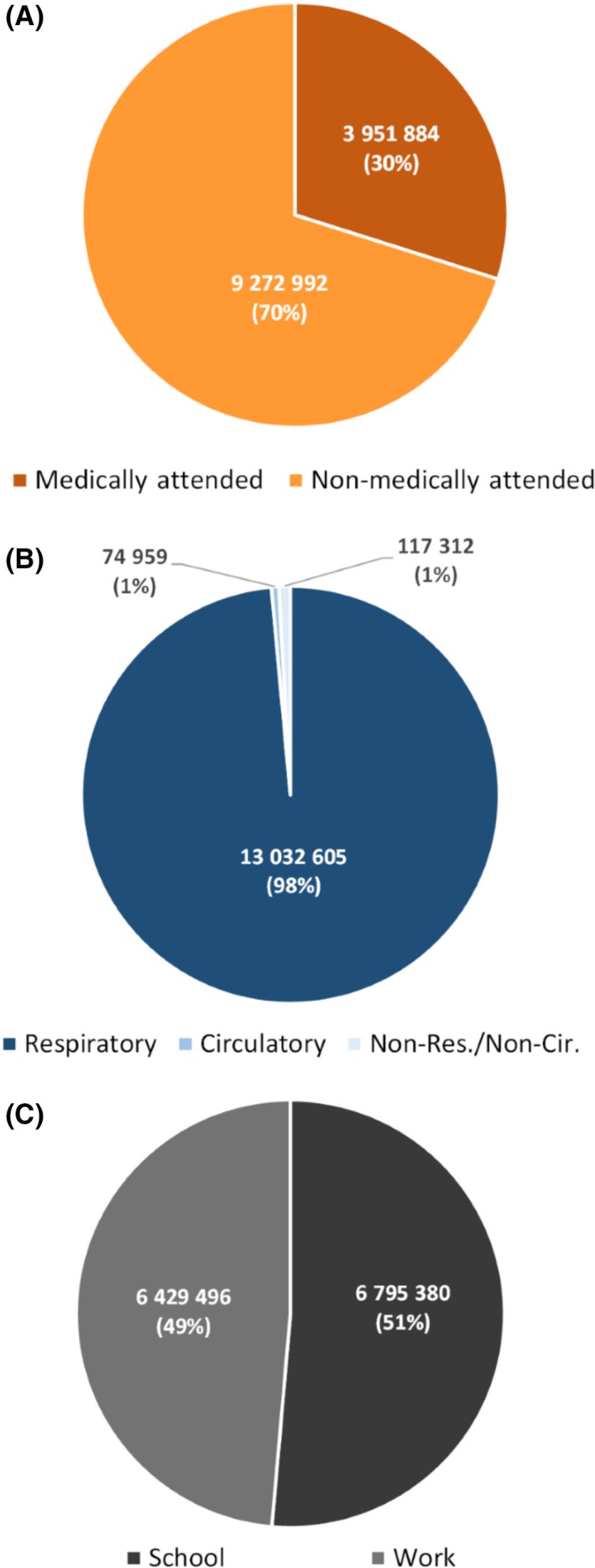
The estimated mean annual cost of influenza‐associated illness was $270.5 million, of which $111.3 million (41%) were government‐incurred costs, 40.7 million (15%) were out‐of‐pocket expenses, and $118.4 million (44%) were indirect costs. The cost of influenza‐associated medically attended mild illness ($107.9 million) was 2.3 times higher than that of severe illness ($47.1 million). Influenza‐associated respiratory illness costs ($251.4 million) accounted for 93% of the total cost. Estimated absenteeism and YLL were 13.2 million days and 304 867 years, respectively. Among patients with influenza‐associated WHO‐defined ILI or SARI, the costs ($95.3 million), absenteeism (4.5 million days), and YLL (65 697) were 35%, 34%, and 21% of the total economic and health burden of influenza.
Conclusion
The economic burden of influenza‐associated illness was substantial from both a government and a societal perspective. Models that limit estimates to those obtained from patients with WHO‐defined ILI or SARI substantially underestimated the total economic and health burden of influenza‐associated illness. -
Subjects:
-
Source:Influenza Other Respir Viruses. 13(5):484-495
-
Pubmed ID:31187609
-
Pubmed Central ID:PMC6692552
-
Document Type:
-
Funding:
-
Place as Subject:
-
Volume:13
-
Issue:5
-
Download URL:
-
File Type:
 [PDF - 544.69 KB]
 -
Collection(s):
-
Main Document Checksum:urn:sha256:5b014fd1ade5b403565181f1d9f907f80b78723c4d7d4557461801fd5bc85b04
Supporting Files


File Language:
English
 Was this page helpful?
 Found an issue?


CDC STACKS serves as an archival repository of CDC-published products including
scientific findings, journal articles, guidelines, recommendations, or other public health information authored or
co-authored by CDC or funded partners.
As a repository, CDC STACKS retains documents in their original published format to ensure public access to scientific information.
As a repository, CDC STACKS retains documents in their original published format to ensure public access to scientific information.
You May Also Like
COLLECTION
CDC Public Access