



Identification of 16q21 as a modifier of nonsyndromic orofacial cleft phenotypes
Supporting Files

-
12 2017 ; 12-2017
-
Available in CDC Stacks on 2018-12-01T00:00:00Z
File Language:
English
Details
-
Alternative Title:Genet Epidemiol
-
Personal Author:Carlson, Jenna C. ; Standley, Jennifer ; Petrin, Aline ; Shaffer, John R. ; Butali, Azeez ; Buxo, Carmen J. ; Castilla, Eduardo ; Christensen, Kaare ; Deleyiannis, Frederic W-D ; Hecht, Jacqueline T. ; Field, L. Leigh ; Garidkhuu, Ariuntuul ; Moreno Uribe, Lina M. ; Nagato, Natsume ; Orioli, Ieda M. ; Padilla, Carmencita ; Poletta, Fernando ; Suzuki, Satoshi ; Vieira, Alexandre R. ; Wehby, George L. ; Weinberg, Seth M. ; Beaty, Terri H. ; Feingold, Eleanor ; Murray, Jeffrey C. ; Marazita, Mary L. ; Leslie, Elizabeth J.
-
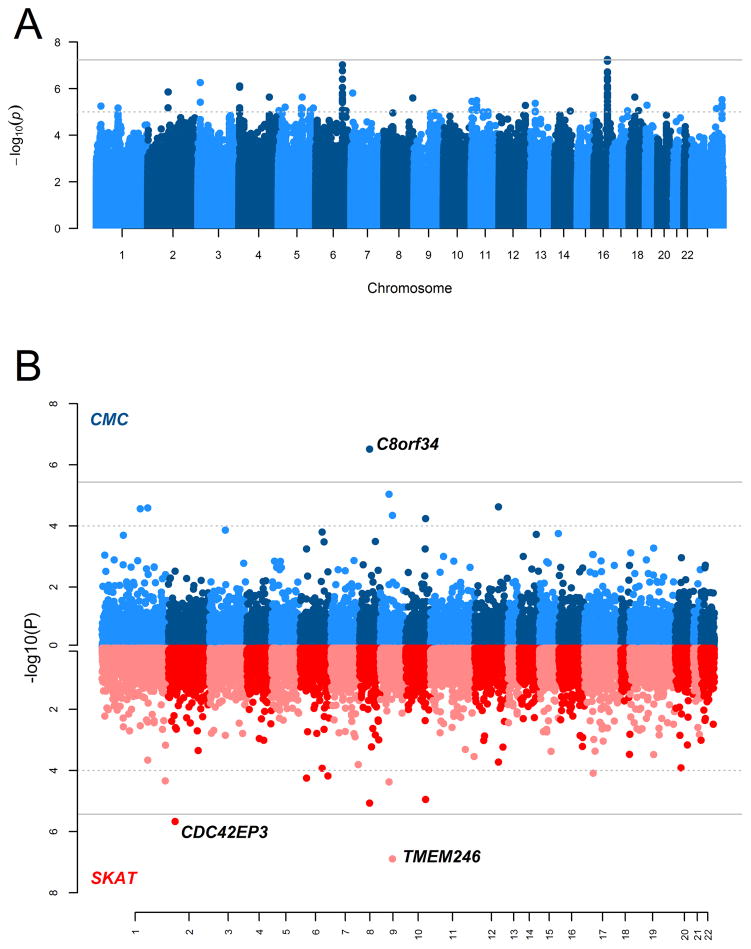
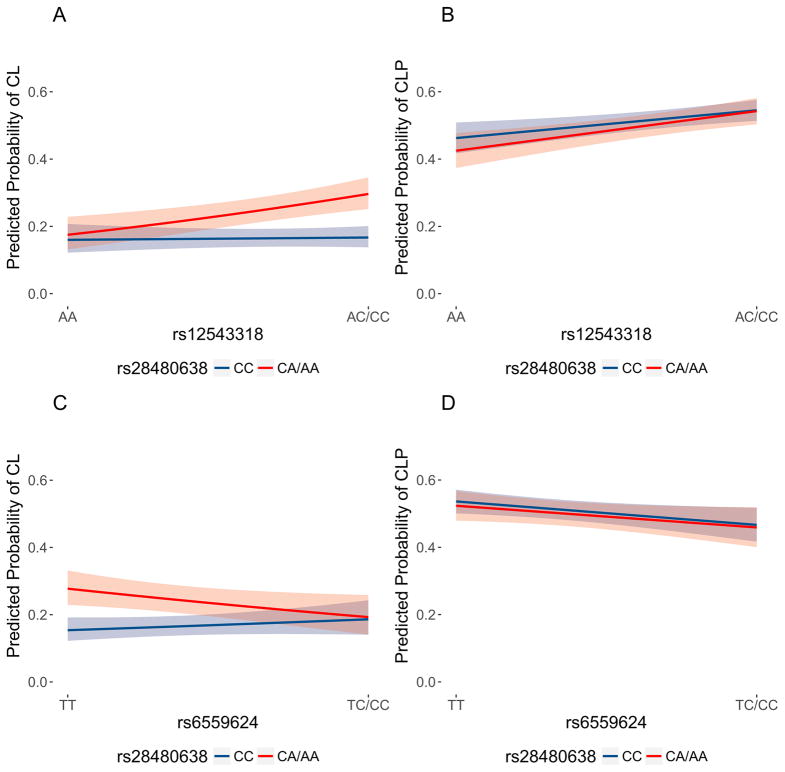
Description:Orofacial clefts (OFCs) are common, complex birth defects with extremely heterogeneous phenotypic presentations. Two common subtypes-cleft lip alone (CL) and CL plus cleft palate (CLP)-are typically grouped into a single phenotype for genetic analysis (i.e., CL with or without cleft palate, CL/P). However, mounting evidence suggests there may be unique underlying pathophysiology and/or genetic modifiers influencing expression of these two phenotypes. To this end, we performed a genome-wide scan for genetic modifiers by directly comparing 450 CL cases with 1,692 CLP cases from 18 recruitment sites across 13 countries from North America, Central or South America, Asia, Europe, and Africa. We identified a region on 16q21 that is strongly associated with different cleft type (P = 5.611 × 10| ). We also identified significant evidence of gene-gene interactions between this modifier locus and two recognized CL/P risk loci: 8q21 and 9q22 (FOXE1) (P = 0.012 and 0.023, respectively). Single nucleotide polymorphism (SNPs) in the 16q21 modifier locus demonstrated significant association with CL over CLP. The marker alleles on 16q21 that increased risk for CL were found at highest frequencies among individuals with a family history of CL (P = 0.003). Our results demonstrate the existence of modifiers for which type of OFC develops and suggest plausible elements responsible for phenotypic heterogeneity, further elucidating the complex genetic architecture of OFCs.
-
Subjects:
- Article
- complex trait
- gene-gene interaction
- genetic modifier
- orofacial cleft
- Alleles
- Brain
- Chromosomes, Human, Pair 16
- Cleft Lip
- Cleft Palate
- Female
- Forkhead Transcription Factors
- Genetic Loci
- Genome-Wide Association Study
- Humans
- Male
- Phenotype
- Polymorphism, Single Nucleotide
- Racial Groups
- Risk Factors
-
Source:Genet Epidemiol. 41(8):887-897
-
Pubmed ID:29124805
-
Pubmed Central ID:PMC5728176
-
Document Type:
-
Funding:R37 DE008559/DE/NIDCR NIH HHSUnited States/ ; R01 DE011931/DE/NIDCR NIH HHSUnited States/ ; R01 DE014667/DE/NIDCR NIH HHSUnited States/ ; T90 DE023520/DE/NIDCR NIH HHSUnited States/ ; U01 DE018993/DE/NIDCR NIH HHSUnited States/ ; S21 MD001830/MD/NIMHD NIH HHSUnited States/ ; HHSN268201200008C/HL/NHLBI NIH HHSUnited States/ ; R01 DE014581/DE/NIDCR NIH HHSUnited States/ ; K99 DE022378/DE/NIDCR NIH HHSUnited States/ ; R01 DE016148/DE/NIDCR NIH HHSUnited States/ ; R01 DE011948/DE/NIDCR NIH HHSUnited States/ ; U01 DE024425/DE/NIDCR NIH HHSUnited States/ ; R00 DE025060/DE/NIDCR NIH HHSUnited States/ ; R21 DE016930/DE/NIDCR NIH HHSUnited States/ ; R00 DE022378/DE/NIDCR NIH HHSUnited States/ ; HHSN268201200008I/HL/NHLBI NIH HHSUnited States/ ; R01 DE009886/DE/NIDCR NIH HHSUnited States/ ; K99 DE024571/DE/NIDCR NIH HHSUnited States/ ; R01 DD000295/DD/NCBDD CDC HHSUnited States/
-
Volume:41
-
Issue:8
-
Download URL:
-
File Type:
 [PDF - 1.09 MB]
 -
Collection(s):
-
Main Document Checksum:urn:sha256:4e4c84e732b2e513bd912285fafaecce49d4fe53dbeab1c854bfdc67383cdcaa
Supporting Files


File Language:
English
 Was this page helpful?
 Found an issue?




CDC STACKS serves as an archival repository of CDC-published products including
scientific findings, journal articles, guidelines, recommendations, or other public health information authored or
co-authored by CDC or funded partners.
As a repository, CDC STACKS retains documents in their original published format to ensure public access to scientific information.
As a repository, CDC STACKS retains documents in their original published format to ensure public access to scientific information.
You May Also Like
COLLECTION
CDC Public Access