



Patient- and provider-level risk factors associated with default from tuberculosis treatment, South Africa, 2002: a case-control study
Supporting Files
Public Domain

-
Jan 20 2012
File Language:
English
Details
-
Alternative Title:BMC Public Health
-
Personal Author:
-
Description:Background
Persons who default from tuberculosis treatment are at risk for clinical deterioration and complications including worsening drug resistance and death. Our objective was to identify risk factors associated with tuberculosis (TB) treatment default in South Africa.
Methods
We conducted a national retrospective case control study to identify factors associated with treatment default using program data from 2002 and a standardized patient questionnaire. We defined default as interrupting TB treatment for two or more consecutive months during treatment. Cases were a sample of registered TB patients receiving treatment under DOTS that defaulted from treatment. Controls were those who began therapy and were cured, completed or failed treatment. Two respective multivariable models were constructed, stratified by history of TB treatment (new and re-treatment patients), to identify independent risk factors associated with default.
Results
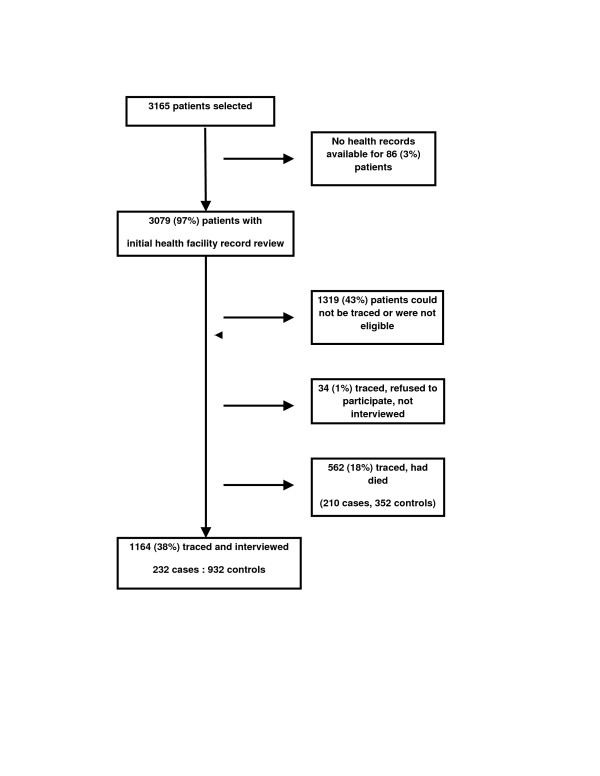
The sample included 3165 TB patients from 8 provinces; 1164 were traceable and interviewed (232 cases and 932 controls). Significant risk factors associated with default among both groups included poor health care worker attitude (new: AOR 2.1, 95% CI 1.1-4.4; re-treatment: AOR 12, 95% CI 2.2-66.0) and changing residence during TB treatment (new: AOR 2.0, 95% CI 1.1-3.7; re-treatment: AOR 3.4, 95% CI 1.1-9.9). Among new patients, cases were more likely than controls to report having no formal education (AOR 2.3, 95% CI 1.2-4.2), feeling ashamed to have TB (AOR 2.0, 95% CI 1.3-3.0), not receiving adequate counseling about their treatment (AOR 1.9, 95% CI 1.2-2.8), drinking any alcohol during TB treatment (AOR 1.9, 95% CI 1.2-3.0), and seeing a traditional healer during TB treatment (AOR 1.9, 95% CI 1.1-3.4). Among re-treatment patients, risk factors included stopping TB treatment because they felt better (AOR 21, 95% CI 5.2-84), having a previous history of TB treatment default (AOR 6.4, 95% CI 2.9-14), and feeling that food provisions might have helped them finish treatment (AOR 5.0, 95% CI 1.3-19).
Conclusions
Risk factors for default differ between new and re-treatment TB patients in South Africa. Addressing default in both populations with targeted interventions is critical to overall program success. -
Subjects:
-
Source:BMC Public Health. 2011; 12:56.
-
Document Type:
-
Place as Subject:
-
Volume:12
-
Download URL:
-
File Type:
 [PDF - 299.52 KB]
 -
Collection(s):
-
Main Document Checksum:urn:sha256:ea027e1ce0df2efb380b5fff7d8f2d4737241d4e177fedde67176a1870dff2ff
Supporting Files


File Language:
English
 Was this page helpful?
 Found an issue?


CDC STACKS serves as an archival repository of CDC-published products including
scientific findings, journal articles, guidelines, recommendations, or other public health information authored or
co-authored by CDC or funded partners.
As a repository, CDC STACKS retains documents in their original published format to ensure public access to scientific information.
As a repository, CDC STACKS retains documents in their original published format to ensure public access to scientific information.
You May Also Like
COLLECTION
CDC Public Access