


Essential Role of Interferon Response in Containing Human Pathogenic Bourbon Virus
Supporting Files
Public Domain

-
Jul 2019
-
File Language:
English
Details
-
Alternative Title:Emerg Infect Dis
-
Personal Author:
-
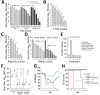
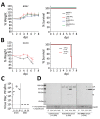
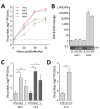
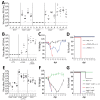
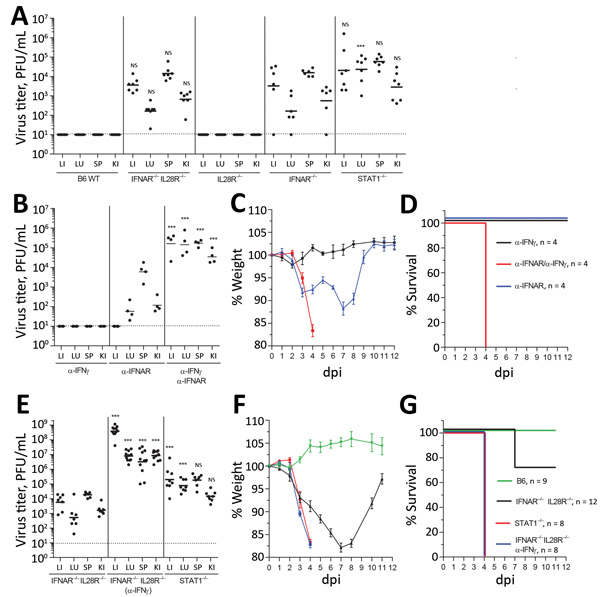
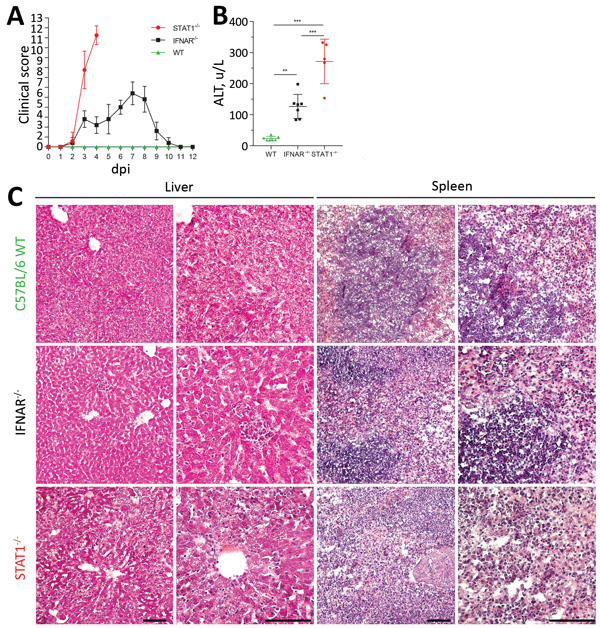
Description:Bourbon virus (BRBV) is a recently discovered tick-transmitted viral pathogen that is prevalent in the Midwest and southern United States. Since 2014, zoonotic BRBV infections have been verified in several human cases of severe febrile illness, occasionally with fatal outcomes, indicating a possible public health threat. We analyzed the pathology of BRBV infection in mice and found a high sensitivity of the virus to the host interferon system. Infected standard laboratory mice did not show clinical signs or virus replication. However, in mice carrying defects in the type I and type II interferon system, the virus grew to high titers and caused severe pathology. In cell culture, BRBV was blocked by antiviral agents like ribavirin and favipiravir (T705). Our data suggest that persons having severe BRBV infection might have a deficiency in their innate immunity and could benefit from an already approved antiviral treatment.
-
Subjects:
-
Source:Emerg Infect Dis. 25(7):1304-1313
-
Pubmed ID:31211667
-
Pubmed Central ID:PMC6590733
-
Document Type:
-
Volume:25
-
Issue:7
-
Collection(s):
-
Main Document Checksum:urn:sha256:9429e430da821ef7aa0391c796cab8fba057a5e32837457c0ee2b81da980feac
-
Download URL:
-
File Type:
 [PDF
- 6.89 MB
]
[PDF
- 6.89 MB
]
Supporting Files


File Language:
English
ON THIS PAGE




CDC STACKS serves as an archival repository of CDC-published products including
scientific findings,
journal articles, guidelines, recommendations, or other public health information authored or
co-authored by CDC or funded partners.
As a repository, CDC STACKS retains documents in their original published format to ensure public access to scientific information.
As a repository, CDC STACKS retains documents in their original published format to ensure public access to scientific information.
You May Also Like
COLLECTION
Emerging Infectious Diseases