



Respiratory Syncytial Virus Seasonality, Beijing, China, 2007–2015
Supporting Files
Public Domain

-
-
By Show All

File Language:
English
Details
-
Alternative Title:Emerg Infect Dis
-
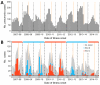
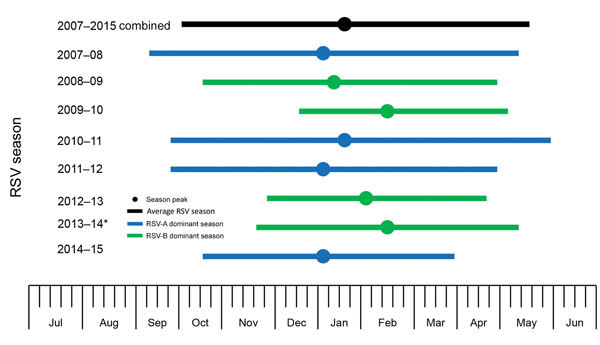
Description:During July 2007-June 2015, we enrolled 4,225 hospitalized children with pneumonia in a study to determine the seasonality of respiratory syncytial virus (RSV) infection in Beijing, China. We defined season as the period during which >10% of total PCRs performed each week were RSV positive. We identified 8 distinctive RSV seasons. On average, the season onset occurred at week 41 (mid-October) and lasted 33 weeks, through week 20 of the next year (mid-May); 97% of all RSV-positive cases occurred during the season. RSV seasons occurred 3-5 weeks earlier and lasted ≈6 weeks longer in RSV subgroup A-dominant years than in RSV subgroup B-dominant years. Our analysis indicates that monitoring such RSV subgroup shifts might provide better estimates for the onset of RSV transmission. PCR-based tests could be a flexible or complementary way of determining RSV seasonality in locations where RSV surveillance is less well-established, such as local hospitals throughout China.
-
Subjects:
- Research
- Adolescent
- Adult
- Child
- Child, Preschool
- Female
- History, 21st Century
- Hospitalization
- Humans
- Infant
- Infant, Newborn
- Male
- Middle Aged
- Patient Outcome Assessment
- Population Surveillance
- Respiratory Syncytial Virus Infections/epidemiology
- Respiratory Syncytial Virus Infections/history
- Respiratory Syncytial Virus Infections/virology
- Respiratory Syncytial Virus, Human
- Risk Factors
- Seasons
- Young Adult
-
Pubmed ID:31107230
-
Pubmed Central ID:PMC6537707
-
Document Type:
-
Place as Subject:
-
Location:
-
Volume:25
-
Issue:6
-
Download URL:
-
File Type:
 [PDF - 2.28 MB]
-
Collection(s):
-
Main Document Checksum:urn:sha256:b130dcbb81952d5caf910c19e7ad385faaed4ad071011ffaba42a564e37f5705
Supporting Files


File Language:
English
 Was this page helpful?
 Found an issue?





CDC STACKS serves as an archival repository of CDC-published products including
scientific findings, journal articles, guidelines, recommendations, or other public health information authored or
co-authored by CDC or funded partners.
As a repository, CDC STACKS retains documents in their original published format to ensure public access to scientific information.
You May Also Like
COLLECTION
Emerging Infectious Diseases