



Maternal Malaria and Perinatal HIV Transmission, Western Kenya1,2
Supporting Files
Public Domain

-
Apr 2004
File Language:
English
Details
-
Alternative Title:Emerg Infect Dis
-
Personal Author:Ayisi, John G. ; van Eijk, Anna M. ; Newman, Robert D. ; ter Kuile, Feiko O. ; Shi, Ya Ping ; Yang, Chunfu ; Kolczak, Margarette S. ; Otieno, Juliana A. ; Misore, Ambrose O. ; Kager, Piet A. ; Lal, Renu B. ; Steketee, Richard W. ; Nahlen, Bernard L.
-
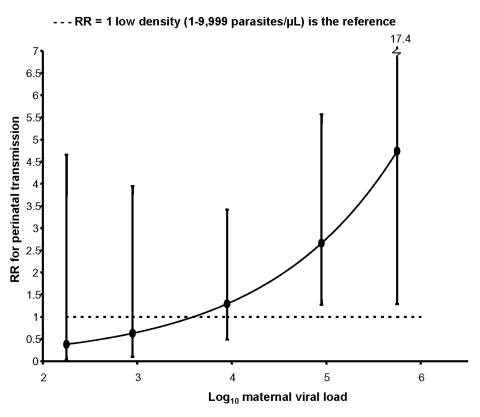
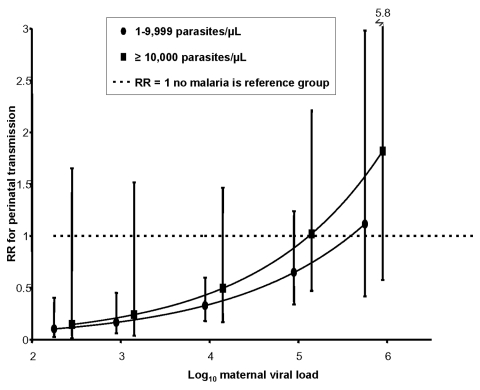
Description:To determine whether maternal placental malaria is associated with an increased risk for perinatal mother-to-child HIV transmission (MTCT), we studied HIV-positive women in western Kenya. We enrolled 512 mother-infant pairs; 128 (25.0%) women had placental malaria, and 102 (19.9%) infants acquired HIV perinatally. Log10 HIV viral load and episiotomy or perineal tear were associated with increased perinatal HIV transmission, whereas low-density placental malaria (<10,000 parasites/mL) was associated with reduced risk (adjusted relative risk ARR 0.4). Among women dually infected with malaria and HIV, high-density placental malaria (>10,000 parasites/mL) was associated with increased risk for perinatal MTCT (ARR 2.0), compared to low-density malaria. The interaction between placental malaria and MTCT appears to be variable and complex: placental malaria that is controlled at low density may cause an increase in broad-based immune responses that protect against MTCT; uncontrolled, high-density malaria may simultaneously disrupt placental architecture and generate substantial antigen stimulus to HIV replication and increase risk for MTCT.
-
Subjects:
-
Source:Emerg Infect Dis. 10(4):643-652.
-
Document Type:
-
Place as Subject:
-
Location:
-
Volume:10
-
Issue:4
-
Download URL:
-
File Type:
 [PDF - 132.17 KB]
 -
Collection(s):
-
Main Document Checksum:urn:sha256:346cd6d59abcbc8df27c95c806ec58dfa70d95b7f0bc91b669670decaafb9a7c
Supporting Files


File Language:
English
 Was this page helpful?
 Found an issue?


CDC STACKS serves as an archival repository of CDC-published products including
scientific findings, journal articles, guidelines, recommendations, or other public health information authored or
co-authored by CDC or funded partners.
As a repository, CDC STACKS retains documents in their original published format to ensure public access to scientific information.
As a repository, CDC STACKS retains documents in their original published format to ensure public access to scientific information.
You May Also Like
COLLECTION
Emerging Infectious Diseases