


Disparities in Hepatocellular Carcinoma Incidence by Race/Ethnicity and Geographic Area in California: Implications for Prevention
Supporting Files

-
August 16 2018
-
File Language:
English
Details
-
Alternative Title:Cancer
-
Personal Author:
-
Description:BACKGROUND:
The incidence of hepatocellular carcinoma (HCC) has been rising rapidly in the United States. California is an ethnically diverse state with the largest number of incident HCC cases in the country. Characterizing HCC disparities in California may inform priorities for HCC prevention.
METHODS:
By using data from the Surveillance, Epidemiology, and End Results 18-Registry Database and the California Cancer Registry, age-adjusted HCC incidence in California from 2009 through 2013 was calculated by race/ethnicity and neighborhood ethnic enclave status. A geographic analysis was conducted using Medical Service Study Areas (MSSAs) as the geographic unit, and race/ethnicity-specific standardized incidence ratios (SIRs) were calculated to identify MSSAs with higher-than-expected HCC incidence compared with the statewide average.
RESULTS:
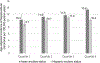
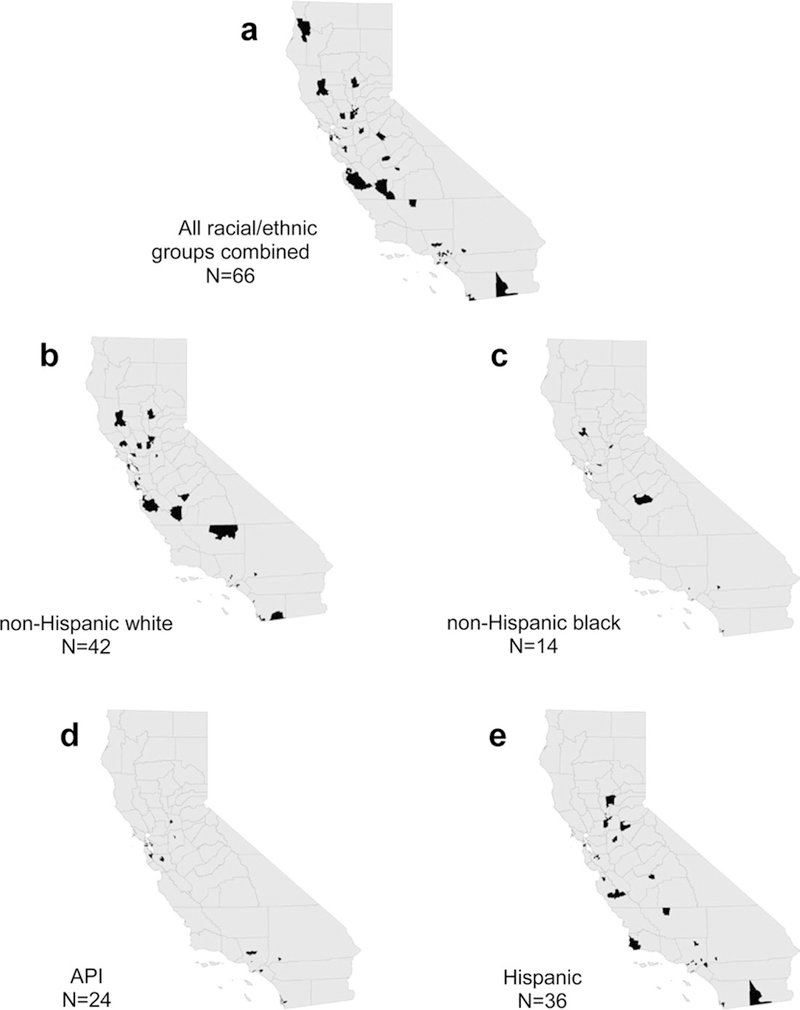
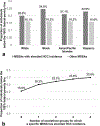
During 2009 through 2013, the age-adjusted incidence of HCC in California was the highest in Asians/Pacific Islanders (APIs) and Hispanics (>100% higher than whites), especially those living in more ethnic neighborhoods (20%−30% higher than less ethnic neighborhoods). Of the 542 MSSAs statewide, 42 had elevated HCC incidence (SIR ≥ 1.5; lower bound of 95% confidence interval > 1) for whites, 14 for blacks, 24 for APIs, and 36 for Hispanics. These MSSAs have 24% to 52% higher proportions of individuals below the 100% federal poverty line than other MSSAs.
CONCLUSIONS:
APIs and Hispanics residing in more ethnic neighborhoods and individuals residing in lower income neighborhoods require more extensive preventive efforts tailored toward their unique risk factor profiles. The current race/ethnicity-specific geographic analysis can be extended to other states to inform priorities for HCC targeted prevention at the subcounty level, eventually reducing HCC burden in the country.
-
Subjects:
-
Source:Cancer. 124(17):3551-3559
-
Pubmed ID:30113700
-
Pubmed Central ID:PMC6436543
-
Document Type:
-
Funding:Cancer Prevention Institute/International ; HHSN261201000140C/CA/NCI NIH HHS/United States ; HHSN261201000035C/CA/NCI NIH HHS/United States ; 2016 Stanford Cancer Institute Developmental Cancer Research Pilot Award/International ; Stanford Cancer Institute Developmental Cancer Research Pilot Award/International ; HHSN261201000035C/Cancer Prevention Institute of California/International ; HHSN261201000140C/National Cancer Institute's Surveillance, Epidemiology/International ; HHSN261201000035I/CA/NCI NIH HHS/United States ; HHSN261201000034C/CA/NCI NIH HHS/United States ; U58 DP003862/DP/NCCDPHP CDC HHS/United States ; Public Health Institute/International ; California Department of Public Health/International ; HHSN261201000034C/University of Southern California/International ; P30 CA124435/CA/NCI NIH HHS/United States ; 5NU58DP003862-04/DP003862/Centers for Disease Control and Prevention's National Program/International
-
Volume:124
-
Issue:17
-
Collection(s):
-
Main Document Checksum:urn:sha256:afc8b54551c4826f04677fc898cd97bed6e35a241c648899921eaacfe9c723ba
-
Download URL:
-
File Type:
 [PDF
- 453.12 KB
]
[PDF
- 453.12 KB
]
Supporting Files


File Language:
English
ON THIS PAGE




CDC STACKS serves as an archival repository of CDC-published products including
scientific findings,
journal articles, guidelines, recommendations, or other public health information authored or
co-authored by CDC or funded partners.
As a repository, CDC STACKS retains documents in their original published format to ensure public access to scientific information.
As a repository, CDC STACKS retains documents in their original published format to ensure public access to scientific information.
You May Also Like
COLLECTION
CDC Public Access