


Effort–reward imbalance in police work: associations with the cortisol awakening response
Supporting Files

-
March 07 2018
-
File Language:
English
Details
-
Alternative Title:Int Arch Occup Environ Health
-
Personal Author:
-
Description:Purpose
We hypothesized that effort–reward imbalance (ERI) is associated with an atypical cortisol response. ERI has been associated with higher job stress. Stress triggers cortisol secretion via the hypothalamic–pituitary–adrenal (HPA) axis, and significant deviation from a typical cortisol pattern can indicate HPA axis dysfunction.
Methods
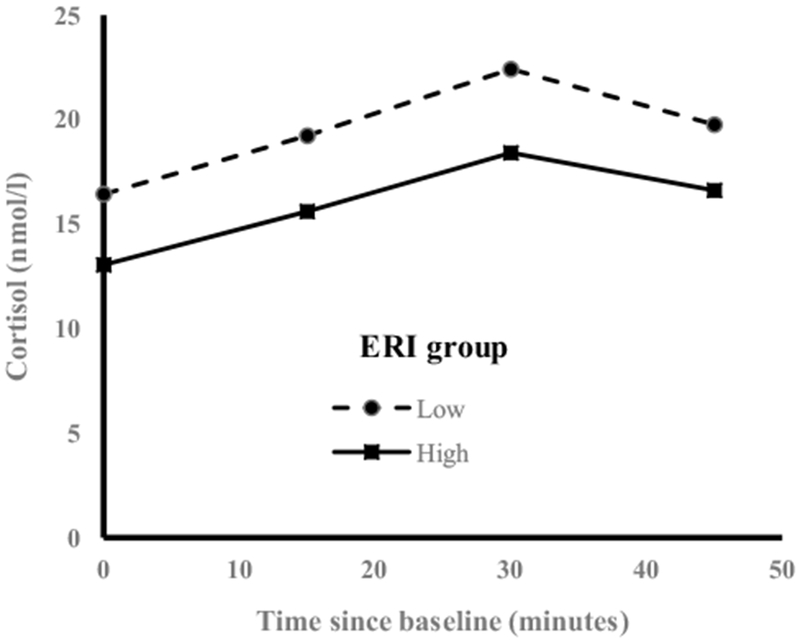
176 police officers participated from the Buffalo Cardio-Metabolic Occupational Police Stress (BCOPS) Study. ERI was the exposure variable. Outcome variables were saliva-based peak and mean cortisol values, total area under the curve ground (AUCG) and baseline (AUCI); linear regression line fitted to log-transformed cortisol. Regression analyses were used to examine linear trend between ERI and cortisol parameters. Repeated measures analysis examined whether the pattern of cortisol over time differed between low ERI (< median) and high ERI (≥ median).
Results
Mean age was 46 years (SD = 6.6). After adjustment for potential confounders, there was a significant inverse association between ERI and peak cortisol (β = −0.20, p = 0.009), average cortisol (β = −0.23, p = 0.003), and total area under the curve (β = −0.21, p = 0.009). ERI was not significantly associated with AUCI (β = −0.11, p = 0.214); slope of the regression line fitted to the cortisol profile (β = −0.009, p = 0.908). Repeated measures analyses showed that the cortisol pattern did not vary significantly between high and low ERI using the median as a cut point (interaction p value = 0.790).
Conclusions
ERI was inversely associated with the magnitude of awakening cortisol over time, indicating HPA axis dys-regulation and potential future health outcomes.
-
Subjects:
-
Source:Int Arch Occup Environ Health. 91(5):513-522
-
Pubmed ID:29516173
-
Pubmed Central ID:PMC6381834
-
Document Type:
-
Funding:
-
Place as Subject:
-
Volume:91
-
Issue:5
-
Collection(s):
-
Main Document Checksum:urn:sha256:46dcb1cf5faa1dbca7a261a467e320513f913902dfa7f12dbb1a67d484fc8098
-
Download URL:
-
File Type:
 [PDF
- 372.51 KB
]
[PDF
- 372.51 KB
]
Supporting Files


File Language:
English
ON THIS PAGE

CDC STACKS serves as an archival repository of CDC-published products including
scientific findings,
journal articles, guidelines, recommendations, or other public health information authored or
co-authored by CDC or funded partners.
As a repository, CDC STACKS retains documents in their original published format to ensure public access to scientific information.
As a repository, CDC STACKS retains documents in their original published format to ensure public access to scientific information.
You May Also Like
COLLECTION
CDC Public Access