



Impact of chemotherapy relative dose intensity on cause-specific and overall survival for stage I–III breast cancer: ER+/PR+, HER2− vs. triple-negative
Supporting Files

-
January 24 2018
-
Available in CDC Stacks on 2019-05-01T00:00:00Z
File Language:
English
Details
-
Alternative Title:Breast Cancer Res Treat
-
Personal Author:
-
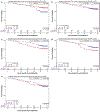
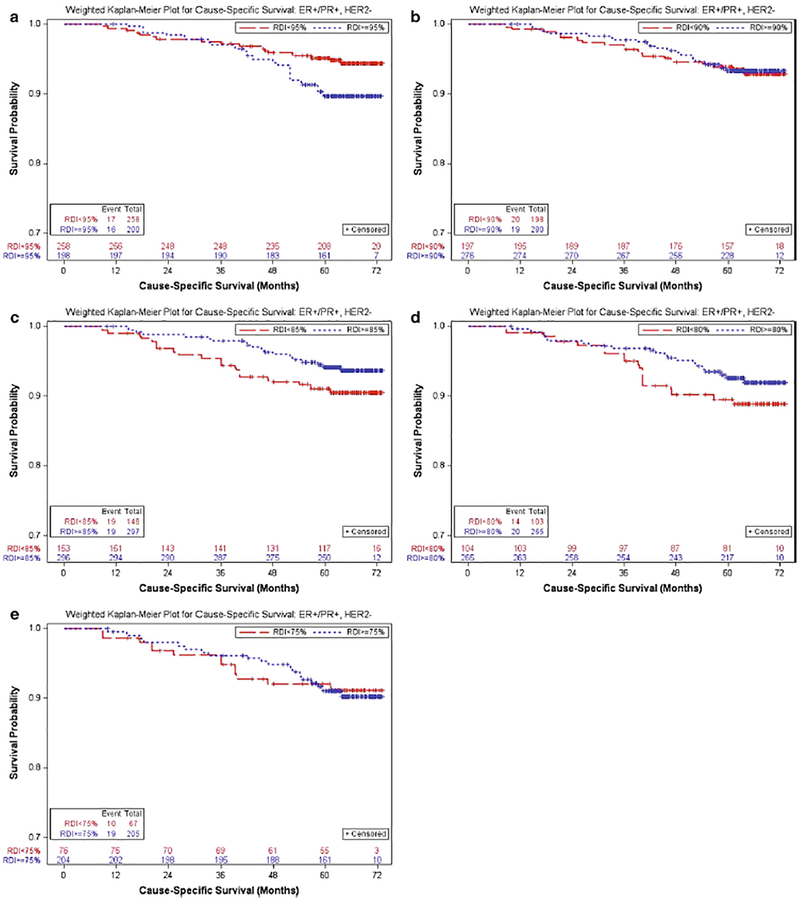
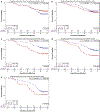
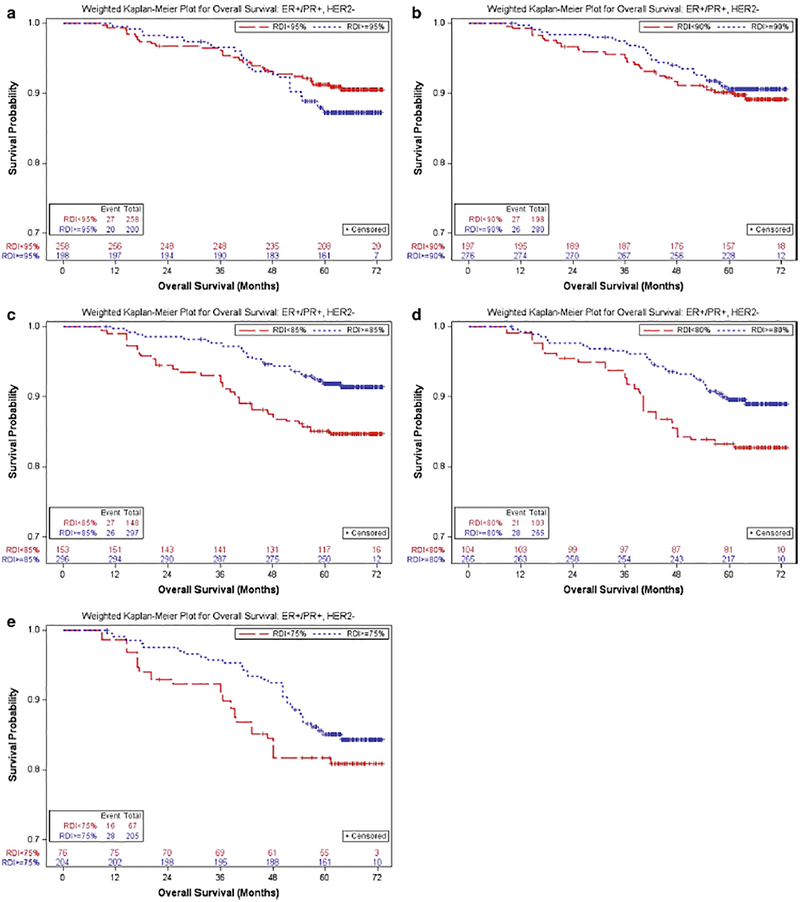
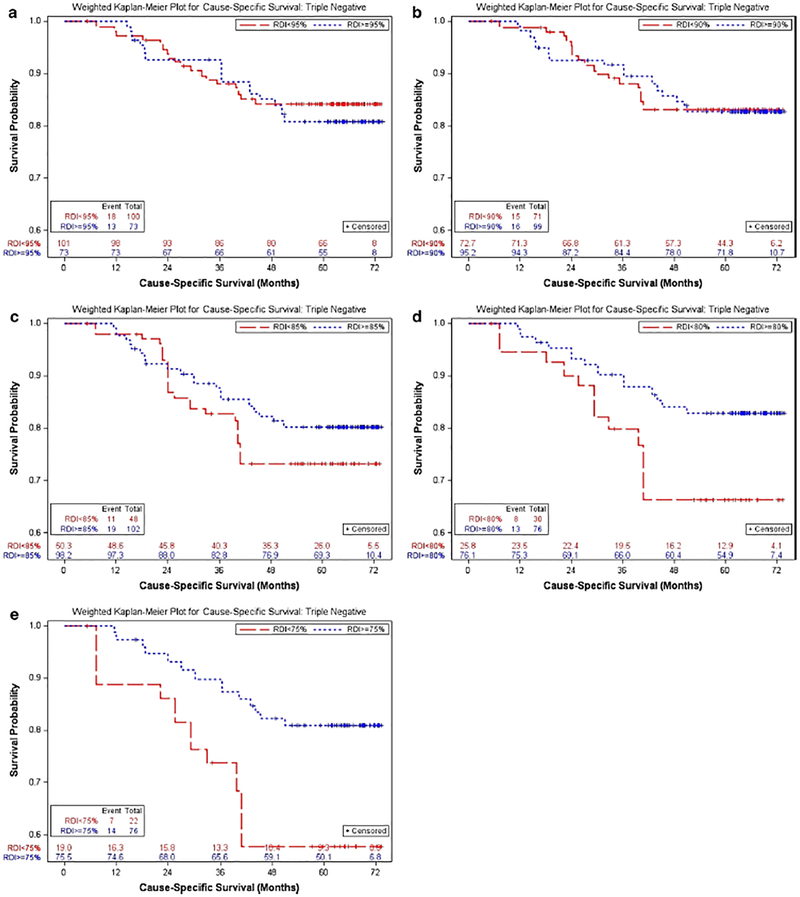
Description:Purpose ; To investigate the impact of chemotherapy relative dose intensity (RDI) on cause-specific and overall survival for stage I–III breast cancer: estrogen receptor or progesterone receptor positive, human epidermal-growth factor receptor negative (ER+/PR+ and HER2−) vs. triple-negative (TNBC) and to identify the optimal RDI cut-off points in these two patient populations. ; Methods ; Data were collected by the Louisiana Tumor Registry for two CDC-funded projects. Women diagnosed with stage I–III ER+/PR+, HER2− breast cancer, or TNBC in 2011 with complete information on RDI were included. Five RDI cut-off points (95, 90, 85, 80, and 75%) were evaluated on cause-specific and overall survival, adjusting for multiple demographic variables, tumor characteristics, comorbidity, use of granulocyte-growth factor/cytokines, chemotherapy delay, chemotherapy regimens, and use of hormone therapy. Cox proportional hazards models and Kaplan–Meier survival curves were estimated and adjusted by stabilized inverse probability treatment weighting (IPTW) of propensity score. ; Results ; Of 494 ER+/PR+, HER2− patients and 180 TNBC patients, RDI < 85% accounted for 30.4 and 27.8%, respectively. Among ER+/PR+, HER2− patients, 85% was the only cut-off point at which the low RDI was significantly associated with worse overall survival (HR = 1.93; 95% CI 1.09–3.40). Among TNBC patients, 75% was the cut-off point at which the high RDI was associated with better cause-specific (HR = 2.64; 95% CI 1.09, 6.38) and overall survival (HR = 2.39; 95% CI 1.04–5.51). ; Conclusions ; Higher RDI of chemotherapy is associated with better survival for ER+/PR+, HER2− patients and TNBC patients. To optimize survival benefits, RDI should be maintained ≥ 85% in ER+/PR+, HER2− patients, and ≥ 75% in TNBC patients.
-
Subjects:
- Article
- Breast cancer
- Hormone receptor positive
- Triple-negative
- Chemotherapy
- Relative dose intensity
- Adult
- Aged
- Breast Neoplasms
- Disease-Free Survival
- Dose-Response Relationship, Drug
- Female
- Humans
- Kaplan-Meier Estimate
- Middle Aged
- Neoplasm Staging
- Receptor, ErbB-2
- Receptors, Estrogen
- Receptors, Progesterone
- Triple Negative Breast Neoplasms
-
Source:Breast Cancer Res Treat. 169(1):175-187
-
Pubmed ID:29368311
-
Pubmed Central ID:PMC6190707
-
Document Type:
-
Funding:
-
Volume:169
-
Issue:1
-
Download URL:
-
File Type:
 [PDF - 1.52 MB]
 -
Collection(s):
-
Main Document Checksum:urn:sha256:2a1c59659573b972aafaf362805a8e94f29ca88b964fb08fc1532f2dd2a2a8b1
Supporting Files


File Language:
English
 Was this page helpful?
 Found an issue?



CDC STACKS serves as an archival repository of CDC-published products including
scientific findings, journal articles, guidelines, recommendations, or other public health information authored or
co-authored by CDC or funded partners.
As a repository, CDC STACKS retains documents in their original published format to ensure public access to scientific information.
As a repository, CDC STACKS retains documents in their original published format to ensure public access to scientific information.
You May Also Like
COLLECTION
CDC Public Access