



Incidence and Survival by Human Epidermal Growth Factor Receptor-2 Status in Young Women with Stage I-III Breast Cancer: SEER 2010–2016
Supporting Files

-
8 2020 ; 8-2020
-
Available in CDC Stacks on August 01, 2021, 12:00 AM
File Language:
English
Details
-
Alternative Title:Clin Breast Cancer
-
Personal Author:
-
Description:Background:
Young, premenopausal women with breast cancer often experience more aggressive disease biology and poorer survival than older women. Diagnostic and therapeutic advances, including human epidermal growth factor receptor-2 (HER2)-directed therapy, may lessen treatment burden and improve survival for these young women, but contemporary incidence and survival data by HER2 status are limited.
Patients and Methods:
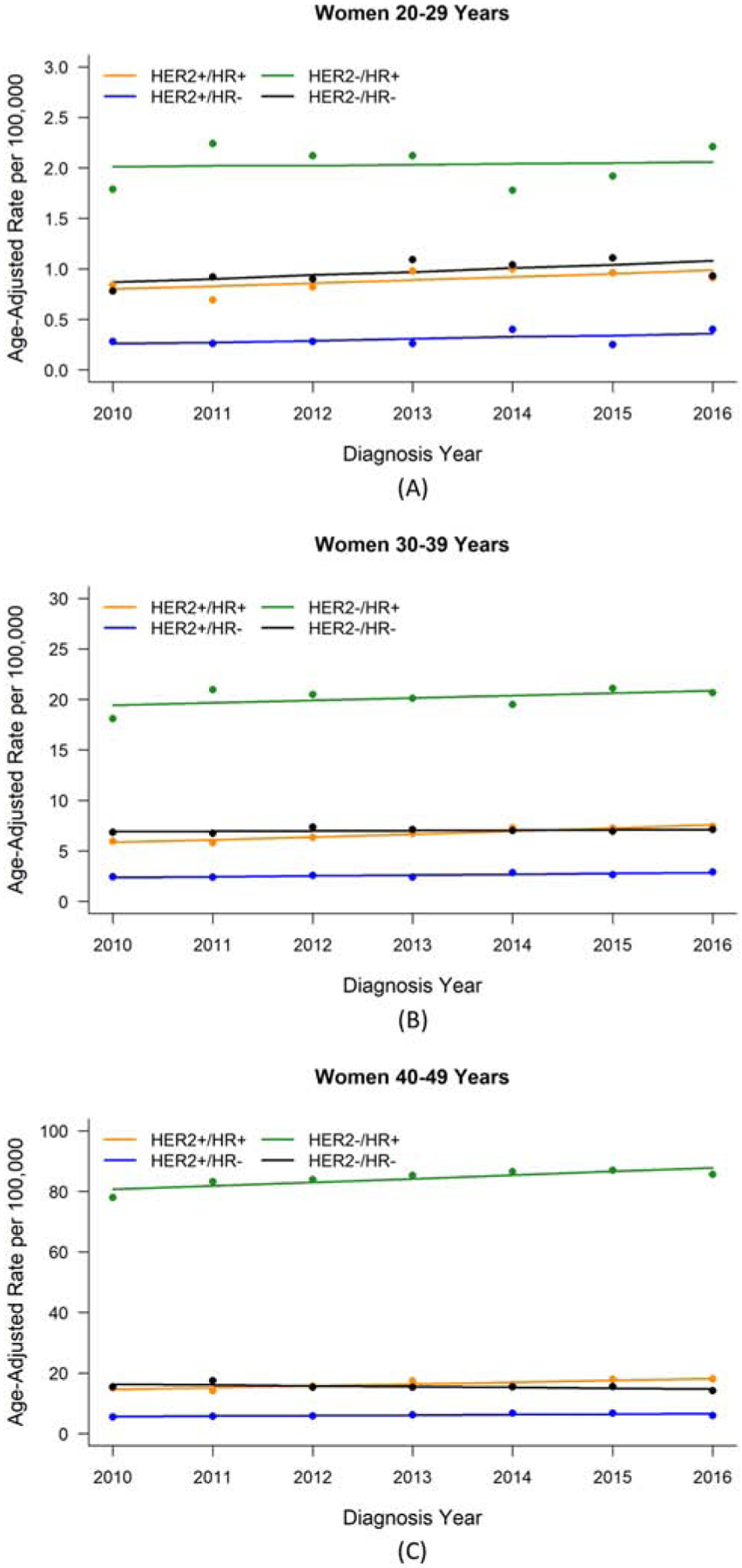
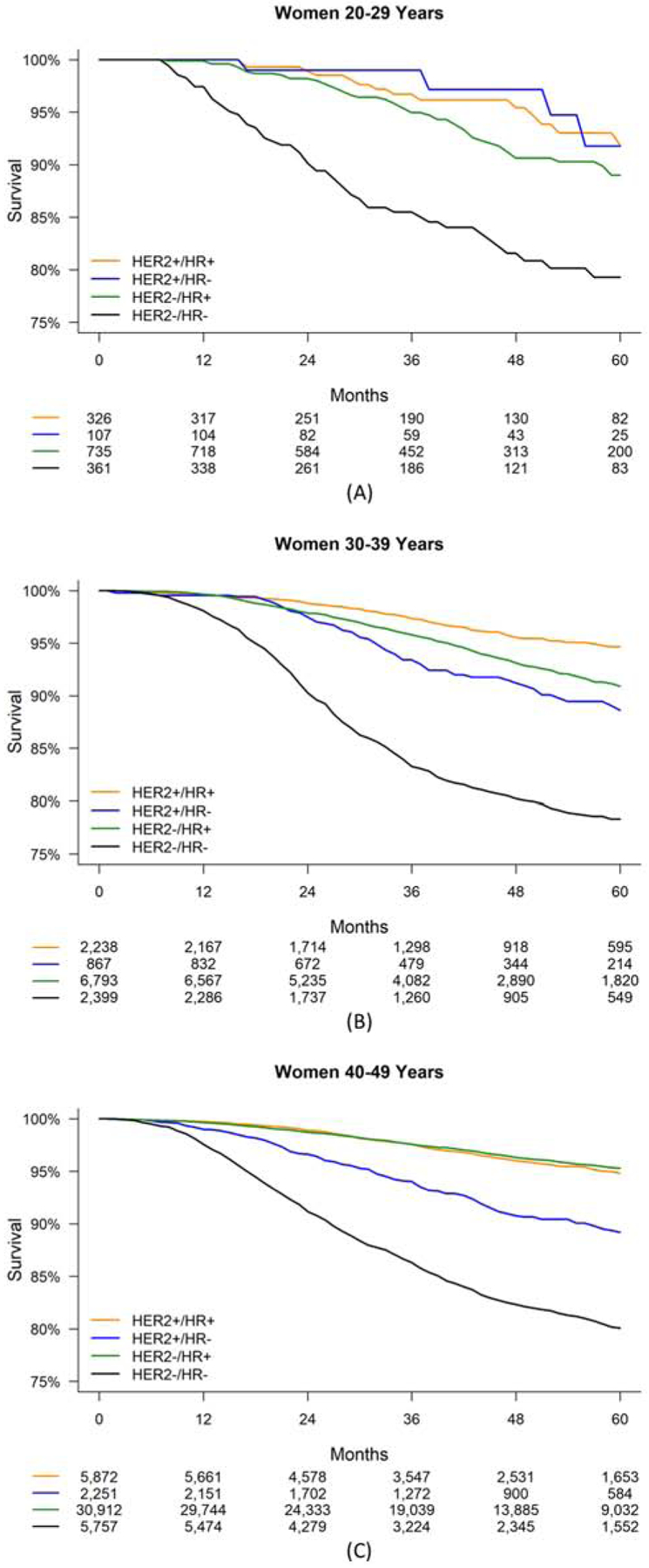
We identified women aged 20–49 years (n=68,530) diagnosed with stage I-III breast cancer during 2010–2016 from the United States Surveillance, Epidemiology and End Results 18 registries database. Age-adjusted, average annual percentage changes in incidence (diagnosis 2010–2016) and five-year Kaplan-Meier survival curves (diagnosis 2010–2015) were estimated by HER2 and hormone receptor (HR) status and stratified independently by cancer stage and race/ethnicity.
Results:
With increasing age decade, proportions of HER2−/HR+ cancer increased, whereas proportions of HER2+/HR+, HER2+/HR−, and HER2−/HR− decreased. The greatest increases in incidence during 2010–2016 were observed for HER2+ among women 20–49 and HER2−/HR− among women 20–29. Incidence decreased for HER2−/HR− among women 40–49. Five-year survival was lowest for HER2−/HR− status compared to other receptor-based subtypes among women 20–49. HER2+ status was more beneficial for five-year survival than HR+ status among women 20–29, with the opposite observed among women 30–49, particularly those 40–49.
Conclusions:
HER2+ breast cancer increased among premenopausal women and was also associated with higher early survival within each HR status. HER2−/HR− cancer also increased among women 20–29 and was associated with lower early survival. Our contemporary data provide important insights to help inform preventive and therapeutic strategies for premenopausal women. -
Subjects:
-
Keywords:
-
Source:Clin Breast Cancer. 20(4):e410-e422
-
Pubmed ID:32278642
-
Pubmed Central ID:PMC7398833
-
Document Type:
-
Funding:U01DD001035/ACL/ACL HHSUnited States/ ; U01 DD001223/DD/NCBDD CDC HHSUnited States/ ; HHSN261201300020I/CA/NCI NIH HHSUnited States/ ; P30 CA086862/CA/NCI NIH HHSUnited States/ ; U01 DD001035/DD/NCBDD CDC HHSUnited States/ ; HHSN261201300021C/CA/NCI NIH HHSUnited States/ ; U01DD001223/ACL/ACL HHSUnited States/ ; HHSN261201300020C/CA/NCI NIH HHSUnited States/
-
Volume:20
-
Issue:4
-
Download URL:
-
File Type:
 [PDF - 425.81 KB]
 -
Collection(s):
-
Main Document Checksum:urn:sha-512:114fa50c9bf63dc9d2e89cfde8a1cda6365d48987729a1477ca21242509391e49bfff202de3e65c3b687280500ce612f091d9edfa45fa8db7867626b534e9dc4
Supporting Files


File Language:
English
 Was this page helpful?
 Found an issue?

CDC STACKS serves as an archival repository of CDC-published products including
scientific findings, journal articles, guidelines, recommendations, or other public health information authored or
co-authored by CDC or funded partners.
As a repository, CDC STACKS retains documents in their original published format to ensure public access to scientific information.
As a repository, CDC STACKS retains documents in their original published format to ensure public access to scientific information.
You May Also Like
COLLECTION
CDC Public Access