


Hepatitis B Virus Testing and Care among Pregnant Women Using Commercial Claims Data, United States, 2011–2014
Supporting Files
Public Domain

-
Apr 01 2018
-
File Language:
English
Details
-
Alternative Title:Infect Dis Obstet Gynecol
-
Personal Author:
-
Description:Introduction
Pregnant women should receive hepatitis B virus (HBV) testing with hepatitis B surface antigen (HBsAg), but it is unclear whether HBV-infected pregnant women are linked to care.
Methods
We analyzed MarketScan™ commercial insurance claims. We included pregnant women, aged 10–50 years, with 42 weeks of continuous enrollment before (predelivery) and 6 months after (postdelivery) the first delivery claim for each unique pregnancy between 1/1/2011 and 6/30/2014. We identified claims for HBsAg testing by CPT code and described the care continuum among pregnancies with an associated ICD-9 HBV diagnosis code by demographic and clinical characteristics, including HBV-directed care ([HBV DNA or hepatitis B e antigen] and ALT test codes) and antiviral treatment (claims for tenofovir, entecavir, lamivudine, adefovir, or telbivudine) pre- and postdelivery.
Results
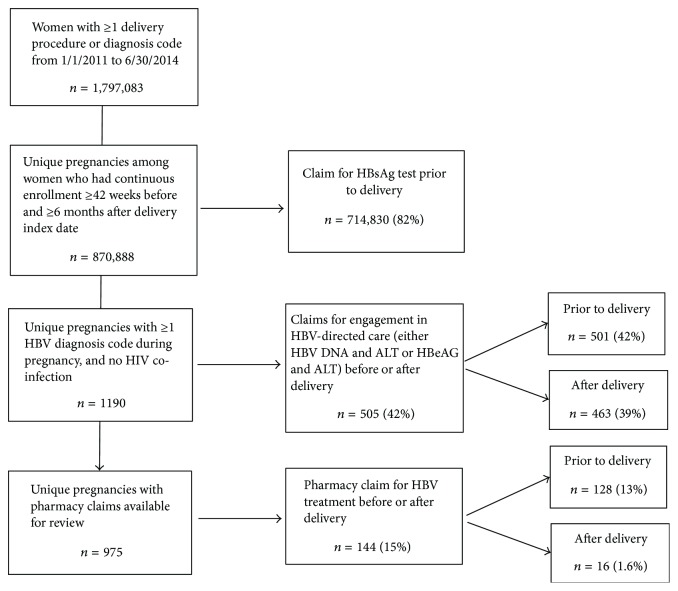
There were 870,888 unique pregnancies (819,752 women) included. Before delivery, 714,830 (82%) pregnancies had HBsAg test claims, but this proportion decreased with subsequent pregnancies (p < 0.0001): second (80%), third (71%), and fourth (61%). We identified 1,190 (0.14%) pregnancies with an associated HBV diagnosis code: most were among women aged ≥ 30 years (76%) residing in the Pacific (34%) or Middle Atlantic (18%) regions. Forty-two percent of pregnancies with an HBV diagnosis received HBV-directed care (42% predelivery and 39% postdelivery). Antiviral treatment was initiated before delivery in 128 (13%) of 975 pregnancies and postdelivery in 16 (1.6%) pregnancies.
Conclusions
While most of these commercially insured pregnant women received predelivery HBV screening, we identified gaps in HBV testing and the HBV care continuum which highlight potential targets for public health interventions.
-
Subjects:
-
Source:Infect Dis Obstet Gynecol. 2018; 2018.
-
Pubmed ID:29805248
-
Pubmed Central ID:PMC5899853
-
Document Type:
-
Place as Subject:
-
Volume:2018
-
Collection(s):
-
Main Document Checksum:urn:sha256:a9b12fd05bd5fd3f988f21c89e6a147dead7ad0d1dec02cf0283011d911bca82
-
Download URL:
-
File Type:
 [PDF
- 707.39 KB
]
[PDF
- 707.39 KB
]
Supporting Files


File Language:
English
ON THIS PAGE

CDC STACKS serves as an archival repository of CDC-published products including
scientific findings,
journal articles, guidelines, recommendations, or other public health information authored or
co-authored by CDC or funded partners.
As a repository, CDC STACKS retains documents in their original published format to ensure public access to scientific information.
As a repository, CDC STACKS retains documents in their original published format to ensure public access to scientific information.
You May Also Like
COLLECTION
CDC Public Access