



Knowledge and attitude towards Ebola and Marburg virus diseases in Uganda using quantitative and participatory epidemiology techniques
Supporting Files
Public Domain

-
09/11/2017
File Language:
English
Details
-
Alternative Title:PLoS Negl Trop Dis
-
Personal Author:
-
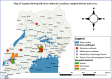
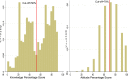
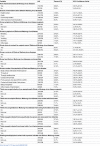
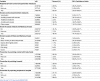
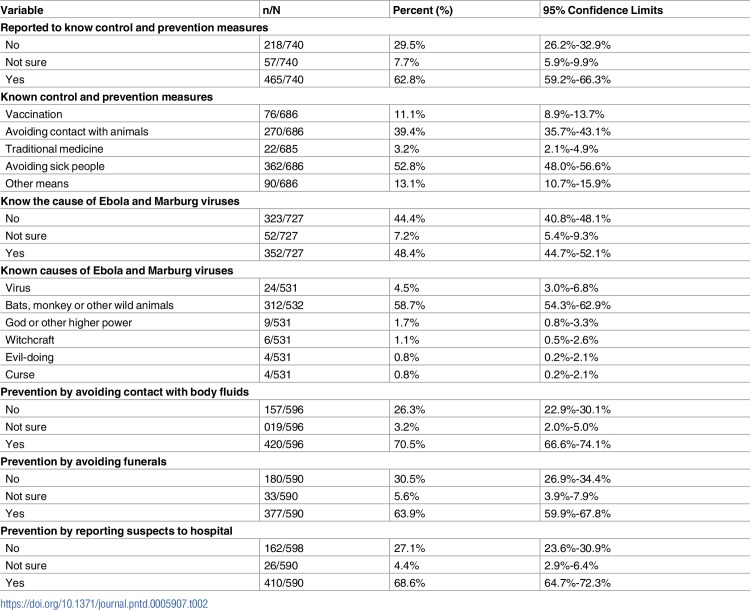
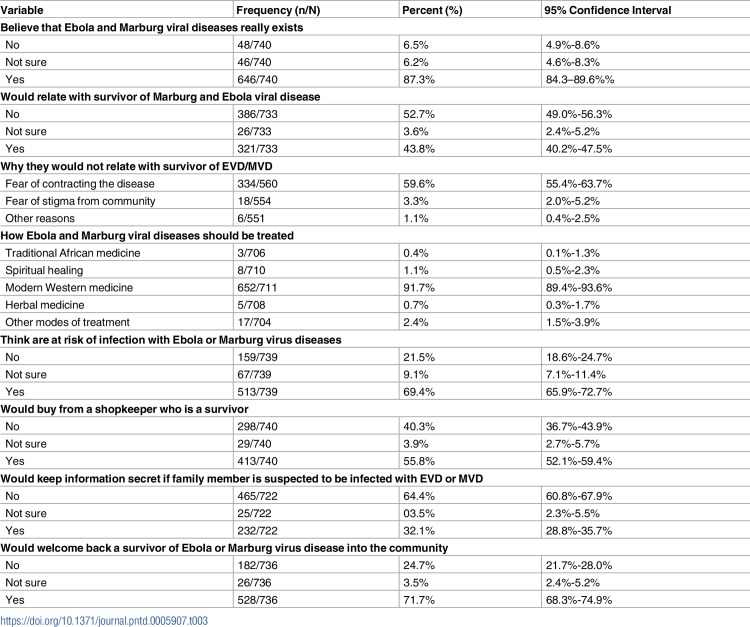
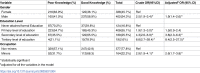
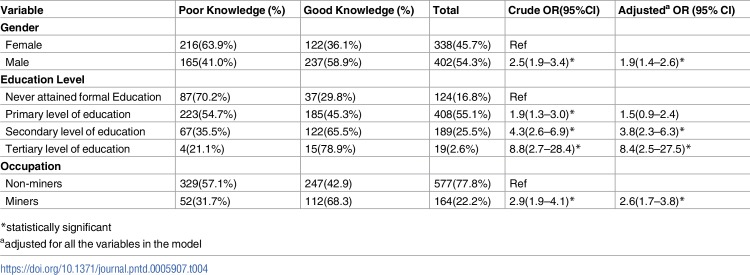
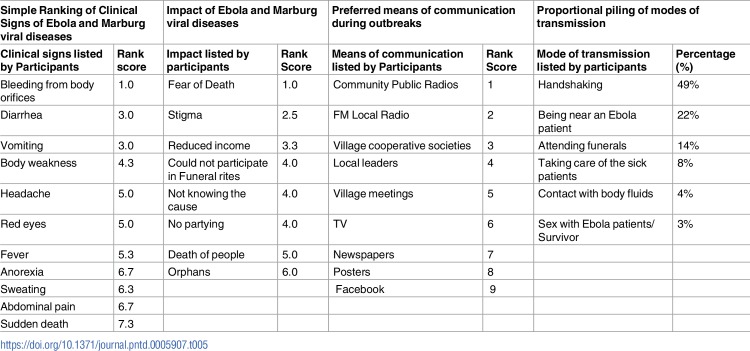
Description:Background ; Uganda has reported five (5) Ebola virus disease outbreaks and three (3) Marburg virus disease outbreaks from 2000 to 2016. Peoples’ knowledge and attitude towards Ebola and Marburg virus disease impact on control and prevention measures especially during outbreaks. We describe knowledge and attitude towards Ebola and Marburg virus outbreaks in two affected communities in Uganda to inform future outbreak responses and help in the design of health education and communication messages. ; Methods ; The study was a community survey done in Luweero, Ibanda and Kamwenge districts that have experienced outbreaks of Ebola and Marburg virus diseases. Quantitative data were collected using a structured questionnaire and triangulated with qualitative participatory epidemiology techniques to gain a communities’ knowledge and attitude towards Ebola and Marburg virus disease. ; Results ; Out of 740 respondents, 48.5% (359/740) were categorized as being knowledgeable about Ebola and Marburg virus diseases, whereas 60.5% (448/740) were having a positive attitude towards control and prevention of Ebola and Marburg virus diseases. The mean knowledge and attitude percentage scores were 54.3 (SD = 23.5, 95%CI = 52.6–56.0) and 69.9 (SD = 16.9, 95%CI = 68.9–71.1) respectively. People educated beyond primary school were more likely to be knowledgeable about Ebola and Marburg virus disease than those who did not attain any formal education (OR = 3.6, 95%CI = 2.1–6.1). Qualitative data revealed that communities describe Ebola and Marburg virus diseases as very severe diseases with no cure and they believe the diseases spread so fast. Respondents reported fear and stigma suffered by survivors, their families and the broader community due to these diseases. ; Conclusion ; Communities in Uganda affected by filovirus outbreaks have moderate knowledge about these diseases and have a positive attitude towards practices to prevent and control Ebola and Marburg viral diseases. The public health sector should enhance this community knowledge gap to empower them more by supplying educational materials for epidemic preparedness in future using appropriate communication channels as proposed by the communities.
-
Subjects:
- Adolescent
- Adult
- Aged
- Aged, 80 and over
- Animals
- Child
- Child, Preschool
- Disease Outbreaks
- Ebolavirus
- Epidemiologic Methods
- Female
- Health Knowledge, Attitudes, Practice
- Hemorrhagic Fever, Ebola
- Humans
- Interviews as Topic
- Male
- Marburg Virus Disease
- Marburgvirus
- Middle Aged
- Public Health
- Social Stigma
- Young Adult
-
Source:PLoS Negl Trop Dis. 11(9)
-
Pubmed ID:28892520
-
Pubmed Central ID:PMC5608436
-
Document Type:
-
Place as Subject:
-
Volume:11
-
Issue:9
-
Download URL:
-
File Type:
 [PDF - 2.03 MB]
 -
Collection(s):
-
Main Document Checksum:urn:sha256:2f077fef0da472276fd3608b5c91488f31697c1cb5c0f97457b55e281ccbfe73
Supporting Files


File Language:
English
 Was this page helpful?
 Found an issue?




CDC STACKS serves as an archival repository of CDC-published products including
scientific findings, journal articles, guidelines, recommendations, or other public health information authored or
co-authored by CDC or funded partners.
As a repository, CDC STACKS retains documents in their original published format to ensure public access to scientific information.
As a repository, CDC STACKS retains documents in their original published format to ensure public access to scientific information.
You May Also Like
COLLECTION
CDC Public Access