


Comparison of indoor air sampling and dust collection methods for fungal exposure assessment using quantitative PCR
Supporting Files

-
10 18 2017
-
File Language:
English
Details
-
Alternative Title:Environ Sci Process Impacts
-
Personal Author:
-
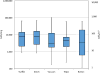
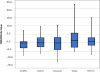
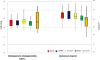
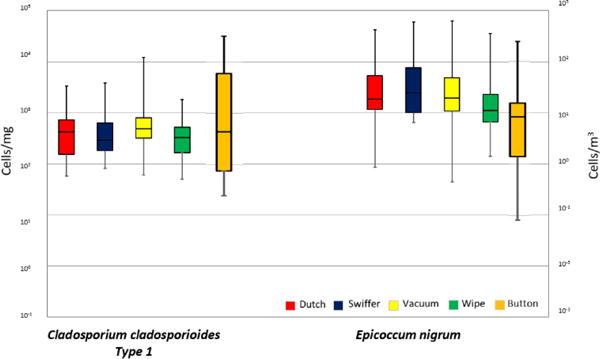
Description:Evaluating fungal contamination indoors is complicated because of the many different sampling methods utilized. In this study, fungal contamination was evaluated using five sampling methods and four matrices for results. The five sampling methods were a 48 hour indoor air sample collected with a Button™ inhalable aerosol sampler and four types of dust samples: a vacuumed floor dust sample, newly settled dust collected for four weeks onto two types of electrostatic dust cloths (EDCs) in trays, and a wipe sample of dust from above floor surfaces. The samples were obtained in the bedrooms of asthmatic children (n = 14). Quantitative polymerase chain reaction (qPCR) was used to analyze the dust and air samples for the 36 fungal species that make up the Environmental Relative Moldiness Index (ERMI). The results from the samples were compared by four matrices: total concentration of fungal cells, concentration of fungal species associated with indoor environments, concentration of fungal species associated with outdoor environments, and ERMI values (or ERMI-like values for air samples). The ERMI values for the dust samples and the ERMI-like values for the 48 hour air samples were not significantly different. The total cell concentrations of the 36 species obtained with the four dust collection methods correlated significantly (r = 0.64-0.79, p < 0.05), with the exception of the vacuumed floor dust and newly settled dust. In addition, fungal cell concentrations of indoor associated species correlated well between all four dust sampling methods (r = 0.68-0.86, p < 0.01). No correlation was found between the fungal concentrations in the air and dust samples primarily because of differences in concentrations of Cladosporium cladosporioides Type 1 and Epicoccum nigrum. A representative type of dust sample and a 48 hour air sample might both provide useful information about fungal exposures.
-
Subjects:
-
Source:Environ Sci Process Impacts. 19(10):1312-1319
-
Pubmed ID:28858343
-
Pubmed Central ID:PMC5884110
-
Document Type:
-
Funding:
-
Volume:19
-
Issue:10
-
Collection(s):
-
Main Document Checksum:urn:sha-512:bbdd98655e7b3b7a89d50fb055ad760b3a7aac5a6f9f99166d31f6ebd767c52576948eef82b168e0e5d8ae203063ba694b2ec8de80e107833f2e559a33257910
-
Download URL:
-
File Type:
 [PDF
- 430.28 KB
]
[PDF
- 430.28 KB
]
Supporting Files


File Language:
English
ON THIS PAGE



CDC STACKS serves as an archival repository of CDC-published products including
scientific findings,
journal articles, guidelines, recommendations, or other public health information authored or
co-authored by CDC or funded partners.
As a repository, CDC STACKS retains documents in their original published format to ensure public access to scientific information.
As a repository, CDC STACKS retains documents in their original published format to ensure public access to scientific information.
You May Also Like
COLLECTION
CDC Public Access