



Traffic-Related Air Pollution and Telomere Length in Children and Adolescents Living in Fresno, CA: A Pilot Study
Supporting Files

-
5 2017 ; 5-2017
-
Available in CDC Stacks on May 01, 2018, 12:00 AM
File Language:
English
Details
-
Alternative Title:J Occup Environ Med
-
Personal Author:
-
Description:Objective
The main objective of this pilot study was to gather preliminary information about how telomere length (TL) varies in relation to exposure to polycyclic aromatic hydrocarbons (PAHs) in children living in a highly polluted city.
Methods
We conducted a cross-sectional study of children living in Fresno, California (n=14). Subjects with and without asthma were selected based on their annual average PAH level in the 12-months prior to their blood draw. We measured relative telomere length from peripheral blood mononuclear cells (PBMC).
Results
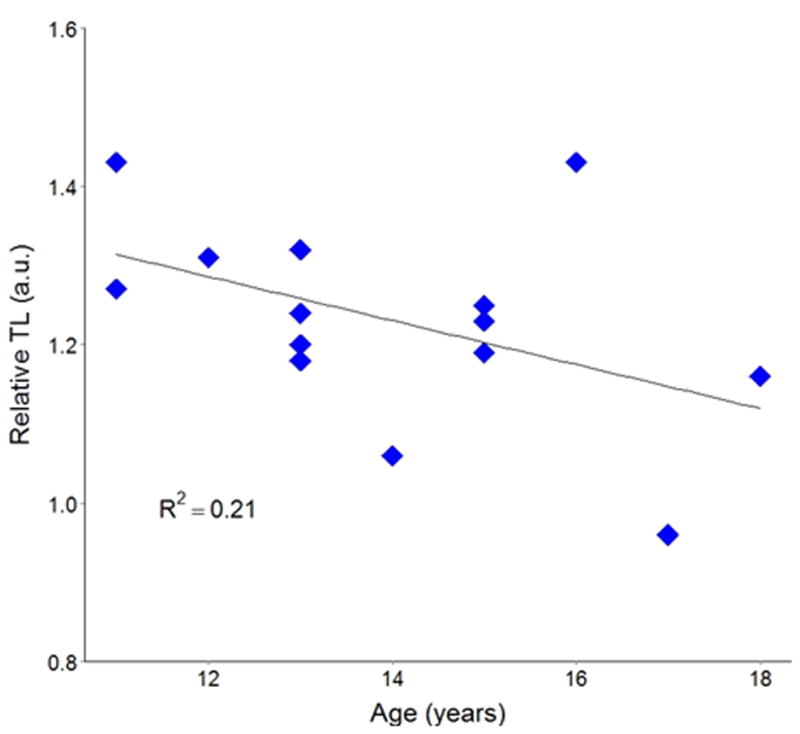
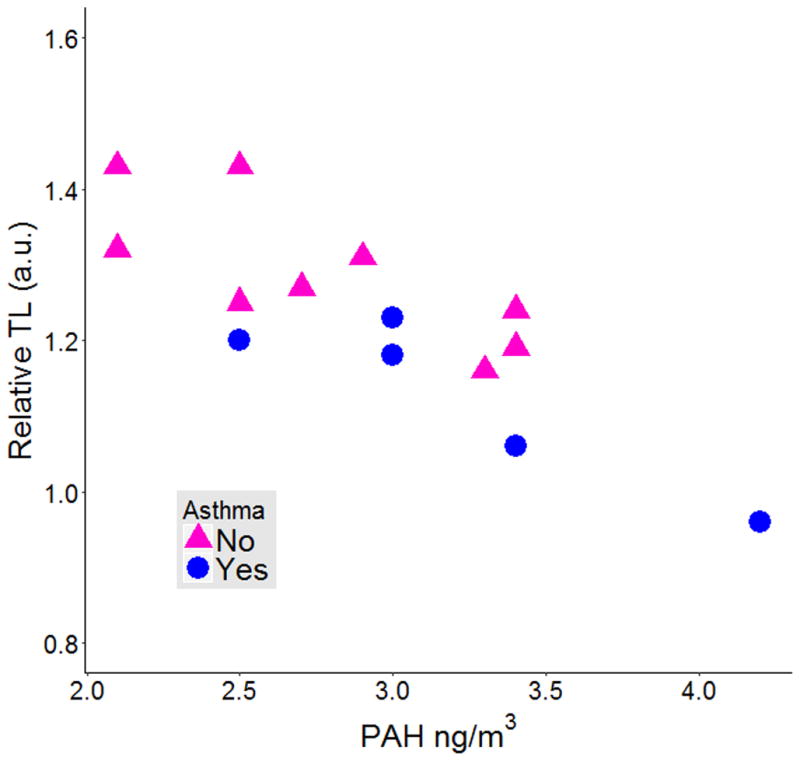
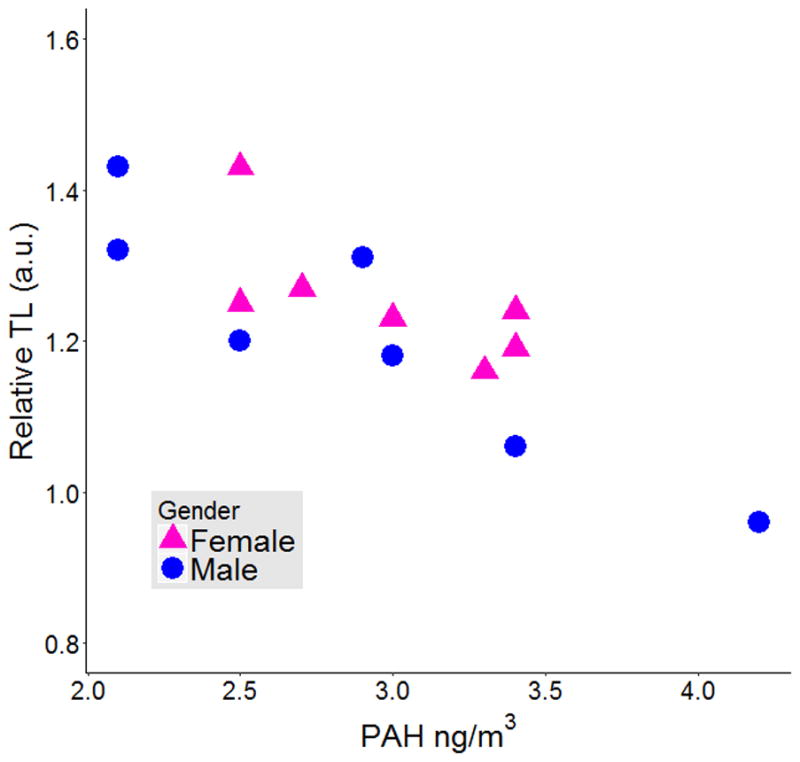
We found an inverse linear relationship between average PAH level and telomere length (TL) (R2 = 0.69), as well as between age and TL (R2 = 0.21). Asthmatics had shorter mean telomere length than non-asthmatics (TLasthmatic=1.13, TLnon-asthmatic=1.29).
Conclusions
These preliminary findings suggest that exposure to ambient PAH may play a role in telomere shortening. -
Keywords:
-
Source:J Occup Environ Med. 59(5):446-452
-
Pubmed ID:28486341
-
Pubmed Central ID:PMC5424623
-
Document Type:
-
Funding:
-
Volume:59
-
Issue:5
-
Download URL:
-
File Type:
 [PDF - 1.00 MB]
 -
Collection(s):
-
Main Document Checksum:urn:sha256:3c10438f3203d1008c61caffa12b843d92846ade5832b51f25a3091a4b52898f
Supporting Files


File Language:
English
 Was this page helpful?
 Found an issue?






CDC STACKS serves as an archival repository of CDC-published products including
scientific findings, journal articles, guidelines, recommendations, or other public health information authored or
co-authored by CDC or funded partners.
As a repository, CDC STACKS retains documents in their original published format to ensure public access to scientific information.
As a repository, CDC STACKS retains documents in their original published format to ensure public access to scientific information.
You May Also Like
COLLECTION
CDC Public Access