


Enhanced genetic characterization of influenza A(H3N2) viruses and vaccine effectiveness by genetic group, 2014–2015
Supporting Files

-
10 01 2016
-
File Language:
English
Details
-
Alternative Title:J Infect Dis
-
Personal Author:Flannery, Brendan ; Zimmerman, Richard K. ; Gubareva, Larisa V. ; Garten, Rebecca J. ; Chung, Jessie R. ; Nowalk, Mary Patricia ; Jackson, Michael L. ; Jackson, Lisa A. ; Monto, Arnold S. ; Ohmit, Suzanne E. ; Belongia, Edward A. ; McLean, Huong Q. ; Gaglani, Manjusha ; Piedra, Pedro A. ; Mishin, Vasiliy P. ; Chesnokov, Anton P. ; Spencer, Sarah ; Thaker, Swathi N. ; Barnes, John R. ; Foust, Angie ; Sessions, Wendy ; Xu, Xiyan ; Katz, Jacqueline ; Fry, Alicia M.
-
Description:Background
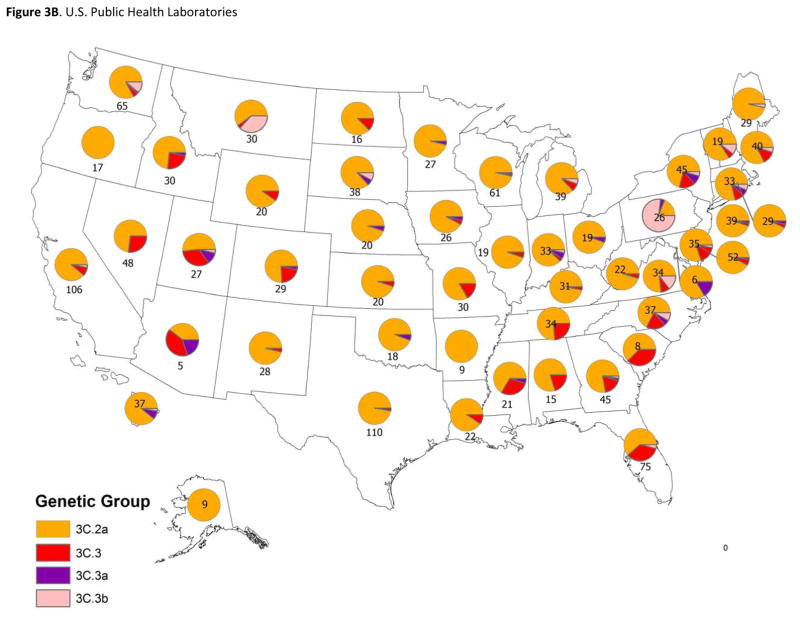
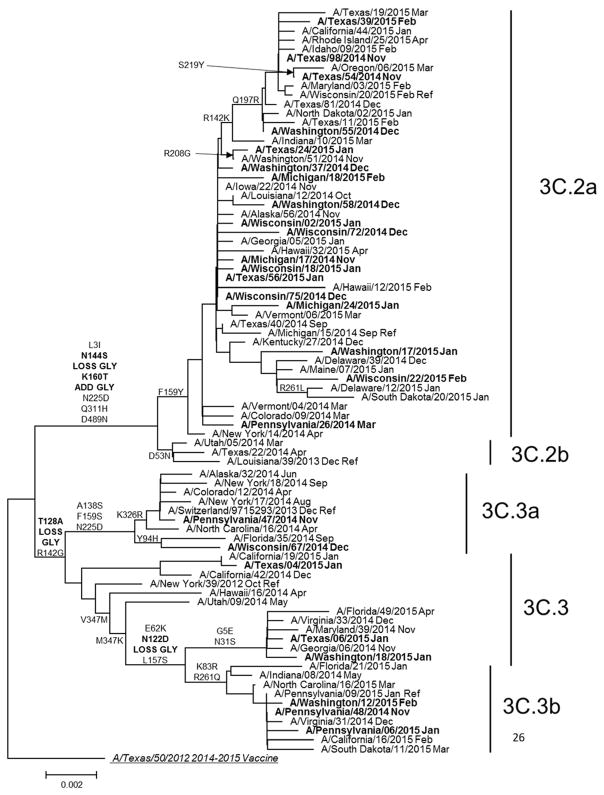
During the 2014–15 US influenza season, expanded genetic characterization of circulating influenza A(H3N2) viruses was used to assess the impact of genetic variability of influenza A(H3N2) viruses on influenza vaccine effectiveness (VE).
Methods
A novel pyrosequencing assay was used to determine genetic group based on hemagglutinin (HA) gene sequences of influenza A(H3N2) viruses from patients enrolled US Flu Vaccine Effectiveness network sites. Vaccine effectiveness was estimated using a test-negative design comparing vaccination among patients infected with influenza A(H3N2) viruses and uninfected patients.
Results
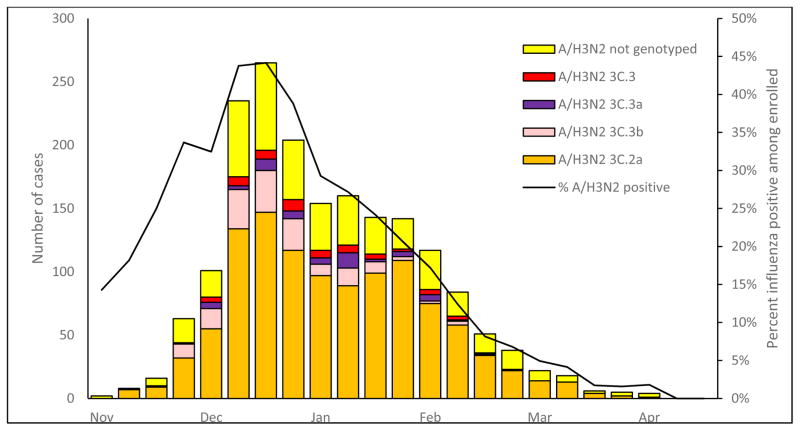
Among 9710 enrollees, 1868 (19%) tested positive for influenza A(H3N2); genetic characterization of 1397 viruses showed 1134 (81%) belonged to one HA genetic group (3C.2a) of antigenically drifted H3N2 viruses. Effectiveness of 2014–15 influenza vaccination varied by A(H3N2) genetic group from 1% (95% confidence interval [CI], −14% to 14%) against illness caused by antigenically drifted A(H3N2) group 3C.2a viruses versus 44% (95% CI, 16% to 63%) against illness caused by vaccine-like A(H3N2) group 3C.3b viruses.
Conclusion
Effectiveness of 2014–15 influenza vaccination varied by genetic group of influenza A(H3N2) virus. Changes in hemagglutinin genes related to antigenic drift were associated with reduced vaccine effectiveness.
-
Subjects:
-
Keywords:
-
Source:J Infect Dis. 214(7):1010-1019
-
Pubmed ID:27190176
-
Pubmed Central ID:PMC5812259
-
Document Type:
-
Funding:UL1 RR024153/RR/NCRR NIH HHSUnited States/ ; U01IP000473/ACL/ACL HHSUnited States/ ; U01 IP001034/IP/NCIRD CDC HHSUnited States/ ; UL1 TR001857/TR/NCATS NIH HHSUnited States/ ; UL1 TR000005/TR/NCATS NIH HHSUnited States/ ; U01 IP000466/IP/NCIRD CDC HHSUnited States/ ; U01 IP000471/IP/NCIRD CDC HHSUnited States/ ; U01 IP000474/IP/NCIRD CDC HHSUnited States/ ; U01 IP001037/IP/NCIRD CDC HHSUnited States/ ; U01 IP000467/IP/NCIRD CDC HHSUnited States/ ; U01 IP000473/IP/NCIRD CDC HHSUnited States/ ; CC999999/ImCDC/Intramural CDC HHSUnited States/
-
Volume:214
-
Issue:7
-
Collection(s):
-
Main Document Checksum:urn:sha256:7ea826cf062737187218fd03441031225ed8f3d4e033316855c7fe554a11e4de
-
Download URL:
-
File Type:
 [PDF
- 1.14 MB
]
[PDF
- 1.14 MB
]
Supporting Files


File Language:
English
ON THIS PAGE



CDC STACKS serves as an archival repository of CDC-published products including
scientific findings,
journal articles, guidelines, recommendations, or other public health information authored or
co-authored by CDC or funded partners.
As a repository, CDC STACKS retains documents in their original published format to ensure public access to scientific information.
As a repository, CDC STACKS retains documents in their original published format to ensure public access to scientific information.
You May Also Like
COLLECTION
CDC Public Access