


Status and progress of hepatitis B control through vaccination in the South-East Asia Region, 1992–2015
Supporting Files

-
1 02 2018
File Language:
English
Details
-
Alternative Title:Vaccine
-
Personal Author:
-
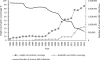
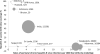
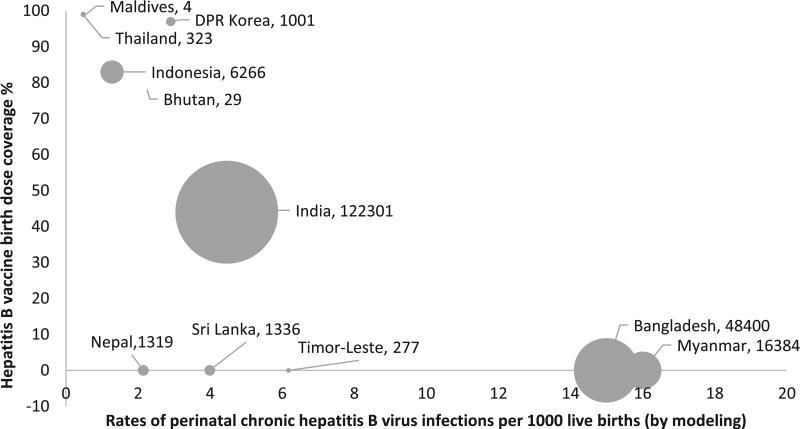
Description:In 2016, the Immunization Technical Advisory Group of the South-East Asia Region (SEAR) endorsed a regional goal to achieve ≤1% prevalence of hepatitis B surface antigen (HBsAg) among 5-year-old children by 2020. Chronic hepatitis B virus (HBV) infection is largely preventable with a birth dose of hepatitis B vaccine (HepB-BD) followed by two to three additional doses. We reviewed the progress towards hepatitis B control through vaccination in SEAR during 1992-2015. We summarized hepatitis B vaccination data and reviewed the literature to determine the prevalence of chronic HBV infection pre- and post-vaccine introduction. We used a mathematical model to determine post-vaccine prevalence of HBsAg among 5 year olds in countries lacking national serosurvey data and estimated the impact of vaccination on disease burden. Regional coverage with three doses of hepatitis B vaccine (HepB3) increased from 56% in 2011 to 87% in 2015. By 2016, 7 of 11 countries had introduced universal HepB-BD. Regional HepB-BD coverage increased from 9% in 2011 to 34% in 2015. In 2015, estimated HBsAg among 5 year olds was 1.1% with variability among countries. Myanmar (3.8%), Timor-Leste (2.7%), Indonesia (1.8%), and India (1%) had the highest prevalence of HBsAg. During 1992-2015, vaccination prevented approximately 16 million chronic HBV infections and 2.6 million related deaths. In 2015, around 197,640 perinatal HBV infections occurred in SEAR with majority occurring in India (62%), Bangladesh (24%), and Myanmar (8%). Myanmar had the highest rate of perinatal chronic HBV infections at 16 per 1000 live births. Despite significant progress in the control of HBV, SEAR needs to secure political commitment for elimination and consider additional strategies, such as promoting health facility births, universal birth dose administration, developing strong coordination between health sectors, and using alternative vaccine delivery methods, to improve HepB-BD coverage and subsequently achieve HBV control and elimination.
-
Subjects:
-
Source:Vaccine. 36(1):6-14
-
Pubmed ID:29174317
-
Pubmed Central ID:PMC5774012
-
Document Type:
-
Funding:
-
Volume:36
-
Issue:1
-
Collection(s):
-
Main Document Checksum:urn:sha256:8b0a7061ca6ca49c74e0c31d27ccd572d75737c5dc4a2f43d4adc0416655a783
-
Download URL:
-
File Type:
 [PDF
- 817.39 KB
]
[PDF
- 817.39 KB
]
Supporting Files


File Language:
English
ON THIS PAGE


CDC STACKS serves as an archival repository of CDC-published products including
scientific findings,
journal articles, guidelines, recommendations, or other public health information authored or
co-authored by CDC or funded partners.
As a repository, CDC STACKS retains documents in their original published format to ensure public access to scientific information.
As a repository, CDC STACKS retains documents in their original published format to ensure public access to scientific information.
You May Also Like
COLLECTION
CDC Public Access