



High Rate of MCR-1-Producing Escherichia coli and Klebsiella pneumoniae among Pigs, Portugal
Supporting Files
Public Domain

-
-
By Show All

File Language:
English
Details
-
Journal Article:Emerging Infectious Diseases
-
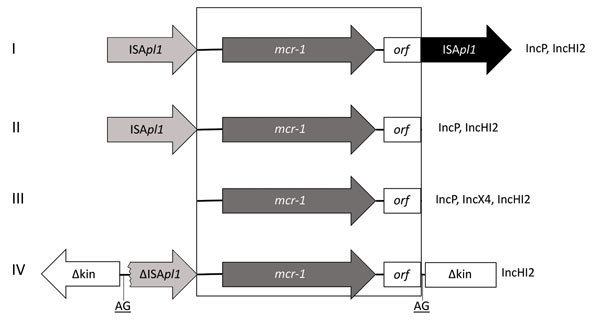
Description:The mcr-1 (mobile colistin resistance 1) gene, which encodes phosphoethanolamine transferase, has been recently identified as a source of acquired resistance to polymyxins in Escherichia coli. Using the SuperPolymyxin selective medium, we prospectively screened 100 pigs at 2 farms in Portugal for polymyxin-resistant Enterobacteriaceae and recovered 98 plasmid-mediated MCR-1-producing isolates. Most isolates corresponded to nonclonally related E. coli belonging to many sequence types; we also found 2 Klebsiella pneumoniae sequence types. The mcr-1 gene was carried on IncHI2 or IncP plasmid backbones. Our finding of a high rate of MCR-1 producers on 2 pig farms in Portugal highlights the diffusion of that colistin-resistance determinant at the farm level. The fact that the pigs received colistin as metaphylaxis in their feed during the 6 weeks before sampling suggests selective pressure.
-
Subjects:
-
ISSN:1080-6059 (online) ; 1080-6040 (print)
-
Publisher:
-
Pubmed ID:29148380
-
Pubmed Central ID:PMC5708242
-
Document Type:
-
Genre:
-
License:
-
Rights:Open Access
-
CIO:
-
Division:
-
Topic:
-
Volume:23
-
Issue:12
-
Download URL:
-
File Type:
 [PDF - 771.74 KB]
-
Collection(s):
-
Main Document Checksum:urn:sha-512:094cc7c3e29c55a45efdccecbcf799fc11442370c3098ae323119e39532d6a35ba555036857c734f1b35c323d4ebcbda49dfc58420dcfc167b2204b9246e175c

Supporting Files


File Language:
English
 Was this page helpful?
 Found an issue?


CDC STACKS serves as an archival repository of CDC-published products including
scientific findings, journal articles, guidelines, recommendations, or other public health information authored or
co-authored by CDC or funded partners.
As a repository, CDC STACKS retains documents in their original published format to ensure public access to scientific information.
You May Also Like
COLLECTION
Emerging Infectious Diseases