



Mycobacterium ulcerans DNA in Bandicoot Excreta in Buruli Ulcer–Endemic Area, Northern Queensland, Australia
Supporting Files
Public Domain

-
Dec 2017
File Language:
English
Details
-
Alternative Title:Emerg Infect Dis
-
Personal Author:
-
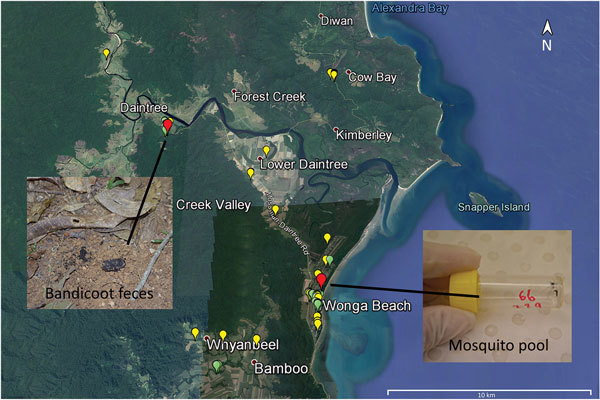
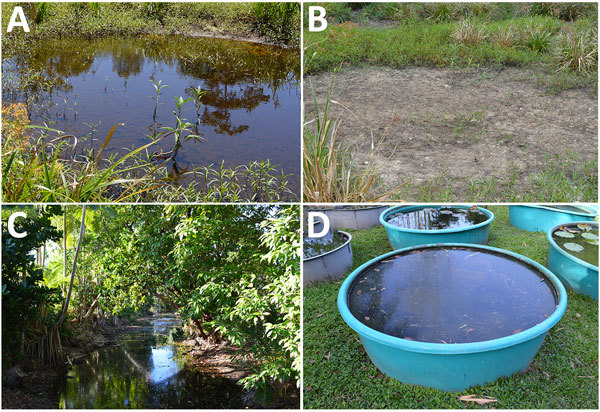
Description:To identify potential reservoirs/vectors of Mycobacterium ulcerans in northern Queensland, Australia, we analyzed environmental samples collected from the Daintree River catchment area, to which Buruli ulcer is endemic, and adjacent coastal lowlands by species-specific PCR. We detected M. ulcerans DNA in soil, mosquitoes, and excreta of bandicoots, which are small terrestrial marsupials.
-
Subjects:
- Animals
- Buruli Ulcer/Epidemiology
- Buruli Ulcer/Microbiology
- Buruli Ulcer/Transmission
- Buruli Ulcer/Veterinary
- Culicidae/Microbiology
- DNA, Bacterial/Genetics
- Endemic Diseases/Veterinary
- Feces/Chemistry
- Feces/Microbiology
- Humans
- Insect Vectors/Microbiology
- Marsupialia/Microbiology
- Mycobacterium Ulcerans
- Polymerase Chain Reaction
- Soil Microbiology
-
Source:Emerg Infect Dis. 23(12):2042-2045.
-
Pubmed ID:29148373
-
Pubmed Central ID:PMC5708234
-
Document Type:
-
Place as Subject:
-
Volume:23
-
Issue:12
-
Download URL:
-
File Type:
 [PDF - 2.79 MB]
 -
Collection(s):
-
Main Document Checksum:urn:sha256:d28b029e82ffdc6b5c29587b06d6a2871eba57768e52954a965d6cb77d1f92db
Supporting Files


File Language:
English
 Was this page helpful?
 Found an issue?

CDC STACKS serves as an archival repository of CDC-published products including
scientific findings, journal articles, guidelines, recommendations, or other public health information authored or
co-authored by CDC or funded partners.
As a repository, CDC STACKS retains documents in their original published format to ensure public access to scientific information.
As a repository, CDC STACKS retains documents in their original published format to ensure public access to scientific information.
You May Also Like
COLLECTION
Emerging Infectious Diseases