



Simultaneous measurement of 3-chlorotyrosine and 3,5-dichlorotyrosine in whole blood, serum, and plasma by isotope dilution HPLC-MS/MS
Supporting Files

-
Mar 13 2016
-
Available in CDC Stacks on 2017-11-17T00:00:00Z
File Language:
English
Details
-
Alternative Title:J Anal Toxicol
-
Personal Author:
-
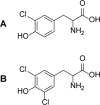
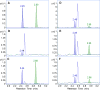
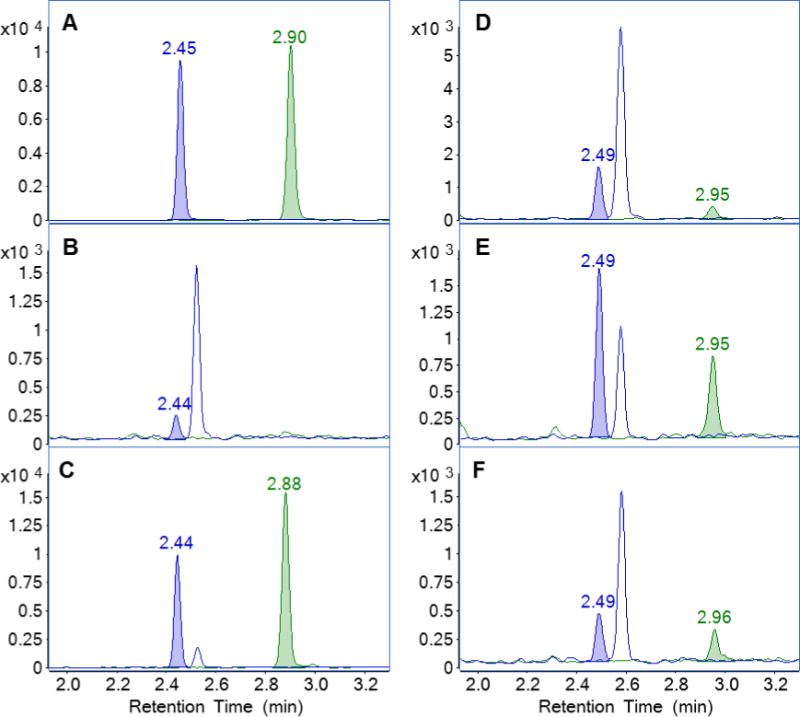
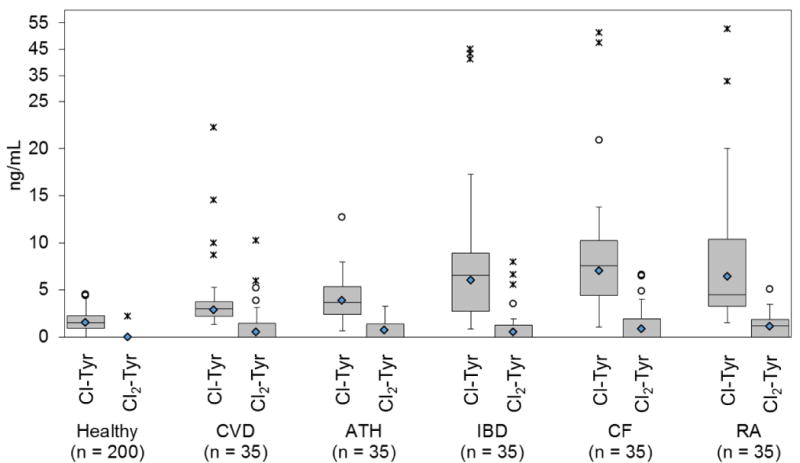
Description:Chlorine is a public health concern and potential threat due to its high reactivity, ease and scale of production, widespread industrial use, bulk transportation, massive stockpiles and history as a chemical weapon. This work describes a new, sensitive and rapid stable isotope dilution method for the retrospective detection and quantitation of two chlorine adducts. The biomarkers 3-chlorotyrosine (Cl-Tyr) and 3,5-dichlorotyrosine (Cl2-Tyr) were isolated from the pronase digest of chlorine exposed whole blood, serum or plasma by solid-phase extraction (SPE), separated by reversed-phase HPLC and detected by tandem mass spectrometry (MS-MS). The calibration range is 2.50-1,000 ng/mL (R2 ≥ 0.998) with a lowest reportable limit (LRL) of 2.50 ng/mL for both analytes, an accuracy of ≥93% and an LOD of 0.443 ng/mL for Cl-Tyr and 0.396 ng/mL for Cl2-Tyr. Inter- and intra-day precision of quality control samples had coefficients of variation of ≤10% and ≤7.0%, respectively. Blood and serum samples from 200 healthy individuals and 175 individuals with chronic inflammatory disease were analyzed using this method to assess background levels of chlorinated tyrosine adducts. Results from patients with no known inflammatory disease history (healthy) showed baseline levels ofSubjects:Source:J Anal Toxicol. 40(4):264-271.Pubmed ID:26977104Pubmed Central ID:PMC5693347Document Type:Funding:Volume:40Issue:4Download URL:File Type:
 [PDF - 593.56 KB]Collection(s):Main Document Checksum:urn:sha256:24db15c77f33a886f42db888a5bd36a9a505df5425e9796fa762381f4ec1b2e1
Supporting Files


File Language:
English
 Was this page helpful?
 Found an issue?




CDC STACKS serves as an archival repository of CDC-published products including
scientific findings, journal articles, guidelines, recommendations, or other public health information authored or
co-authored by CDC or funded partners.
As a repository, CDC STACKS retains documents in their original published format to ensure public access to scientific information.
As a repository, CDC STACKS retains documents in their original published format to ensure public access to scientific information.
You May Also Like
COLLECTION
CDC Public Access