



Two-dimensional high performance liquid chromatography separation and tandem mass spectrometry detection of atrazine and its metabolic and hydrolysis products in urine☆
Supporting Files

-
7 15 2012 ; 7-15-
-
Available in CDC Stacks on 2015-08-07T00:00:00Z
File Language:
English
Details
-
Alternative Title:J Chromatogr B Analyt Technol Biomed Life Sci
-
Personal Author:
-
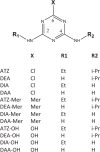
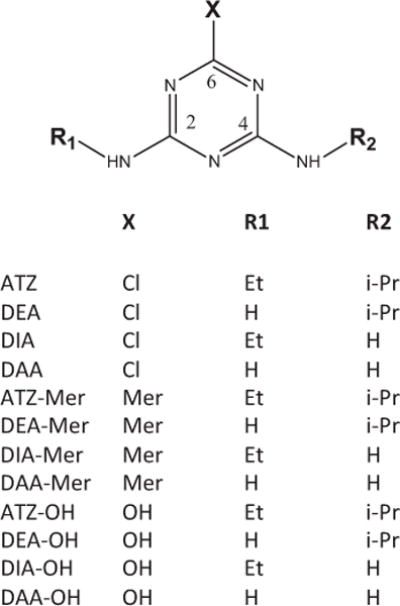
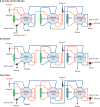
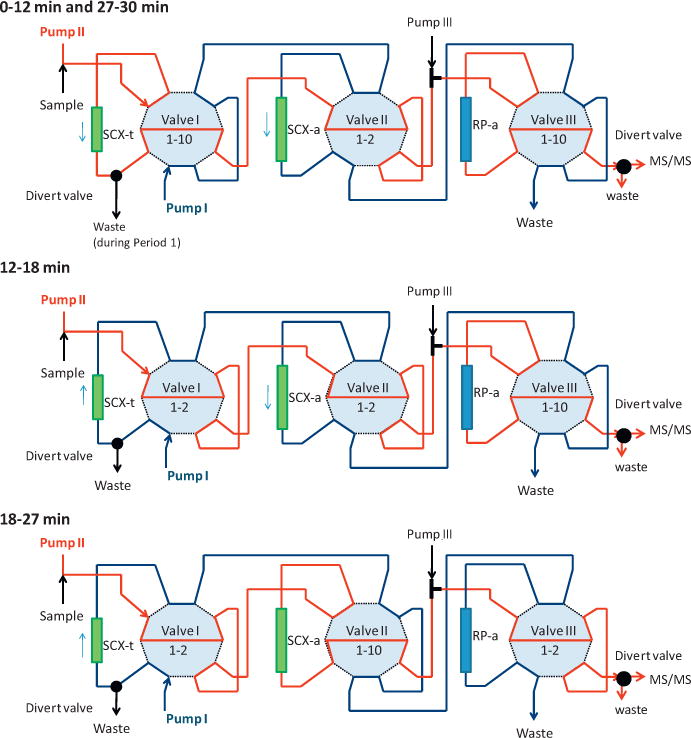
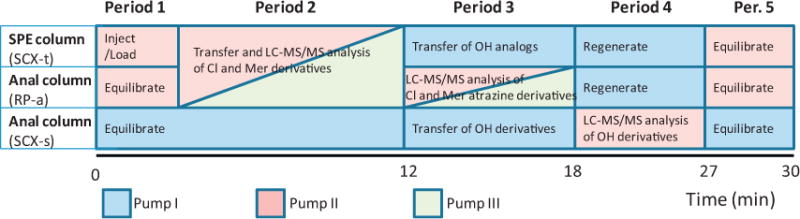
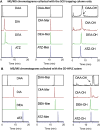
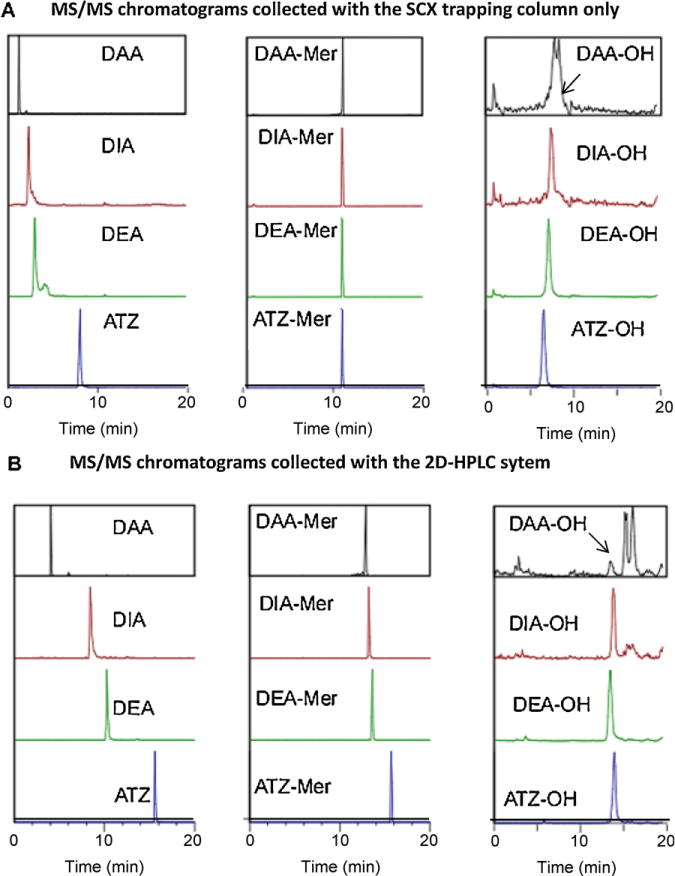
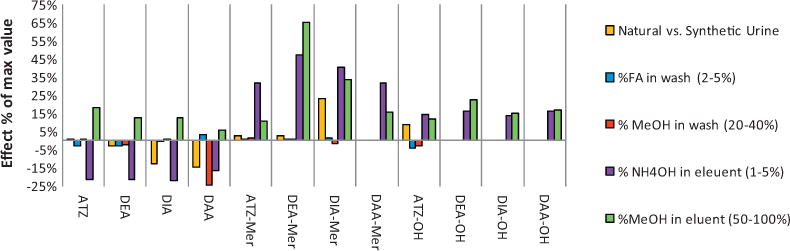
Description:Atrazine 6-chloro-N-ethyl-N'-(1-methylethyl)-1,3,5-triazine-2,4-diamine is the most widely used herbicide in the United States. In recent years, there has been controversy about atrazine's potential endocrine/reproductive and neurological adverse effects in wildlife and humans. The controversy triggered several environmental and epidemiologic studies, and it generated needs for sensitive and selective analytical methods for the quantification of atrazine, atrazine metabolites, and degradation or hydrolysis products. We developed a two-dimensional high performance liquid chromatography (2D-HPLC) method with isotope dilution tandem mass spectrometry detection to measure atrazine in urine, along with 11 atrazine metabolites and hydrolysis products, including 6-chloro (Cl), 6-mercapto (Mer) and 6-hydroxy (OH) derivatives, and their desethyl, desisopropyl and diamino atrazine analogs (DEA, DIA and DAA, respectively). The 2D-HPLC system incorporated strong cation exchange and reversed phase separation modes. This versatile approach can be used for the quantitative determination of all 12 compounds in experimental animals for toxicological studies. The method requires only 10 μL of urine, and the limits of detection (LODs) range from 10 to 50 μg/L. The method can also be applied to assess atrazine exposure in occupational settings by measurement of 6-Cl and 6-Mer analogs, which requires only 100 μL of urine with LODs of 1-5 μg/L. Finally, in combination with automated off-line solid phase extraction before 2D-HPLC, the method can also be applied in non-occupational environmental exposure studies for the determination of -6-Cl and 6-Mer metabolites, using 500 μL of urine and LODs of 0.1-0.5 μg/L.
-
Subjects:
-
Keywords:
-
Source:J Chromatogr B Analyt Technol Biomed Life Sci. 901:1-8
-
Pubmed ID:22721710
-
Pubmed Central ID:PMC4528303
-
Document Type:
-
Funding:
-
Volume:901
-
Download URL:
-
File Type:
 [PDF - 689.54 KB]
 -
Collection(s):
-
Main Document Checksum:urn:sha256:40a528942bdb7ca5cc571d9cdfdec2bada9baaa6a3ea03daf9de39ee1190d2b3
Supporting Files


File Language:
English
 Was this page helpful?
 Found an issue?



CDC STACKS serves as an archival repository of CDC-published products including
scientific findings, journal articles, guidelines, recommendations, or other public health information authored or
co-authored by CDC or funded partners.
As a repository, CDC STACKS retains documents in their original published format to ensure public access to scientific information.
As a repository, CDC STACKS retains documents in their original published format to ensure public access to scientific information.
You May Also Like
COLLECTION
CDC Public Access