


Influence of Hematocrit and Total-Spot Volume on Performance Characteristics of Dried Blood Spots for Newborn Screening
Supporting Files

-
Aug 21 2015
Details
-
Alternative Title:Int J Neonatal Screen
-
Personal Author:
-
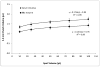
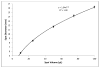
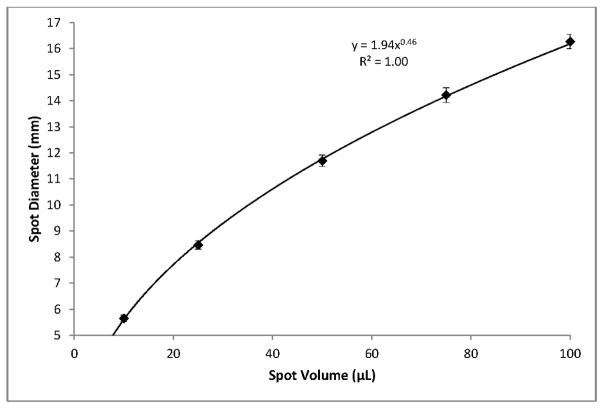
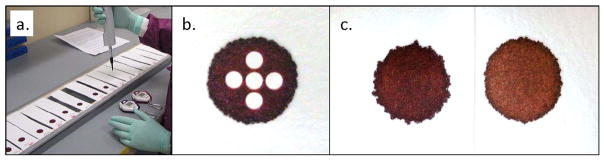
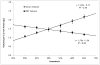
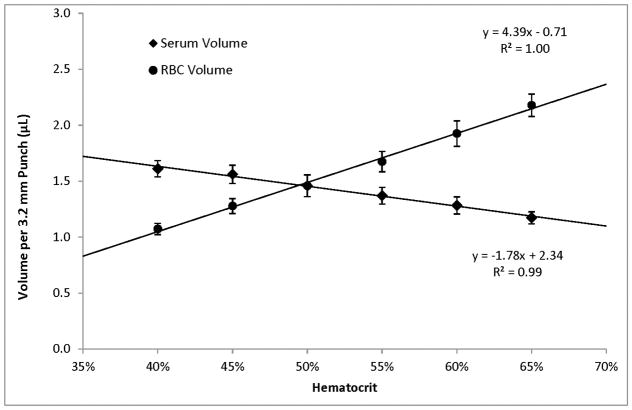
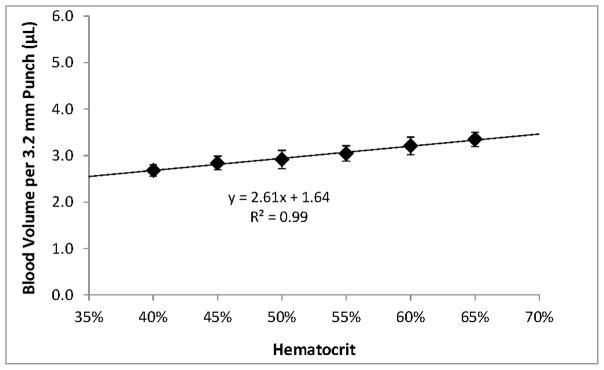
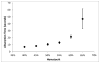
Description:Dried blood spots (DBS) have been used in newborn screening (NBS) tests for over 50 years. The Newborn Screening Quality Assurance Program (NSQAP) at the Centers for Disease Control and Prevention (CDC) conducted studies to assess the individual impacts of hematocrit and total-spot volume on characteristics of DBS samples. Per-punch serum volumes decreased 27%, RBC volumes more than doubled, absorption times increased over 300%, and spot diameters decreased marginally between the hematocrits of 40% to 65%. Per-punch serum and RBC volumes decreased logarithmically with lowering total-spot volumes. Patient hematocrit is an uncontrollable variable and inevitably affects the resulting punch from a DBS sample. It may be possible, though, to identify samples that fall outside of an acceptable range by noting certain physical characteristics of the DBS.
-
Subjects:
-
Source:Int J Neonatal Screen. 1(2):69-78.
-
Pubmed ID:28868497
-
Pubmed Central ID:PMC5580822
-
Document Type:
-
Funding:
-
Volume:1
-
Issue:2
-
Collection(s):
-
Main Document Checksum:urn:sha256:21899745b4b0c68010fe8441ac27b10b66ded7c757e5fd81e289af7b01e758cf
-
Download URL:
-
File Type:
 [PDF
- 438.55 KB
]
[PDF
- 438.55 KB
]
Supporting Files


ON THIS PAGE




CDC STACKS serves as an archival repository of CDC-published products including
scientific findings,
journal articles, guidelines, recommendations, or other public health information authored or
co-authored by CDC or funded partners.
As a repository, CDC STACKS retains documents in their original published format to ensure public access to scientific information.
As a repository, CDC STACKS retains documents in their original published format to ensure public access to scientific information.
You May Also Like
COLLECTION
CDC Public Access