



A cross-sectional analysis of radiographic ankle osteoarthritis frequency and associated factors: The Johnston County Osteoarthritis Project
Supporting Files

-
Feb 15 2017
-
Available in CDC Stacks on April 01, 2018, 12:00 AM
File Language:
English
Details
-
Alternative Title:J Rheumatol
-
Personal Author:
-
Description:Objective
As there are no epidemiologic data regarding the frequency of ankle OA in a general population, we sought to explore this disabling condition in a large, well-characterized community-based cohort of older individuals.
Methods
Cross-sectional data, including ankle radiographs, were from the most recent data collection (2013–5) of the Johnston County OA Project. Radiographic ankle OA (rAOA) was defined as a Kellgren-Lawrence Grade (KLG) of ≥ 2 on weight-bearing lateral and mortise radiographs. The presence of pain, aching, or stiffness in the ankles as well as history of ankle injury (limiting ability to walk for at least 2 days) were assessed. Chi-square statistics (categorical variables) and t-tests (continuous variables) were used to compare all participant characteristics by rAOA status. Joint-based logistic regression models with generalized estimating equations were used to examine associations of rAOA and covariates of interest (age, BMI, sex, race, ankle symptoms, and injury history).
Results
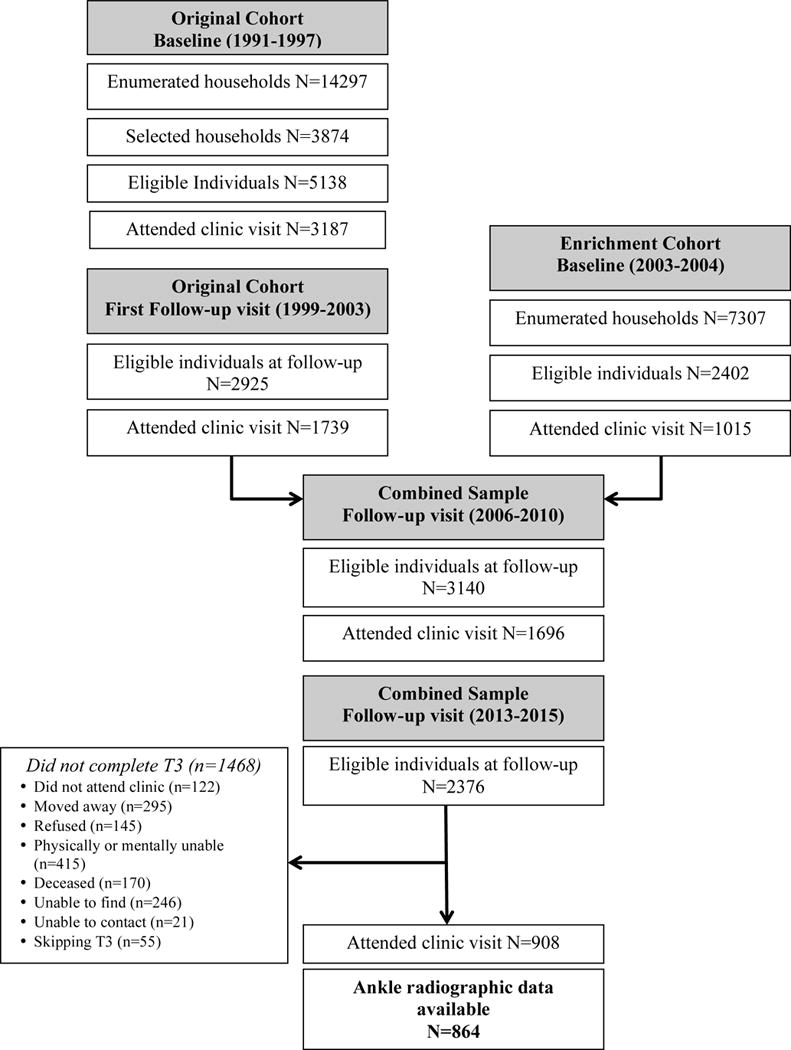
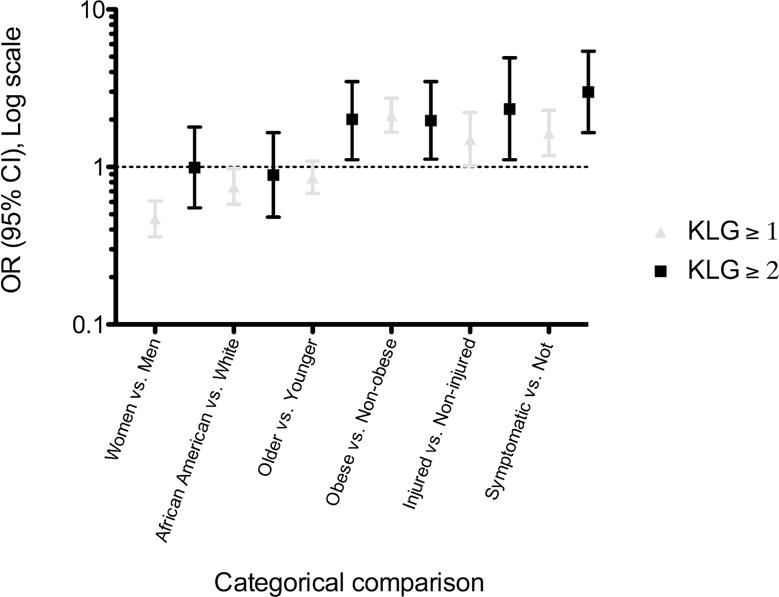
Of 864 participants with available data, 68% were women, 34% were African American, with a mean age of 72 years and BMI of 31 kg/m2. Nearly 7% of this sample had rAOA. Increasing age, high BMI, history of ankle injury, and presence of ankle symptoms were all independently associated with greater odds of having rAOA; no significant differences were seen by sex or race.
Conclusions
The frequency of rAOA was higher than estimates generally quoted in the literature. While injury was an important contributor, other factors such as age, BMI, and symptoms, were also significantly associated with rAOA. -
Subjects:
-
Source:J Rheumatol. 44(4):499-504.
-
Pubmed ID:28202744
-
Pubmed Central ID:PMC5468490
-
Document Type:
-
Funding:
-
Volume:44
-
Issue:4
-
Download URL:
-
File Type:
 [PDF - 235.07 KB]
 -
Collection(s):
-
Main Document Checksum:urn:sha256:2a6eba03f2b43c56fe40df2e930d7b387a0c4b885817972af7c4b6910387d751
Supporting Files


File Language:
English
 Was this page helpful?
 Found an issue?


CDC STACKS serves as an archival repository of CDC-published products including
scientific findings, journal articles, guidelines, recommendations, or other public health information authored or
co-authored by CDC or funded partners.
As a repository, CDC STACKS retains documents in their original published format to ensure public access to scientific information.
As a repository, CDC STACKS retains documents in their original published format to ensure public access to scientific information.
You May Also Like
COLLECTION
CDC Public Access