


Use of Blood Donor Screening Data to Estimate Zika Virus Incidence, Puerto Rico, April–August 2016
Supporting Files
Public Domain

-
May 15 2017
File Language:
English
Details
-
Alternative Title:Emerg Infect Dis
-
Personal Author:Chevalier, Michelle S. ; Biggerstaff, Brad J. ; Basavaraju, Sridhar V. ; Ocfemia, M. Cheryl Bañez ; Alsina, Jose O. ; Climent-Peris, Consuelo ; Moseley, Robin R. ; Chung, Koo-Whang ; Rivera-García, Brenda ; Bello-Pagán, Melissa ; Pate, Lisa L. ; Galel, Susan A. ; Williamson, Phillip ; Kuehnert, Matthew J.
-
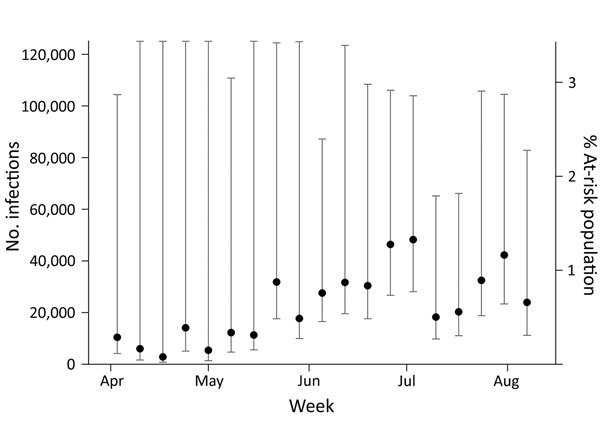
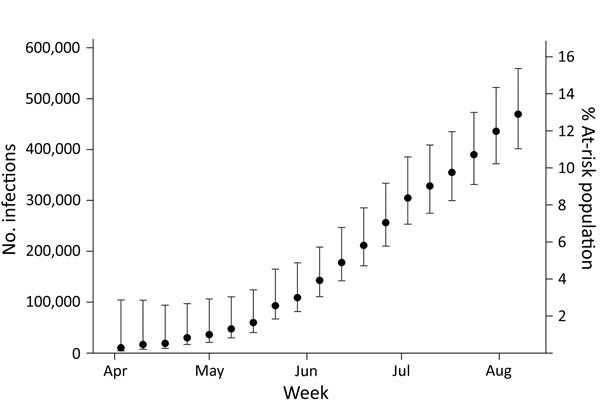
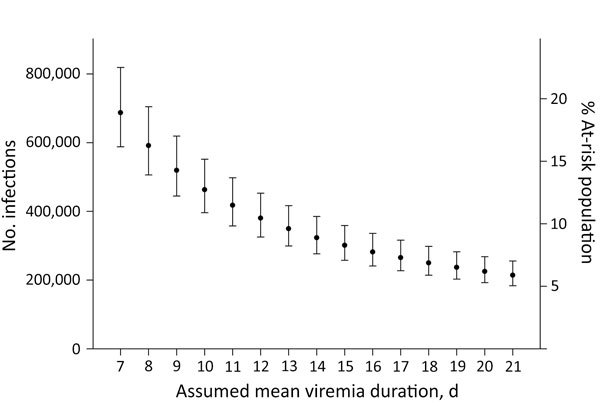
Description:Puerto Rico has been heavily impacted by Zika virus, a mosquitoborne flavivirus that emerged in the Americas during 2015. Although most persons with Zika virus show no symptoms, the virus can cause neurologic and other complications, including fetal microcephaly. Local Zika virus transmission in Puerto Rico has been reported since December 2015. To prevent transfusion-associated transmission, local blood collection ceased in March 2016 but resumed in April 2016 after Zika virus screening of blood donations became available. Using data from screening of blood donations collected by the 2 largest blood centers in Puerto Rico during April 3-August 12, 2016, and assuming a 9.9-day duration of viremia, we estimated that 469,321 persons in Puerto Rico were infected during this period, for an estimated cumulative incidence of 12.9%. Results from blood donation screening during arboviral outbreaks can supplement routine clinical and surveillance data for improved targeting of prevention efforts.
-
Subjects:
-
Source:Emerg Infect Dis. 23(5):790-795.
-
Document Type:
-
Genre:
-
Place as Subject:
-
Volume:23
-
Issue:5
-
Collection(s):
-
Main Document Checksum:urn:sha-512:73353fed0d2825ebf9d39ae097579b32a7570332e4e52149ab3e08530f02e15af5873dc002a0795ac6d971c7eb902927190edb4b3d7a19c13231a586fe459b5c
-
Download URL:
-
File Type:
 [PDF
- 1.22 MB
]
[PDF
- 1.22 MB
]
Supporting Files


File Language:
English
ON THIS PAGE


CDC STACKS serves as an archival repository of CDC-published products including
scientific findings,
journal articles, guidelines, recommendations, or other public health information authored or
co-authored by CDC or funded partners.
As a repository, CDC STACKS retains documents in their original published format to ensure public access to scientific information.
As a repository, CDC STACKS retains documents in their original published format to ensure public access to scientific information.
You May Also Like
COLLECTION
Emerging Infectious Diseases