



Zika Virus RNA Replication and Persistence in Brain and Placental Tissue
Supporting Files
Public Domain

-
Mar 15 2017
Details
-
Alternative Title:Emerg Infect Dis
-
Personal Author:Bhatnagar, Julu ; Rabeneck, Demi B. ; Martines, Roosecelis B. ; Reagan-Steiner, Sarah ; Ermias, Yokabed ; Estetter, Lindsey B.C. ; Suzuki, Tadaki ; Ritter, Jana ; Keating, M. Kelly ; Hale, Gillian ; Gary, Joy ; Muehlenbachs, Atis ; Lambert, Amy ; Lanciotti, Robert ; Oduyebo, Titilope ; Meaney-Delman, Dana ; Bolaños, Fernando ; Saad, Edgar Alberto Parra ; Shieh, Wun-Ju ; Zaki, Sherif R.
-
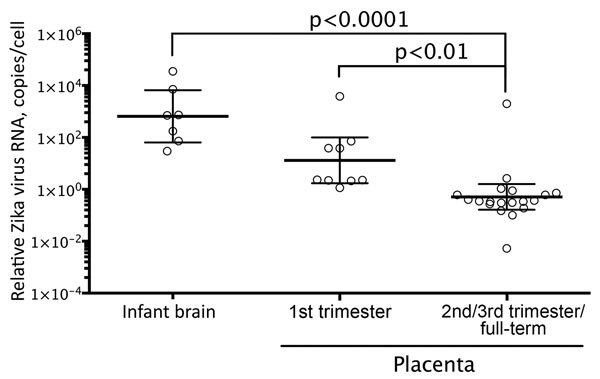
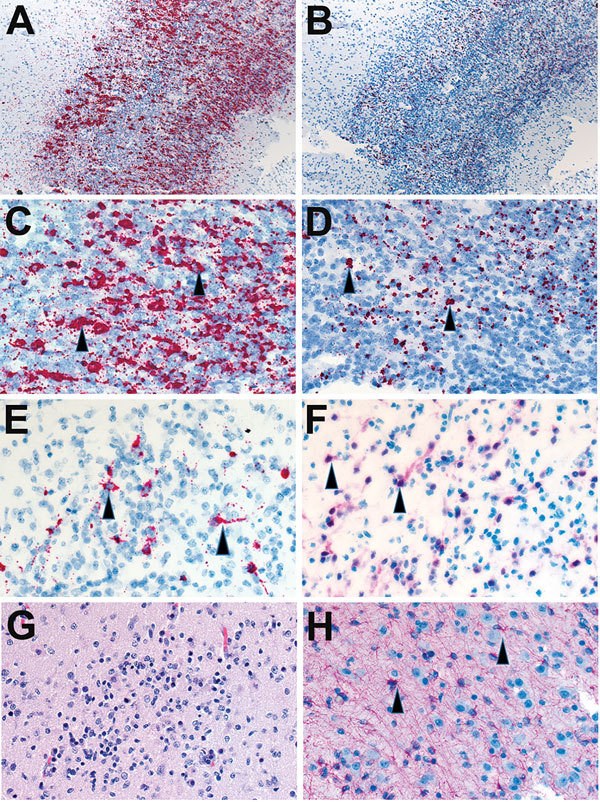
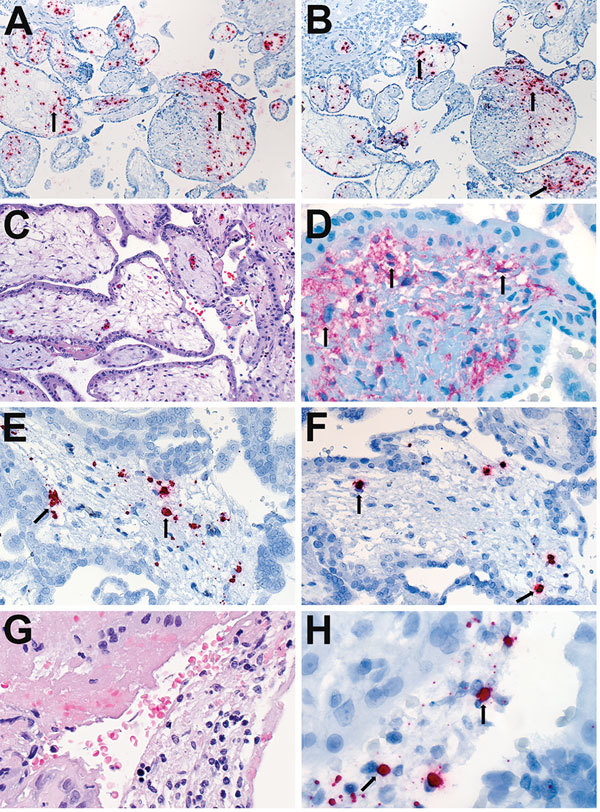
Description:Zika virus is causally linked with congenital microcephaly and may be associated with pregnancy loss. However, the mechanisms of Zika virus intrauterine transmission and replication and its tropism and persistence in tissues are poorly understood. We tested tissues from 52 case-patients: 8 infants with microcephaly who died and 44 women suspected of being infected with Zika virus during pregnancy. By reverse transcription PCR, tissues from 32 (62%) case-patients (brains from 8 infants with microcephaly and placental/fetal tissues from 24 women) were positive for Zika virus. In situ hybridization localized replicative Zika virus RNA in brains of 7 infants and in placentas of 9 women who had pregnancy losses during the first or second trimester. These findings demonstrate that Zika virus replicates and persists in fetal brains and placentas, providing direct evidence of its association with microcephaly. Tissue-based reverse transcription PCR extends the time frame of Zika virus detection in congenital and pregnancy-associated infections.
-
Subjects:
-
Source:Emerg Infect Dis. 23(3):405-414.
-
Document Type:
-
Volume:23
-
Issue:3
-
Download URL:
-
File Type:
 [PDF - 3.90 MB]
 -
Collection(s):
-
Main Document Checksum:urn:sha-512:6cf9b6aa7379cc924d285dd474add201b07f4e05ed6437d4a2d34f5b015e29c28a138a8f7ab8d6e7e284075c041fe085106eee83e2cf2b4f9ab2c44b6aadb1ab
Supporting Files


 Was this page helpful?
 Found an issue?



CDC STACKS serves as an archival repository of CDC-published products including
scientific findings, journal articles, guidelines, recommendations, or other public health information authored or
co-authored by CDC or funded partners.
As a repository, CDC STACKS retains documents in their original published format to ensure public access to scientific information.
As a repository, CDC STACKS retains documents in their original published format to ensure public access to scientific information.
You May Also Like
COLLECTION
Emerging Infectious Diseases