



Detection of Murine Leukemia Virus or Mouse DNA in Commercial RT-PCR Reagents and Human DNAs
Supporting Files
Public Domain

-
Dec 20 2011
File Language:
English
Details
-
Alternative Title:PLoS One
-
Personal Author:
-
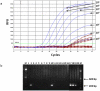
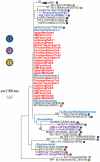
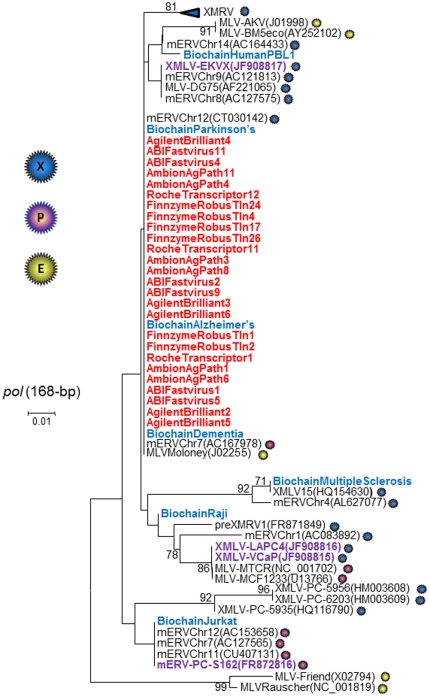
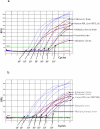
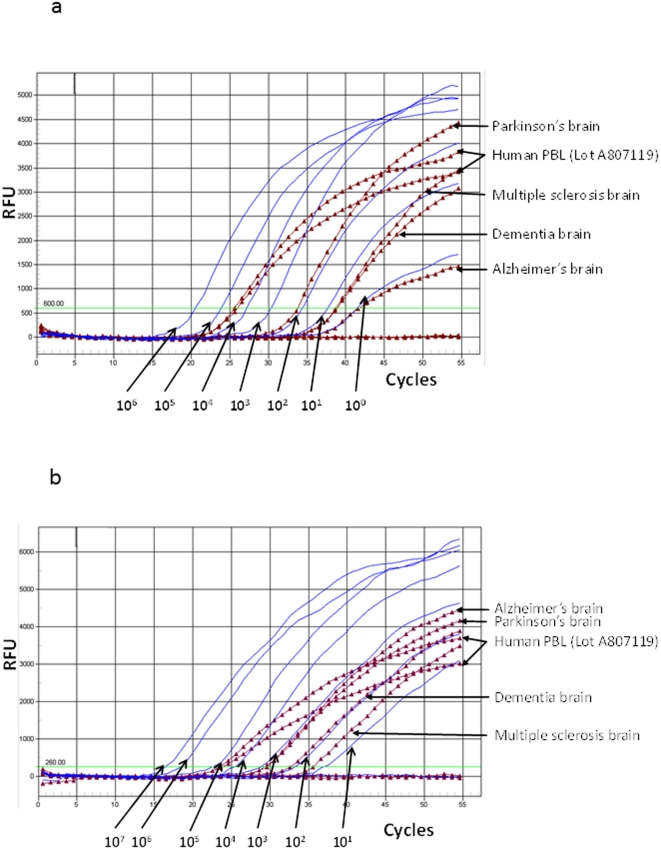
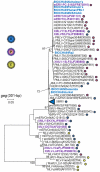
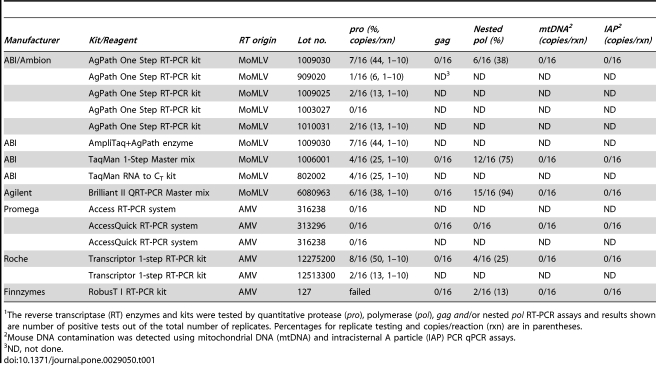
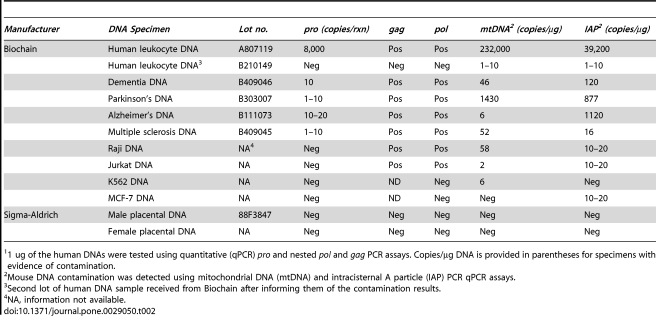
Description:The xenotropic murine leukemia virus (MLV)-related viruses (XMRV) have been reported in persons with prostate cancer, chronic fatigue syndrome, and less frequently in blood donors. Polytropic MLVs have also been described in persons with CFS and blood donors. However, many studies have failed to confirm these findings, raising the possibility of contamination as a source of the positive results. One PCR reagent, Platinum Taq polymerase (pol) has been reported to contain mouse DNA that produces false-positive MLV PCR results. We report here the finding of a large number of PCR reagents that have low levels of MLV sequences. We found that recombinant reverse-transcriptase (RT) enzymes from six companies derived from either MLV or avian myeloblastosis virus contained MLV pol DNA sequences but not gag or mouse DNA sequences. Sequence and phylogenetic analysis showed high relatedness to Moloney MLV, suggesting residual contamination with an RT-containing plasmid. In addition, we identified contamination with mouse DNA and a variety of MLV sequences in commercially available human DNAs from leukocytes, brain tissues, and cell lines. These results identify new sources of MLV contamination and highlight the importance of careful pre-screening of commercial specimens and diagnostic reagents to avoid false-positive MLV PCR results.
-
Subjects:
-
Source:PLoS One. 2011; 6(12).
-
Document Type:
-
Volume:6
-
Issue:12
-
Download URL:
-
File Type:
 [PDF - 656.15 KB]
 -
Collection(s):
-
Main Document Checksum:urn:sha256:3ef6af6d94b7e9b7c36f68819f3102be44f7888036bb0710a531024bb6264924
Supporting Files


File Language:
English
 Was this page helpful?
 Found an issue?




CDC STACKS serves as an archival repository of CDC-published products including
scientific findings, journal articles, guidelines, recommendations, or other public health information authored or
co-authored by CDC or funded partners.
As a repository, CDC STACKS retains documents in their original published format to ensure public access to scientific information.
As a repository, CDC STACKS retains documents in their original published format to ensure public access to scientific information.
You May Also Like
COLLECTION
CDC Public Access