


The Burden of Hospitalized Lower Respiratory Tract Infection due to Respiratory Syncytial Virus in Rural Thailand
Supporting Files
Public Domain

-
Nov 30 2010
-
File Language:
English
Details
-
Alternative Title:PLoS One
-
Personal Author:
-
Description:Background
We describe the epidemiology of hospitalized RSV infections for all age groups from population-based surveillance in two rural provinces in Thailand.
Methods
From September 1, 2003 through December 31, 2007, we enrolled hospitalized patients with acute lower respiratory tract illness, who had a chest radiograph ordered by the physician, from all hospitals in SaKaeo and Nakhom Phanom Provinces. We tested nasopharyngeal specimens for RSV with reverse transcriptase polymerase chain reaction (RT-PCR) assays and paired-sera from a subset of patients with IgG enzyme immunoassay. Rates were adjusted for enrollment.
Results
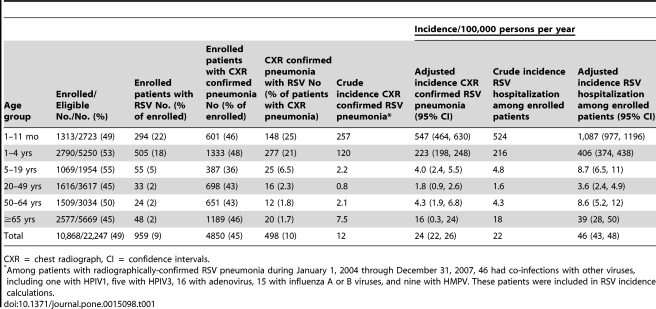
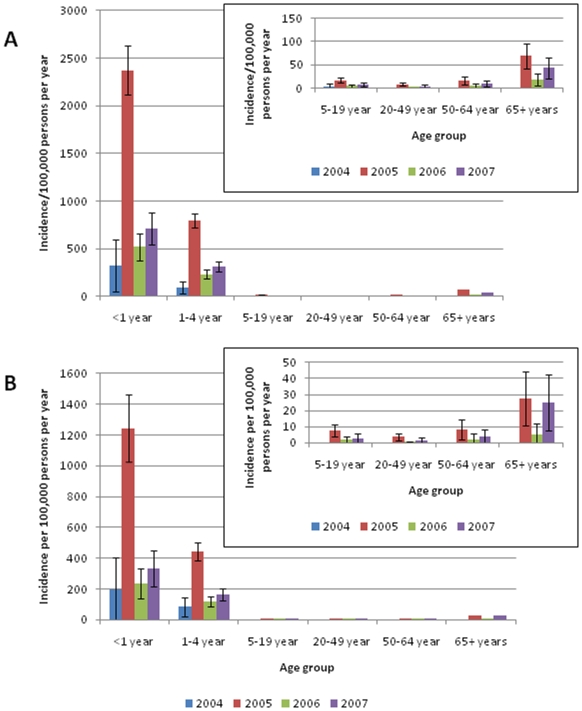
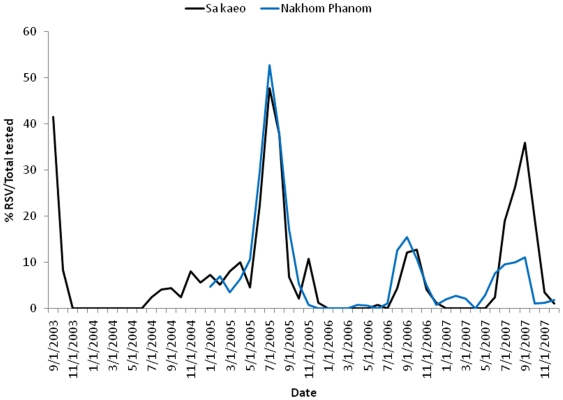
Among 11,097 enrolled patients, 987 (8.9%) had RSV infection. Rates of hospitalized RSV infection overall (and radiographically-confirmed pneumonia) were highest among children aged <1 year: 1,067/100,000 (534/100,000 radiographically-confirmed pneumonia) and 1–4 year: 403/100,000 (222/100,000), but low among enrolled adults aged ≥65 years: 42/100,000. Age <1 year (adjusted odds ratio [aOR] = 13.2, 95% confidence interval [CI] 7.7, 22.5) and 1–4 year (aOR = 8.3, 95% CI 5.0, 13.9) were independent predictors of hospitalized RSV infection.
Conclusions
The incidence of hospitalized RSV lower respiratory tract illness among children <5 years was high in rural Thailand. Efforts to prevent RSV infection could substantially reduce the pneumonia burden in children aged <5 years.
-
Subjects:
-
Source:PLoS One. 5(11).
-
Document Type:
-
Place as Subject:
-
Volume:5
-
Issue:11
-
Collection(s):
-
Main Document Checksum:urn:sha-512:c32c9d7989081a67b82bfb2e13536d519ac04641895853ac591bb0a27ea0fb9b7d8cfa3ab6d7d49fa5c324fa6a4ad5b08478c29b2a8d0a4eed854e1fb75af801
-
Download URL:
-
File Type:
 [PDF
- 426.42 KB
]
[PDF
- 426.42 KB
]
Supporting Files


File Language:
English
ON THIS PAGE



CDC STACKS serves as an archival repository of CDC-published products including
scientific findings,
journal articles, guidelines, recommendations, or other public health information authored or
co-authored by CDC or funded partners.
As a repository, CDC STACKS retains documents in their original published format to ensure public access to scientific information.
As a repository, CDC STACKS retains documents in their original published format to ensure public access to scientific information.
You May Also Like
COLLECTION
CDC Public Access