


Oxidized phospholipids as biomarkers of tissue and cell damage with a focus on cardiolipin
Supporting Files

-
Mar 23 2012
-
File Language:
English
Details
-
Alternative Title:Biochim Biophys Acta
-
Personal Author:
-
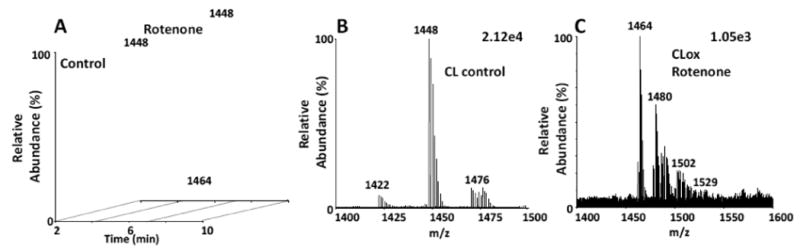
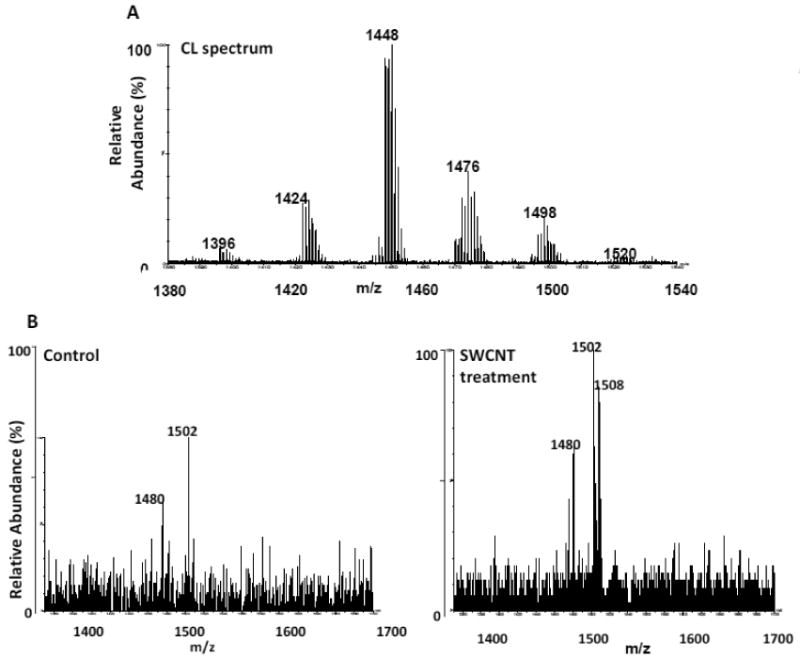
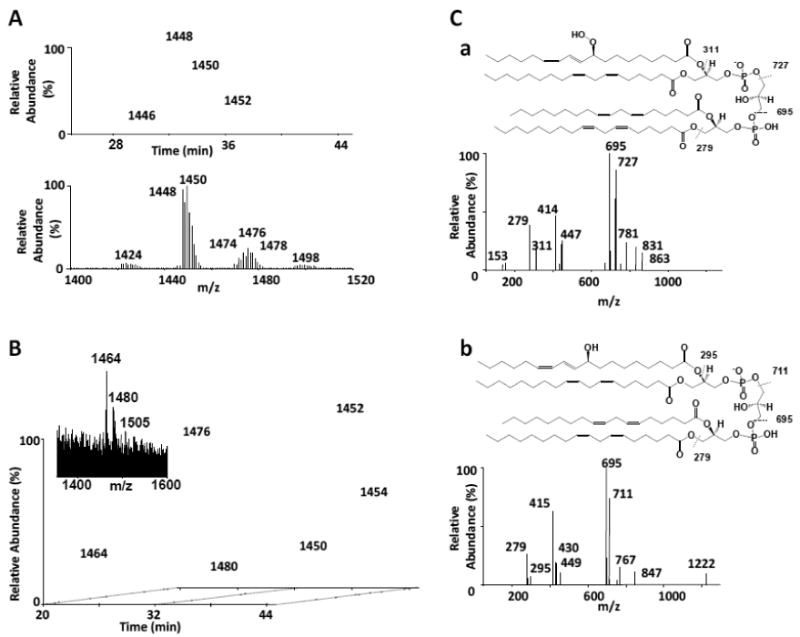
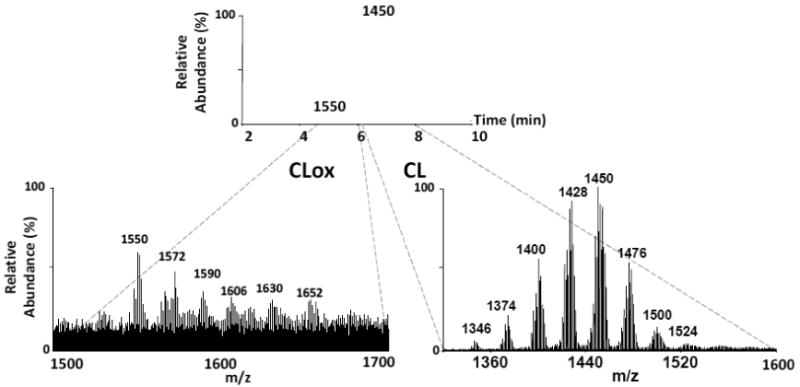
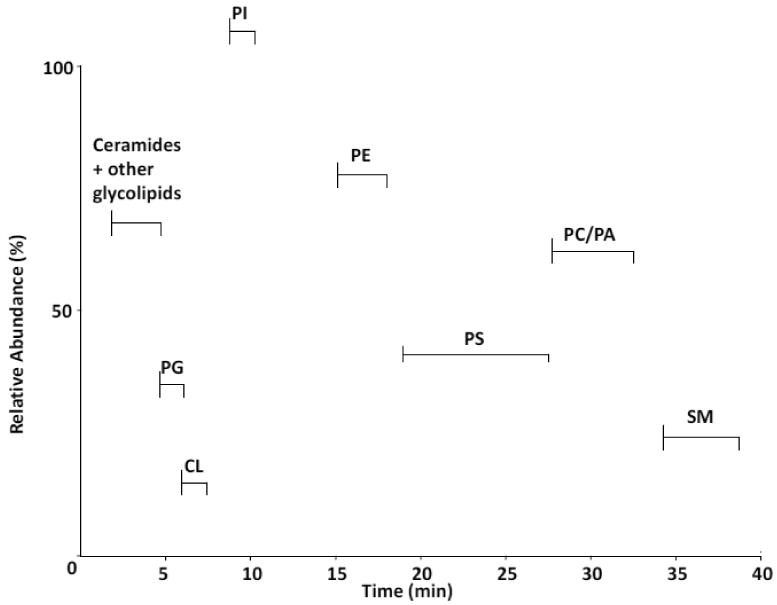
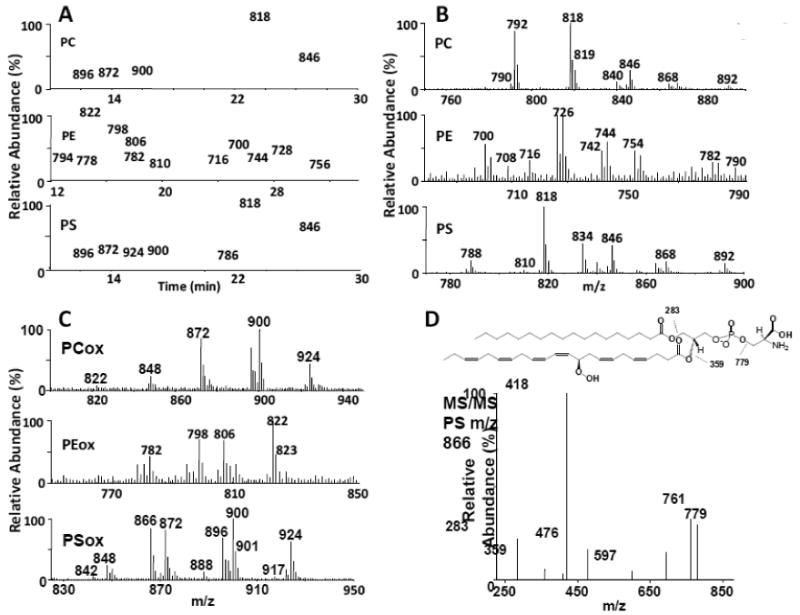
Description:Oxidized phospholipid species are important, biologically relevant, lipid signaling molecules that usually exist in low abundance in biological tissues. Along with their inherent stability issues, these oxidized lipids present themselves as a challenge in their detection and identification. Often times, oxidized lipid species can co-chromatograph with non-oxidized species making the detection of the former extremely difficult, even with the use of mass spectrometry. In this study, a normal-phase and reverse-phase two dimensional high performance liquid chromatography (HPLC)-mass spectrometric system was applied to separate oxidized phospholipids from their non-oxidized counterparts, allowing unambiguous detection in a total lipid extract. We have utilized bovine heart cardiolipin as well as commercially available tetralinoleoyl cardiolipin oxidized with cytochrome c (cyt c) and hydrogen peroxide as well as with lipoxygenase to test the separation power of the system. Our findings indicate that oxidized species of not only cardiolipin, but other phospholipid species, can be effectively separated from their non-oxidized counterparts in this two dimensional system. We utilized three types of biological tissues and oxidative insults, namely rotenone treatment of lymphocytes to induce mitochondrial damage and cell death, pulmonary inhalation exposure to single walled carbon nanotubes, as well as total body irradiation, in order to identify cardiolipin oxidation products, critical to the cell damage/cell death pathways in these tissues following cellular stress/injury. Our results indicate that selective cardiolipin (CL) oxidation is a result of a non-random free radical process. In addition, we assessed the ability of the system to identify CL oxidation products in the brain, a tissue known for its extreme complexity and diversity of CL species. The ability of the two dimensional HPLC-mass spectrometric system to detect and characterize oxidized lipid products will allow new studies to be formulated to probe the answers to biologically important questions with regard to oxidative lipidomics and cellular insult. This article is part of a Special Issue entitled: Oxidized phospholipids - their properties and interactions with proteins.
-
Subjects:
-
Source:Biochim Biophys Acta. 2012; 1818(10):2413-2423.
-
Pubmed ID:22464971
-
Pubmed Central ID:PMC3398793
-
Document Type:
-
Funding:R01 HL070755/HL/NHLBI NIH HHS/United States ; NS061817/NS/NINDS NIH HHS/United States ; R01 ES020693/ES/NIEHS NIH HHS/United States ; R01 OH008282/OH/NIOSH CDC HHS/United States ; U19 AI068021/AI/NIAID NIH HHS/United States ; P01 HL070807/HL/NHLBI NIH HHS/United States ; ES021068/ES/NIEHS NIH HHS/United States ; HL094488/HL/NHLBI NIH HHS/United States ; R01 NS076511/NS/NINDS NIH HHS/United States ; ES020693/ES/NIEHS NIH HHS/United States ; R01 HL094488/HL/NHLBI NIH HHS/United States ; R01 NS061817/NS/NINDS NIH HHS/United States ; HL70755/HL/NHLBI NIH HHS/United States ; R21 ES021068/ES/NIEHS NIH HHS/United States
-
Volume:1818
-
Issue:10
-
Collection(s):
-
Main Document Checksum:urn:sha256:b3d5c69fca735a0cd54d81b109b644ba2806c07487d1fe9761a03a243c540cbf
-
Download URL:
-
File Type:
 [PDF
- 608.05 KB
]
[PDF
- 608.05 KB
]
Supporting Files


File Language:
English
ON THIS PAGE







CDC STACKS serves as an archival repository of CDC-published products including
scientific findings,
journal articles, guidelines, recommendations, or other public health information authored or
co-authored by CDC or funded partners.
As a repository, CDC STACKS retains documents in their original published format to ensure public access to scientific information.
As a repository, CDC STACKS retains documents in their original published format to ensure public access to scientific information.
You May Also Like
COLLECTION
CDC Public Access