


Cell Wall N-Linked Mannoprotein Biosynthesis Requires Goa1p, a Putative Regulator of Mitochondrial Complex I in Candida albicans
Supporting Files

-
Jan 25 2016
-
File Language:
English
Details
-
Alternative Title:PLoS One
-
Personal Author:
-
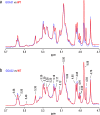
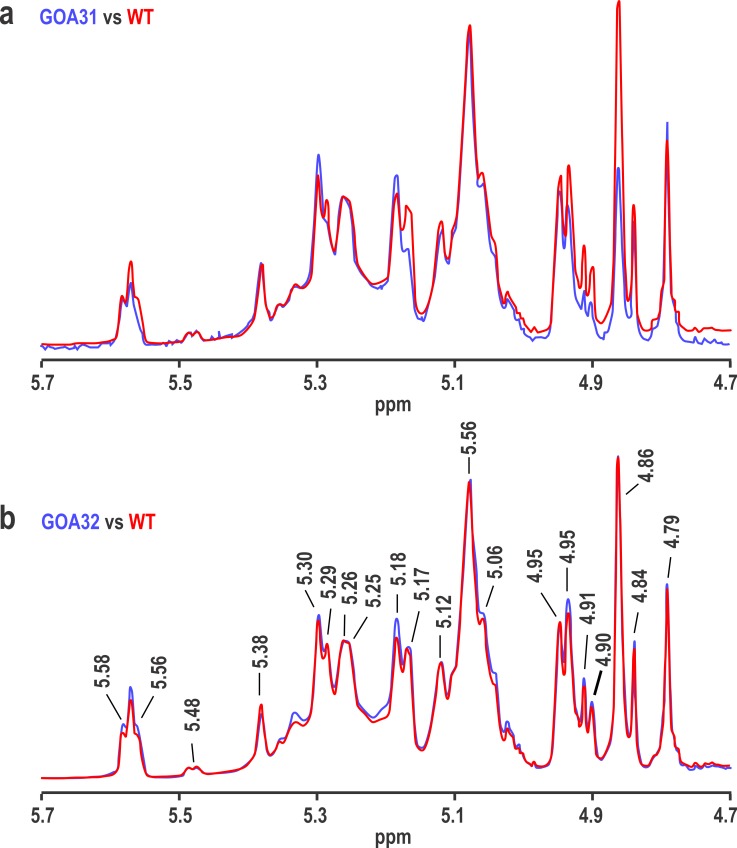
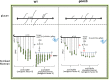
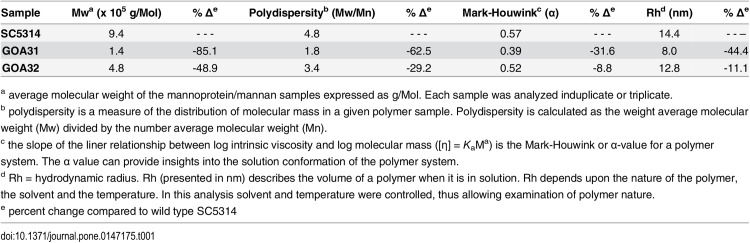
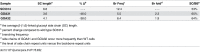
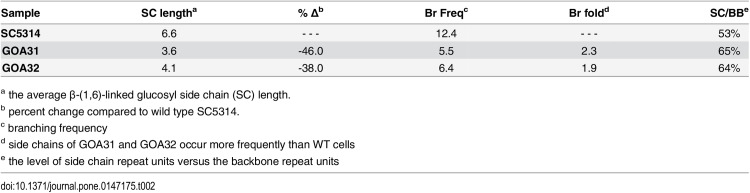
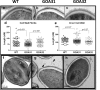
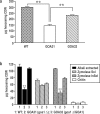
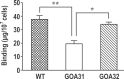
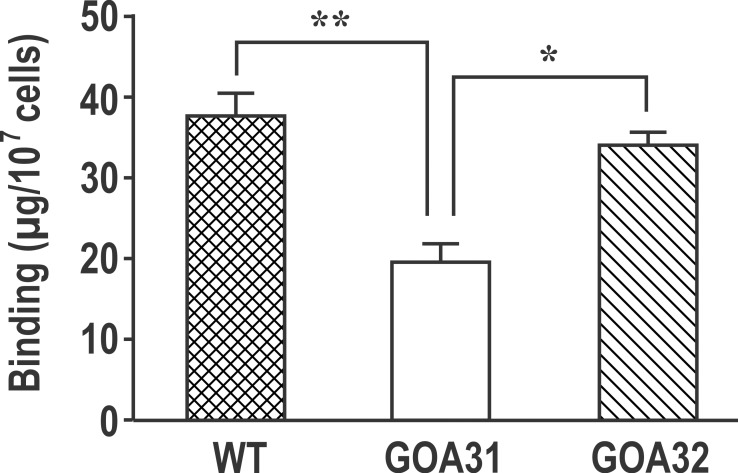
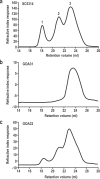
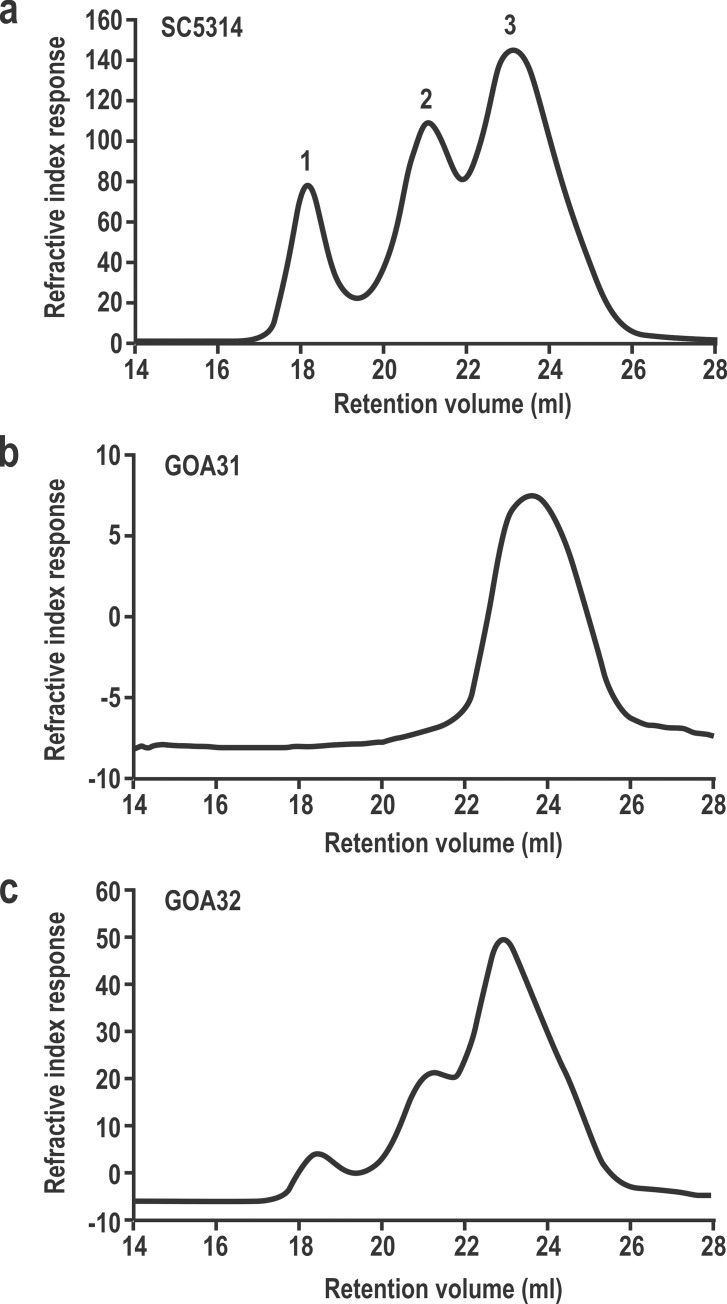
Description:The Goa1p of Candida albicans regulates mitochondrial Complex I (CI) activities in its role as a putative CI accessory protein. Transcriptional profiling of goa1∆ revealed a down regulation of genes encoding β-oligomannosyl transferases. Herein, we present data on cell wall phenotypes of goa1∆ (strain GOA31). We used transmission electron microscopy (TEM), GPC/MALLS, and NMR to compare GOA31 to a gene-reconstituted strain (GOA32) and parental cells. We note by TEM a reduction in outer wall fibrils, increased inner wall transparency, and the loss of a defined wall layer close to the plasma membrane. GPC-MALLS revealed a reduction in high and intermediate Mw mannan by 85% in GOA31. A reduction of β-mannosyl but not α-mannosyl linkages was noted in GOA31 cells. β-(1,6)-linked glucan side chains were branched about twice as often but were shorter in length for GOA31. We conclude that mitochondrial CI energy production is highly integrated with cell wall formation. Our data also suggest that not all cell wall biosynthetic processes are dependent upon Goa1p even though it provides high levels of ATP to cells. The availability of both broadly conserved and fungal-specific mutants lacking CI subunit proteins should be useful in assessing functions of fungal-specific functions subunit proteins.
-
Subjects:
-
Source:PLoS One. 2016; 11(1).
-
Pubmed ID:26809064
-
Pubmed Central ID:PMC4725855
-
Document Type:
-
Funding:
-
Volume:11
-
Issue:1
-
Collection(s):
-
Main Document Checksum:urn:sha256:3c9a771d4d0e6869956cbd6f8b11483607d505a8bd0107035d5f07a560d575df
-
Download URL:
-
File Type:
 [PDF
- 3.47 MB
]
[PDF
- 3.47 MB
]
Supporting Files


File Language:
English
ON THIS PAGE





CDC STACKS serves as an archival repository of CDC-published products including
scientific findings,
journal articles, guidelines, recommendations, or other public health information authored or
co-authored by CDC or funded partners.
As a repository, CDC STACKS retains documents in their original published format to ensure public access to scientific information.
As a repository, CDC STACKS retains documents in their original published format to ensure public access to scientific information.
You May Also Like
COLLECTION
CDC Public Access