


WSC-1 and HAM-7 Are MAK-1 MAP Kinase Pathway Sensors Required for Cell Wall Integrity and Hyphal Fusion in Neurospora crassa
Supporting Files

-
Aug 03 2012
-
File Language:
English
Details
-
Alternative Title:PLoS One
-
Personal Author:
-
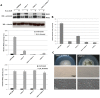
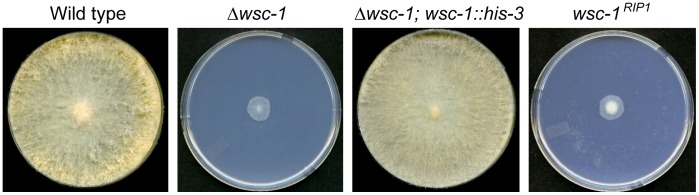
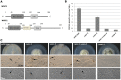
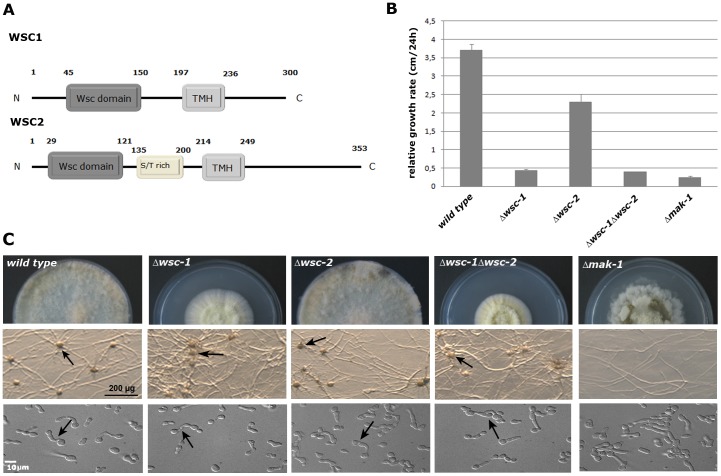
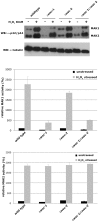
Description:A large number of cell wall proteins are encoded in the Neurospora crassa genome. Strains carrying gene deletions of 65 predicted cell wall proteins were characterized. Deletion mutations in two of these genes (wsc-1 and ham-7) have easily identified morphological and inhibitor-based defects. Their phenotypic characterization indicates that HAM-7 and WSC-1 function during cell-to-cell hyphal fusion and in cell wall integrity maintenance, respectively. wsc-1 encodes a transmembrane protein with extensive homology to the yeast Wsc family of sensor proteins. In N. crassa, WSC-1 (and its homolog WSC-2) activates the cell wall integrity MAK-1 MAP kinase pathway. The GPI-anchored cell wall protein HAM-7 is required for cell-to-cell fusion and the sexual stages of the N. crassa life cycle. Like WSC-1, HAM-7 is required for activating MAK-1. A Δwsc-1;Δham-7 double mutant fully phenocopies mutants lacking components of the MAK-1 MAP kinase cascade. The data identify WSC-1 and HAM-7 as the major cell wall sensors that regulate two distinct MAK-1-dependent cellular activities, cell wall integrity and hyphal anastomosis, respectively.
-
Subjects:
-
Source:PLoS One. 2012; 7(8).
-
Pubmed ID:22879952
-
Pubmed Central ID:PMC3411791
-
Document Type:
-
Funding:
-
Volume:7
-
Issue:8
-
Collection(s):
-
Main Document Checksum:urn:sha256:d6b060ca36649fb089f9bccd9bd3ce7daf096e2ed8f14069af943753d98767d8
-
Download URL:
-
File Type:
 [PDF
- 3.44 MB
]
[PDF
- 3.44 MB
]
Supporting Files


File Language:
English
ON THIS PAGE






CDC STACKS serves as an archival repository of CDC-published products including
scientific findings,
journal articles, guidelines, recommendations, or other public health information authored or
co-authored by CDC or funded partners.
As a repository, CDC STACKS retains documents in their original published format to ensure public access to scientific information.
As a repository, CDC STACKS retains documents in their original published format to ensure public access to scientific information.
You May Also Like
COLLECTION
CDC Public Access