


Determining the familial risk distribution of colorectal cancer: A data mining approach
Supporting Files

-
4 2016
-
File Language:
English
Details
-
Alternative Title:Fam Cancer
-
Personal Author:
-
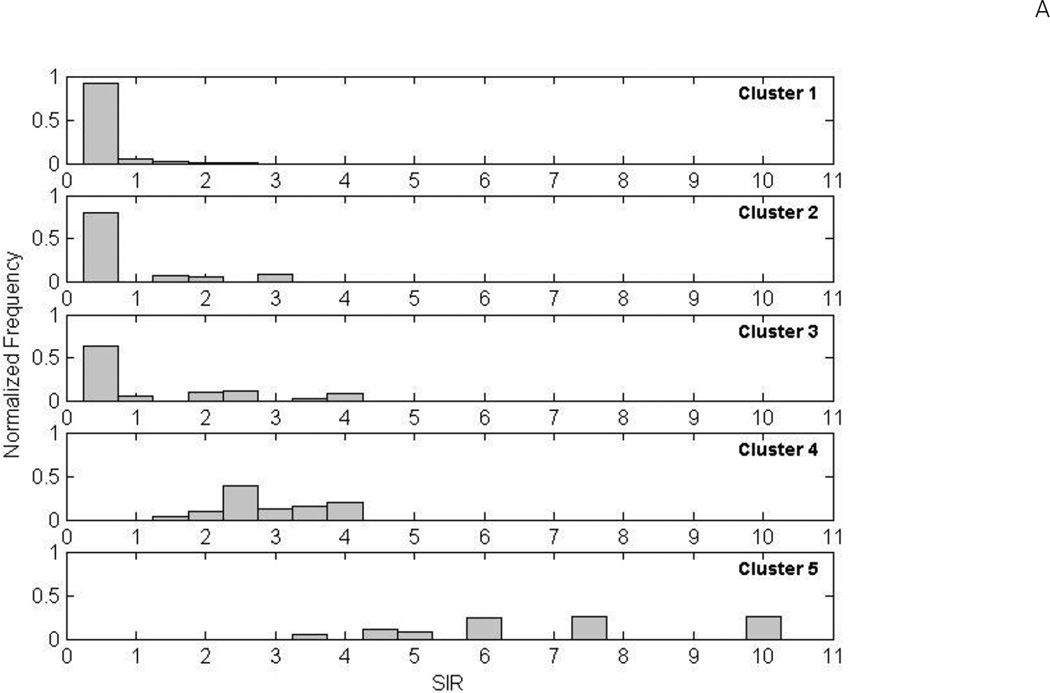
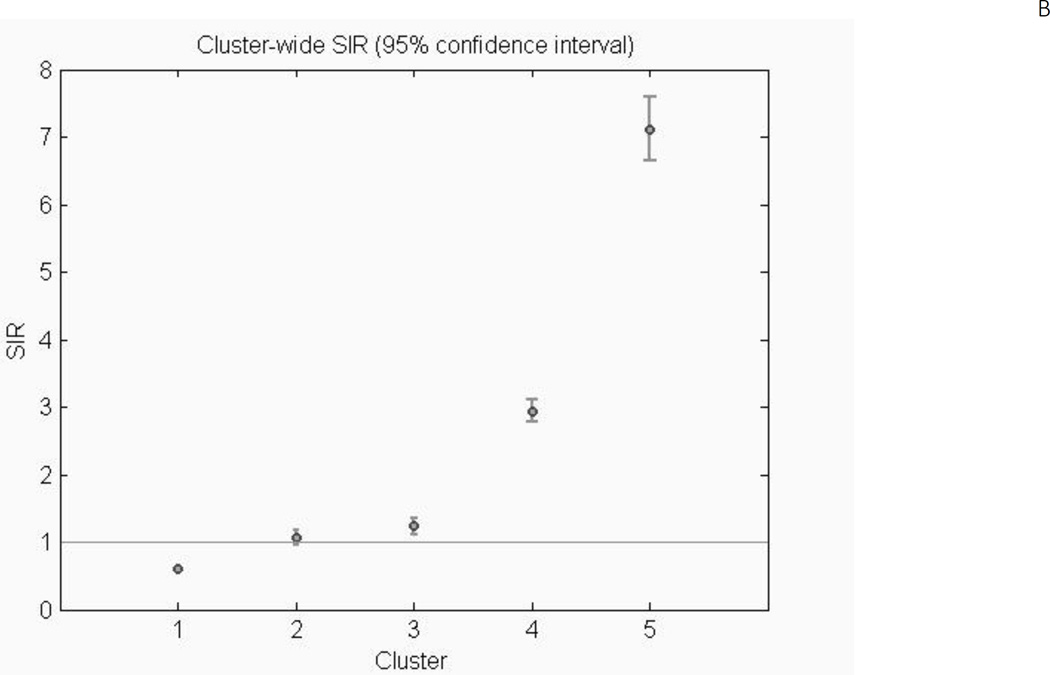
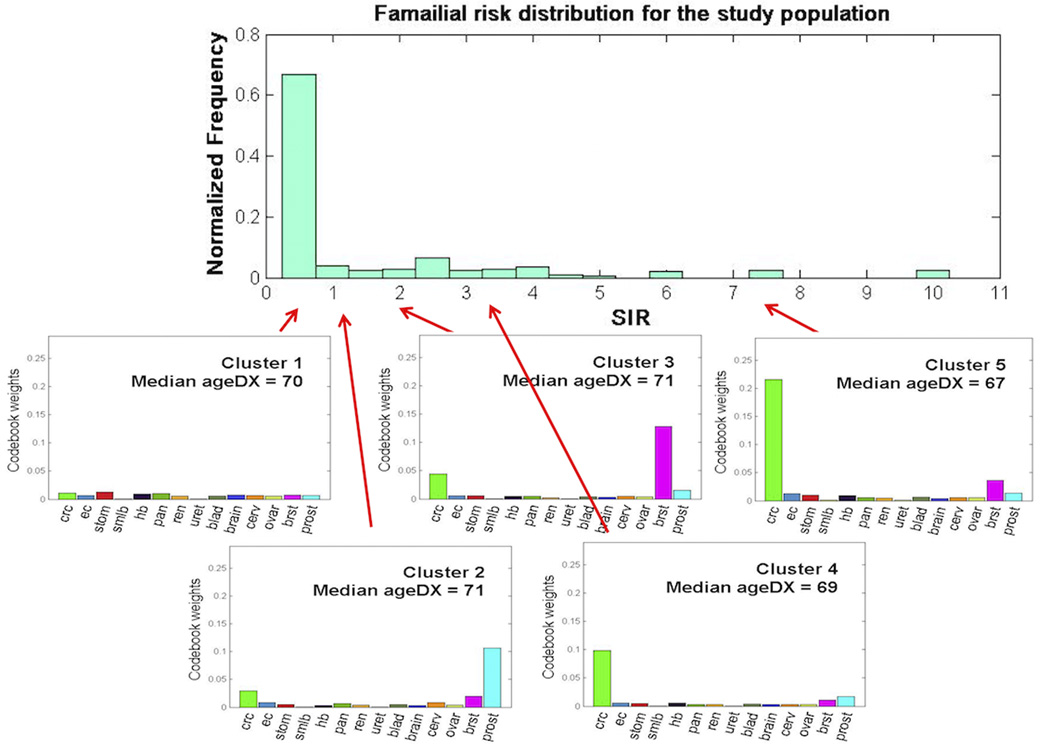
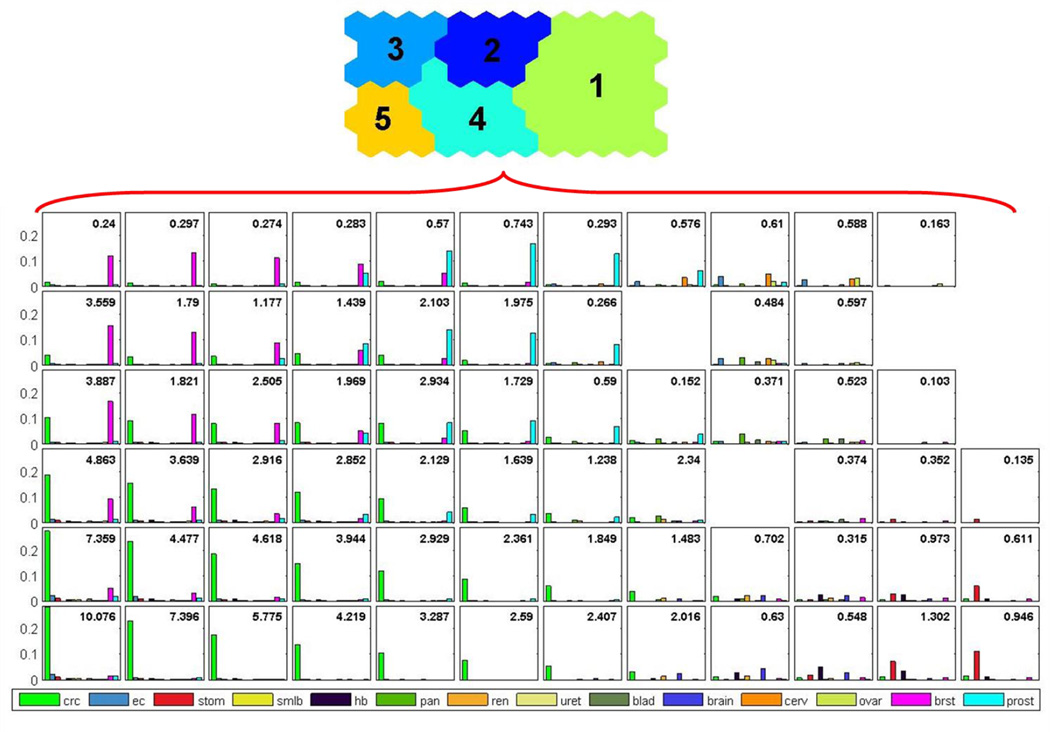
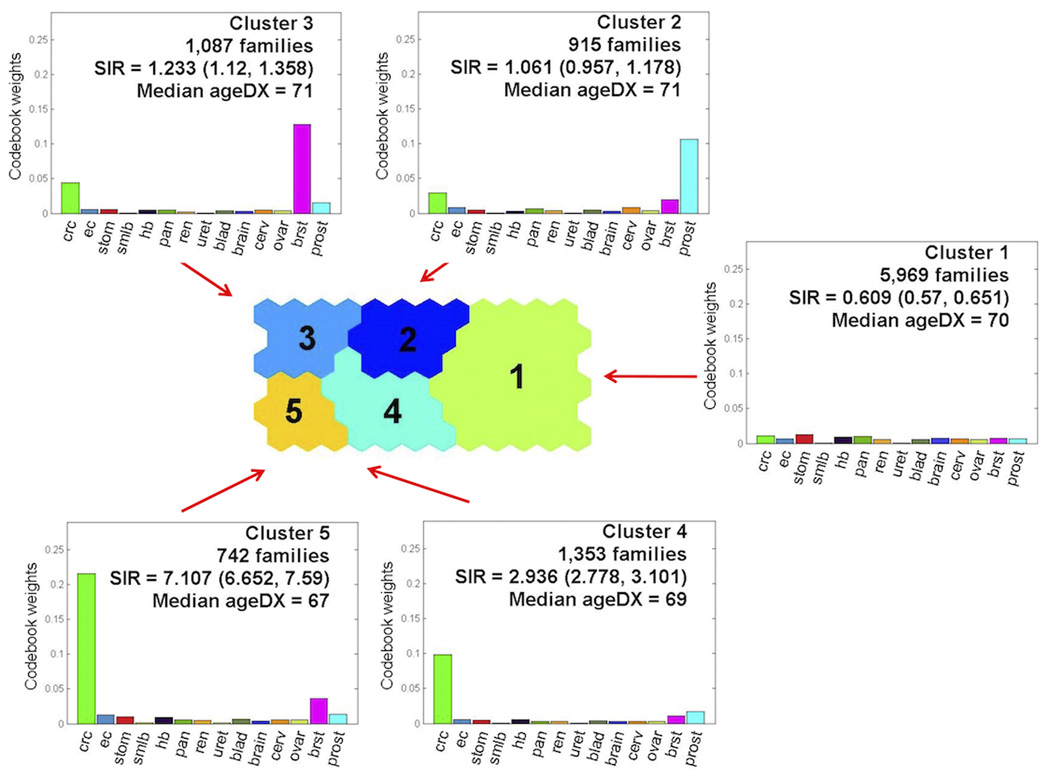
Description:This study was aimed to characterize the distribution of colorectal cancer risk using family history of cancers by data mining. Family histories for 10,066 colorectal cancer cases recruited to population cancer registries of the Colon Cancer Family Registry were analyzed using a data mining framework. A novel index was developed to quantify familial cancer aggregation. Artificial neural network was used to identify distinct categories of familial risk. Standardized incidence ratios (SIRs) and corresponding 95% confidence intervals (CIs) of colorectal cancer were calculated for each category. We identified five major, and 66 minor categories of familial risk for developing colorectal cancer. The distribution the major risk categories were: (1) 7% of families (SIR = 7.11; 95% CI 6.65-7.59) had a strong family history of colorectal cancer; (2) 13% of families (SIR = 2.94; 95% CI 2.78-3.10) had a moderate family history of colorectal cancer; (3) 11% of families (SIR = 1.23; 95% CI 1.12-1.36) had a strong family history of breast cancer and a weak family history of colorectal cancer; (4) 9 % of families (SIR = 1.06; 95 % CI 0.96-1.18) had strong family history of prostate cancer and weak family history of colorectal cancer; and (5) 60% of families (SIR = 0.61; 95% CI 0.57-0.65) had a weak family history of all cancers. There is a wide variation of colorectal cancer risk that can be categorized by family history of cancer, with a strong gradient of colorectal cancer risk between the highest and lowest risk categories. The risk of colorectal cancer for people with the highest risk category of family history (7% of the population) was 12-times that for people in the lowest risk category (60%) of the population. Data mining was proven an effective approach for gaining insight into the underlying cancer aggregation patterns and for categorizing familial risk of colorectal cancer.
-
Keywords:
-
Source:Fam Cancer. 15(2):241-251
-
Pubmed ID:26681340
-
Pubmed Central ID:PMC4803603
-
Document Type:
-
Funding:N01-PC-35142/PC/NCI NIH HHSUnited States/ ; U58DP003862-01/DP/NCCDPHP CDC HHSUnited States/ ; U01 CA074799/CA/NCI NIH HHSUnited States/ ; U24 CA074794/CA/NCI NIH HHSUnited States/ ; U24 CA074806/CA/NCI NIH HHSUnited States/ ; N01PC35142/CA/NCI NIH HHSUnited States/ ; U58 DP003862/DP/NCCDPHP CDC HHSUnited States/ ; U24 CA074799/CA/NCI NIH HHSUnited States/ ; U01/U24 CA074800/CA/NCI NIH HHSUnited States/ ; U01/U24 CA074799/CA/NCI NIH HHSUnited States/ ; HHSN261201000035C/CA/NCI NIH HHSUnited States/ ; U24 CA074783/CA/NCI NIH HHSUnited States/ ; N01 CN067009/CN/NCI NIH HHSUnited States/ ; U24 CA097735/CA/NCI NIH HHSUnited States/ ; U01 CA074794/CA/NCI NIH HHSUnited States/ ; HHSN261201300011C/RC/CCR NIH HHSUnited States/ ; HHSN261201300012I/CA/NCI NIH HHSUnited States/ ; HHSN261201300021C/CA/NCI NIH HHSUnited States/ ; HHSN261201000035I/CA/NCI NIH HHSUnited States/ ; U01/U24 CA074783/CA/NCI NIH HHSUnited States/ ; U01/U24 CA074794/CA/NCI NIH HHSUnited States/ ; HHSN261201000034C/CA/NCI NIH HHSUnited States/ ; U01 CA097735/CA/NCI NIH HHSUnited States/ ; K05 CA152715/CA/NCI NIH HHSUnited States/ ; UM1 CA167551/CA/NCI NIH HHSUnited States/ ; U01 CA074783/CA/NCI NIH HHSUnited States/ ; U01/U24 CA097735/CA/NCI NIH HHSUnited States/ ; U01 CA074806/CA/NCI NIH HHSUnited States/ ; U24 CA074800/CA/NCI NIH HHSUnited States/ ; HHSN261201000121C/CP/NCI NIH HHSUnited States/ ; U01 CA074800/CA/NCI NIH HHSUnited States/
-
Volume:15
-
Issue:2
-
Collection(s):
-
Main Document Checksum:urn:sha256:ca5de1aad27829962bf4120f4b2e1e3d9db376402e02c7911028676646b1ba6a
-
Download URL:
-
File Type:
 [PDF
- 1.40 MB
]
[PDF
- 1.40 MB
]
Supporting Files


File Language:
English
ON THIS PAGE


CDC STACKS serves as an archival repository of CDC-published products including
scientific findings,
journal articles, guidelines, recommendations, or other public health information authored or
co-authored by CDC or funded partners.
As a repository, CDC STACKS retains documents in their original published format to ensure public access to scientific information.
As a repository, CDC STACKS retains documents in their original published format to ensure public access to scientific information.
You May Also Like
COLLECTION
CDC Public Access