



N6-methyladenosine modification in a long non-coding RNA hairpin predisposes its conformation to protein binding
Supporting Files

-
Sep 04 2015
-
Available in CDC Stacks on 2017-02-27T00:00:00Z
Details
-
Personal Author:
-
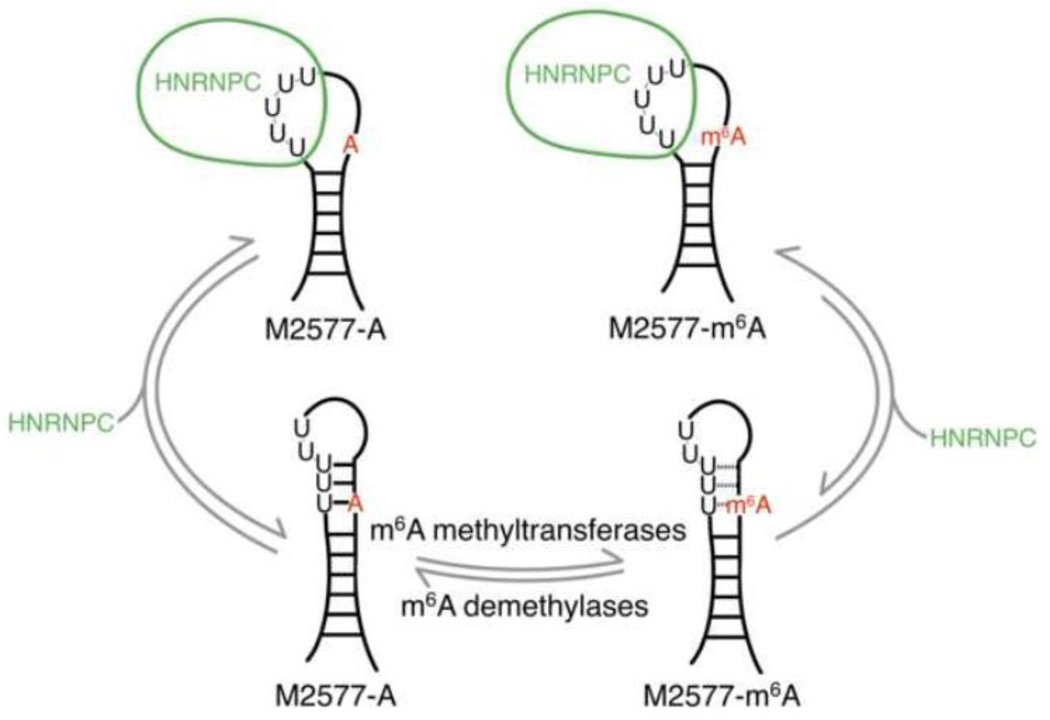
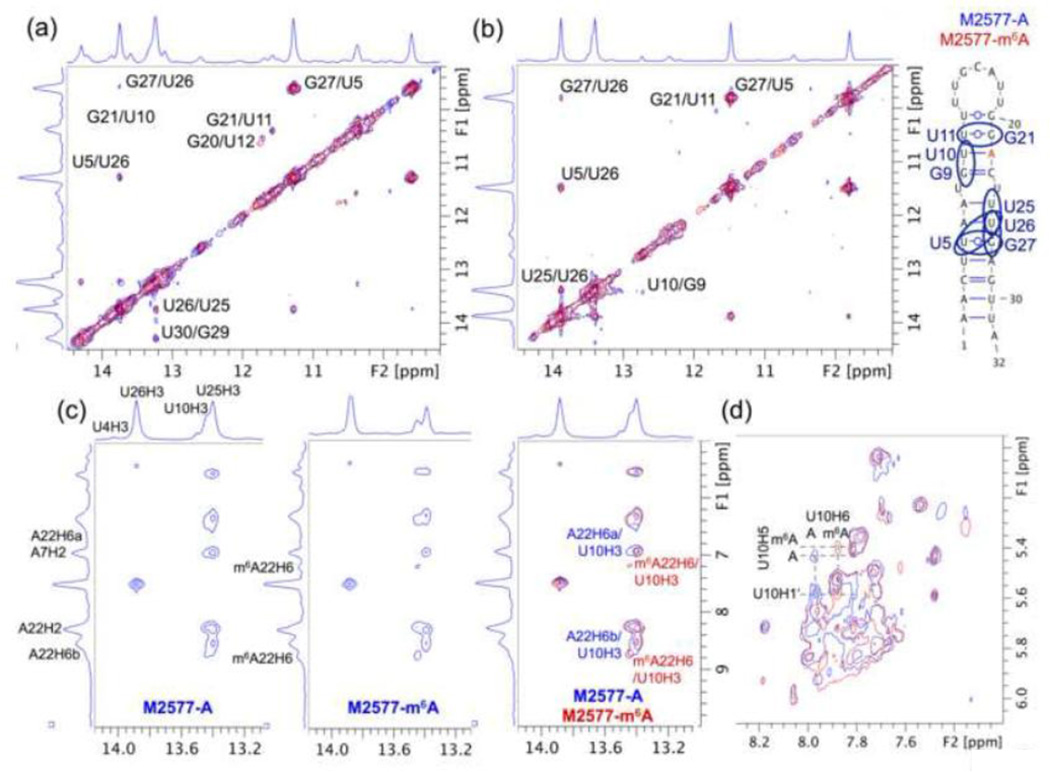
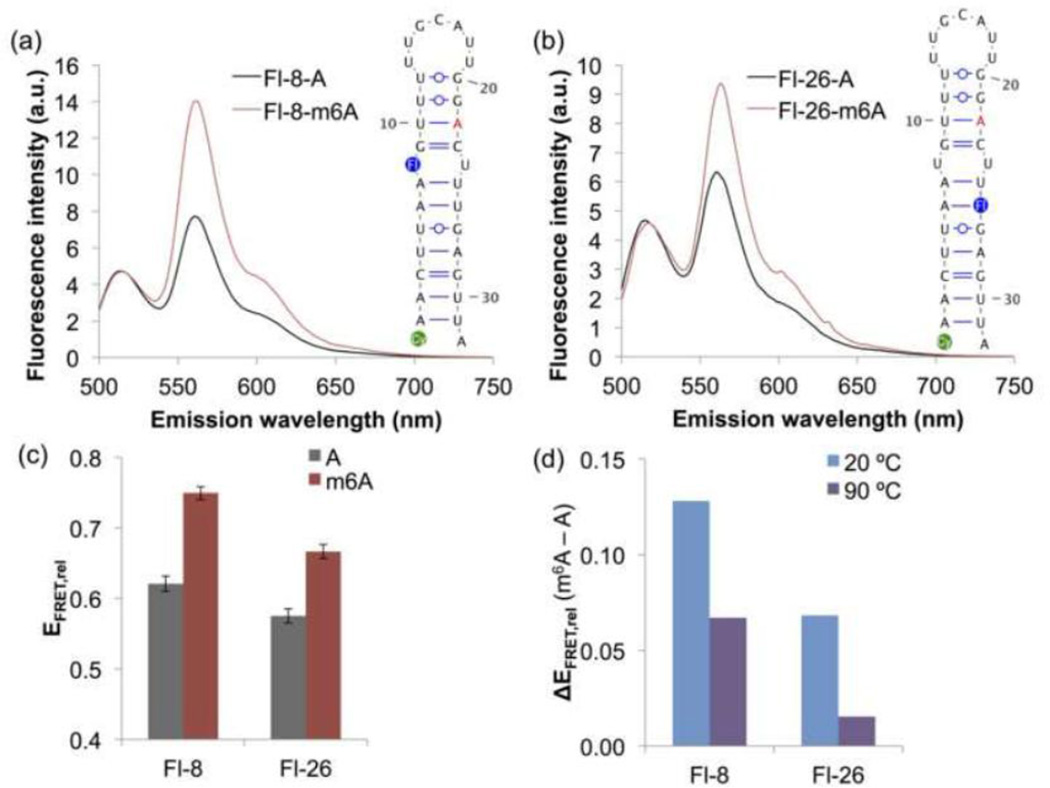
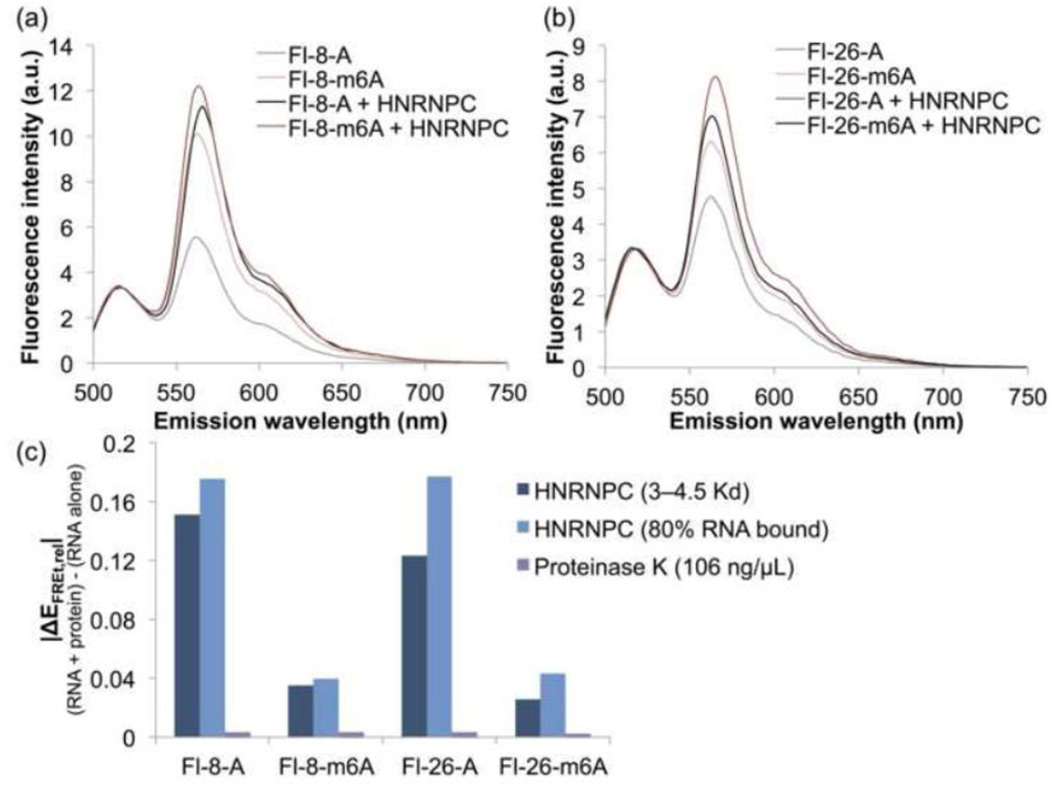
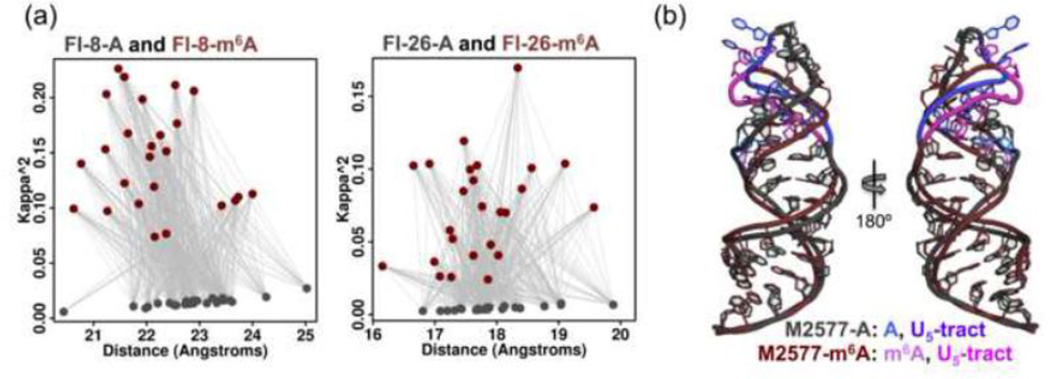
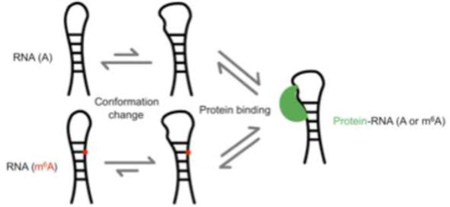
Description:N(6)-Methyladenosine (m(6)A) is a reversible and abundant internal modification of messenger RNA (mRNA) and long noncoding RNA (lncRNA) with roles in RNA processing, transport, and stability. Although m(6)A does not preclude Watson-Crick base pairing, the N(6)-methyl group alters the stability of RNA secondary structure. Since changes in RNA structure can affect diverse cellular processes, the influence of m(6)A on mRNA and lncRNA structure has the potential to be an important mechanism for m(6)A function in the cell. Indeed, an m(6)A site in the lncRNA metastasis associated lung adenocarcinoma transcript 1 (MALAT1) was recently shown to induce a local change in structure that increases the accessibility of a U5-tract for recognition and binding by heterogeneous nuclear ribonucleoprotein C (HNRNPC). This m(6)A-dependent regulation of protein binding through a change in RNA structure, termed "m(6)A-switch", affects transcriptome-wide mRNA abundance and alternative splicing. To further characterize this first example of an m(6)A-switch in a cellular RNA, we used nuclear magnetic resonance and Förster resonance energy transfer to demonstrate the effect of m(6)A on a 32-nucleotide RNA hairpin derived from the m(6)A-switch in MALAT1. The observed imino proton nuclear magnetic resonance resonances and Förster resonance energy transfer efficiencies suggest that m(6)A selectively destabilizes the portion of the hairpin stem where the U5-tract is located, increasing the solvent accessibility of the neighboring bases while maintaining the overall hairpin structure. The m(6)A-modified hairpin has a predisposed conformation that resembles the hairpin conformation in the RNA-HNRNPC complex more closely than the unmodified hairpin. The m(6)A-induced structural changes in the MALAT1 hairpin can serve as a model for a large family of m(6)A-switches that mediate the influence of m(6)A on cellular processes.
-
Subjects:
-
Source:J Mol Biol. 428(5 Pt A):822-833.
-
Pubmed ID:26343757
-
Pubmed Central ID:PMC4779075
-
Document Type:
-
Funding:DP1 GM105386/GM/NIGMS NIH HHS/United States ; K01 HG006699/HG/NHGRI NIH HHS/United States ; T32 GM007281/GM/NIGMS NIH HHS/United States ; K01HG006699/HG/NHGRI NIH HHS/United States ; NIGMS T32GM007281/PHS HHS/United States ; R01GM113194/GM/NIGMS NIH HHS/United States ; R01 GM113194/GM/NIGMS NIH HHS/United States ; DP1GM105386/DP/NCCDPHP CDC HHS/United States
-
Volume:428
-
Download URL:
-
File Type:
 [PDF - 1.38 MB]
 -
Collection(s):
-
Main Document Checksum:urn:sha-512:1d437ceb3649039e6cc20ff3deee8ed2542e134ee1a09a2bd59d37f223fbc67798a4645495302ca8e038c1d35d65e7876b68459859cff9c2bd8dda5cfaf99528
Supporting Files


 Was this page helpful?
 Found an issue?





CDC STACKS serves as an archival repository of CDC-published products including
scientific findings, journal articles, guidelines, recommendations, or other public health information authored or
co-authored by CDC or funded partners.
As a repository, CDC STACKS retains documents in their original published format to ensure public access to scientific information.
As a repository, CDC STACKS retains documents in their original published format to ensure public access to scientific information.
You May Also Like
COLLECTION
CDC Public Access