


Lead and δ-Aminolevulinic Acid Dehydratase Polymorphism: Where Does It Lead? A Meta-Analysis
Supporting Files
Public Domain

-
Jan 2007
-
Details
-
Alternative Title:Environ Health Perspect
-
Personal Author:
-
Description:Background
Lead poisoning affects many organs in the body. Lead inhibits δ-aminolevulinic acid dehydratase (ALAD), an enzyme with two co-dominantly expressed alleles, ALAD1 and ALAD2.
Objective
Our meta-analysis studied the effects of the ALAD polymorphism on a) blood and bone lead levels and b) indicators of target organ toxicity.
Data source
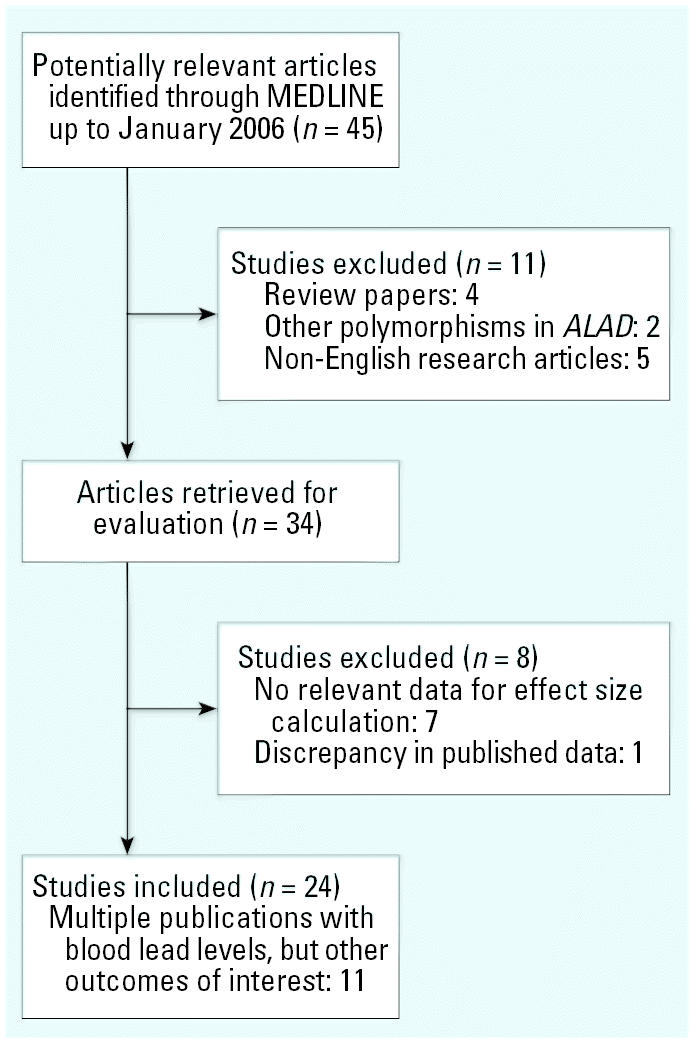
We included studies reporting one or more of the following by individuals with genotypes ALAD1-1 and ALAD1-2/2-2: blood lead level (BLL), tibia or trabecular lead level, zinc protoporphyrin (ZPP), hemoglobin, serum creatinine, blood urea nitrogen (BUN), dimercaptosuccinic acid–chelatable lead, or blood pressure.
Data extraction
Sample sizes, means, and standard deviations were extracted for the genotype groups.
Data synthesis
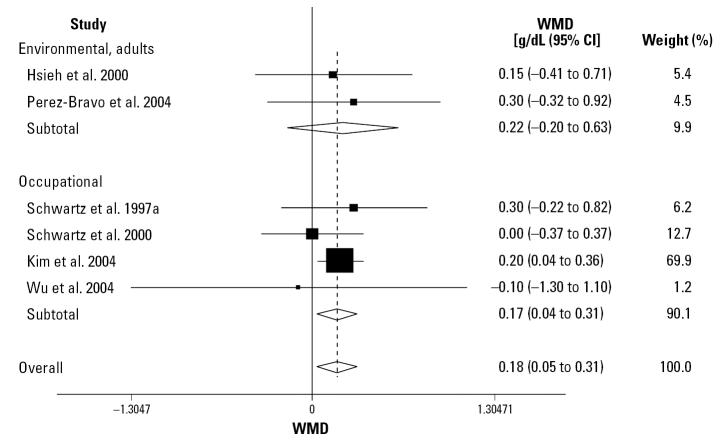
There was a statistically significant association between ALAD2 carriers and higher BLL in lead-exposed workers (weighted mean differences of 1.93 μg/dL). There was no association with ALAD carrier status among environmentally exposed adults with BLLs < 10 μg/dL. ALAD2 carriers were potentially protected against adverse hemapoietic effects (ZPP and hemoglobin levels), perhaps because of decreased lead bioavailability to heme pathway enzymes.
Conclusion
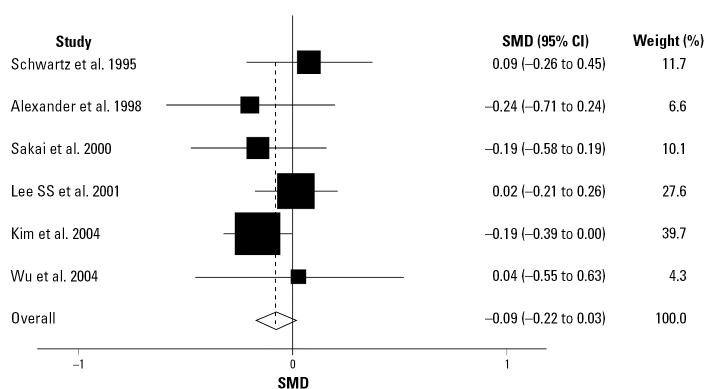
Carriers of the ALAD2 allele had higher BLLs than those who were ALAD1 homozygous and higher hemoglobin and lower ZPP, and the latter seems to be inversely related to BLL. Effects on other organs were not well delineated, partly because of the small number of subjects studied and potential modifications caused by other proteins in target tissues or by other polymorphic genes.
-
Subjects:
-
Source:Environ Health Perspect. 2007; 115(1):35-41.
-
Document Type:
-
Volume:115
-
Issue:1
-
Collection(s):
-
Main Document Checksum:urn:sha-512:e93f01f59a93aecb80c39572c204a23fa5351017f2784805c68ea2814303678c508bcaf0b25829c49b8da2a2a187a7c4662ca47ca2f4e852880608c5451822ea
-
Download URL:
-
File Type:
 [PDF
- 530.03 KB
]
[PDF
- 530.03 KB
]
Supporting Files


ON THIS PAGE




CDC STACKS serves as an archival repository of CDC-published products including
scientific findings,
journal articles, guidelines, recommendations, or other public health information authored or
co-authored by CDC or funded partners.
As a repository, CDC STACKS retains documents in their original published format to ensure public access to scientific information.
As a repository, CDC STACKS retains documents in their original published format to ensure public access to scientific information.
You May Also Like
COLLECTION
CDC Public Access