



Validation of biomarkers of CVD risk from dried blood spots in community-based research: Methodologies and study-specific serum equivalencies
Supporting Files

-
2015 ; 2015
-
Available in CDC Stacks on March 30, 2016, 12:00 AM
File Language:
English
Details
-
Alternative Title:Biodemography Soc Biol
-
Personal Author:
-
Description:Objective
Dried blood spot (DBS) methodology offers significant advantages over venipuncture in vulnerable populations or large-scale studies, including reduced participant burden and higher response rates. Uncertainty about validity of cardiovascular risk biomarkers remains a barrier to wide-scale use. We determined the validity of DBS-derived biomarkers of CVD risk versus gold-standard assessments, and study-specific, serum-equivalency values for clinical relevance of DBS-derived values.
Methods
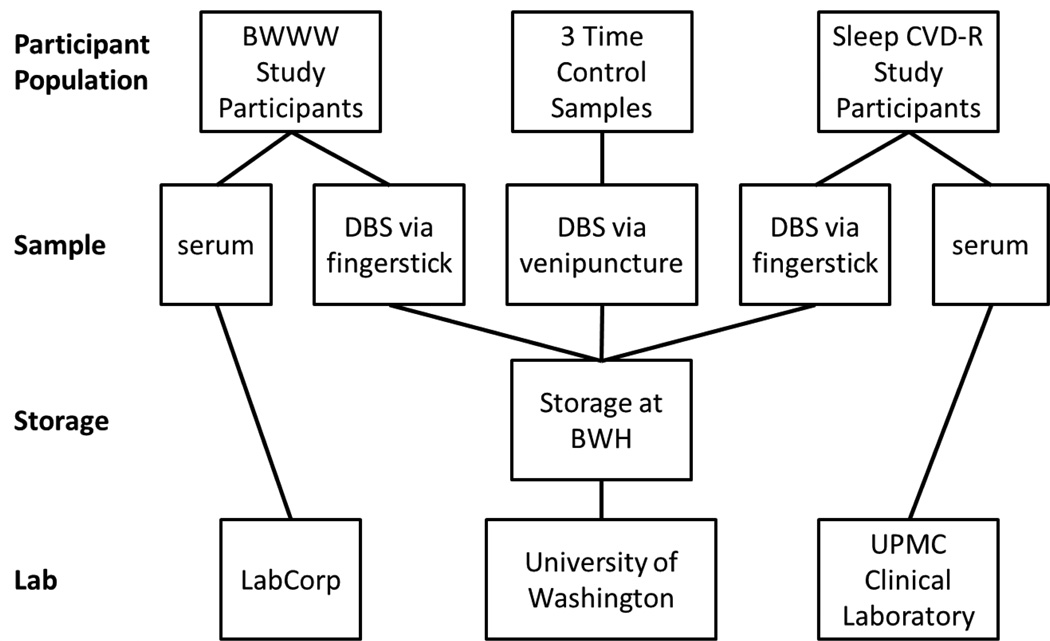
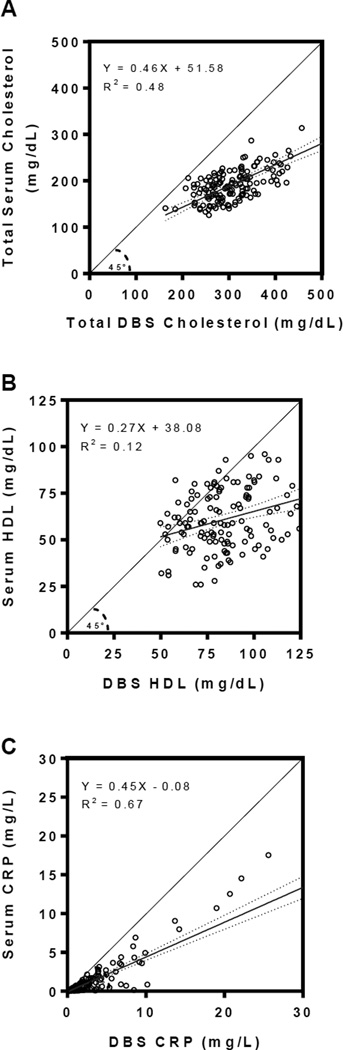
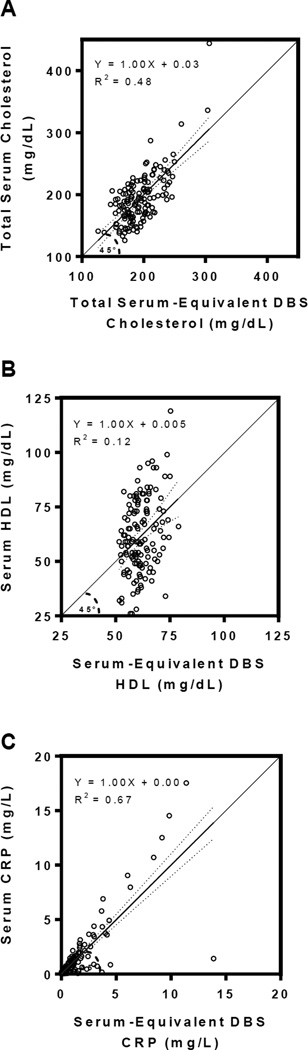
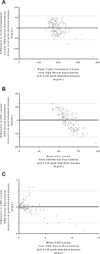
Concurrent venipuncture serum and DBS samples (n=150 adults) were assayed in CLIA-certified and DBS laboratories, respectively. Time controls of DBS standard samples were assayed single-blind along with test samples. Linear regression analyses evaluated DBS-to-serum equivalency values; agreement and bias were assessed via Bland-Altman plots.
Results
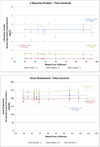
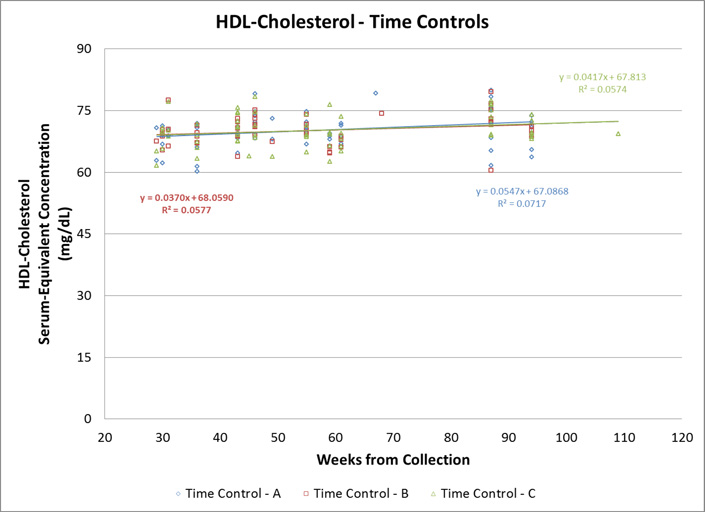
Linear regressions of venipuncture values on DBS-to-serum equivalencies provided R2 values for TC, HDL-C, CRP of 0.484, 0.118, 0.666, respectively. Bland-Altman plots revealed minimal systematic bias between DBS-to-serum and venipuncture values; precision worsened at higher mean values of CRP. Time controls reveal little degradation or change in analyte values for HDL-C and CRP over 30 weeks.
Conclusions
DBS-assessed biomarkers represent a valid alternative to venipuncture assessments. Large studies using DBS should include study-specific serum-equivalency determinations to optimize individual-level sensitivity, viability of detecting intervention effects, and generalizability in community-level, primary prevention interventions. -
Subjects:
-
Keywords:
-
Source:Biodemography Soc Biol. 61(3):285-297
-
Pubmed ID:26652683
-
Pubmed Central ID:PMC4812568
-
Document Type:
-
Funding:UL1 TR000005/TR/NCATS NIH HHSUnited States/ ; UL1 RR024153/RR/NCRR NIH HHSUnited States/ ; U19OH008861/ACL/ACL HHSUnited States/ ; U01-AG027669/AG/NIA NIH HHSUnited States/ ; T32-HL007901/HL/NHLBI NIH HHSUnited States/ ; R01-HL107240/HL/NHLBI NIH HHSUnited States/ ; UL1 RR025758/RR/NCRR NIH HHSUnited States/ ; U01 AG027669/AG/NIA NIH HHSUnited States/ ; R01 HL107240/HL/NHLBI NIH HHSUnited States/ ; UL1-TR000005/TR/NCATS NIH HHSUnited States/ ; UL1-RR024153/RR/NCRR NIH HHSUnited States/ ; R01-HL104607/HL/NHLBI NIH HHSUnited States/ ; T32 HL007901/HL/NHLBI NIH HHSUnited States/ ; R01 HL104607/HL/NHLBI NIH HHSUnited States/ ; T32 HL007560/HL/NHLBI NIH HHSUnited States/ ; U19 OH008861/OH/NIOSH CDC HHSUnited States/
-
Volume:61
-
Issue:3
-
Download URL:
-
File Type:
 [PDF - 1.69 MB]
 -
Collection(s):
-
Main Document Checksum:urn:sha256:b49de05e61b652047f18d415d900734c775ce1196fd6c5669c58cda3c43e4fe5
Supporting Files


File Language:
English
 Was this page helpful?
 Found an issue?




CDC STACKS serves as an archival repository of CDC-published products including
scientific findings, journal articles, guidelines, recommendations, or other public health information authored or
co-authored by CDC or funded partners.
As a repository, CDC STACKS retains documents in their original published format to ensure public access to scientific information.
As a repository, CDC STACKS retains documents in their original published format to ensure public access to scientific information.
You May Also Like
COLLECTION
CDC Public Access