


Reasons for Missing Antiretroviral Therapy: Results from a Multi-Country Study in Tanzania, Uganda, and Zambia
Supporting Files

-
Jan 20 2016
-
File Language:
English
Details
-
Alternative Title:PLoS One
-
Personal Author:Koole, Olivier ; Denison, Julie A ; Menten, Joris ; Tsui, Sharon ; Wabwire-Mangen, Fred ; Kwesigabo, Gideon ; Mulenga, Modest ; Auld, Andrew ; Agolory, Simon ; Mukadi, Ya Diul ; van Praag, Eric ; Torpey, Kwasi ; Williams, Seymour ; Kaplan, Jonathan ; Zee, Aaron ; Bangsberg, David R ; Colebunders, Robert
-
Description:Objectives
To identify the reasons patients miss taking their antiretroviral therapy (ART) and the proportion who miss their ART because of symptoms; and to explore the association between symptoms and incomplete adherence.
Methods
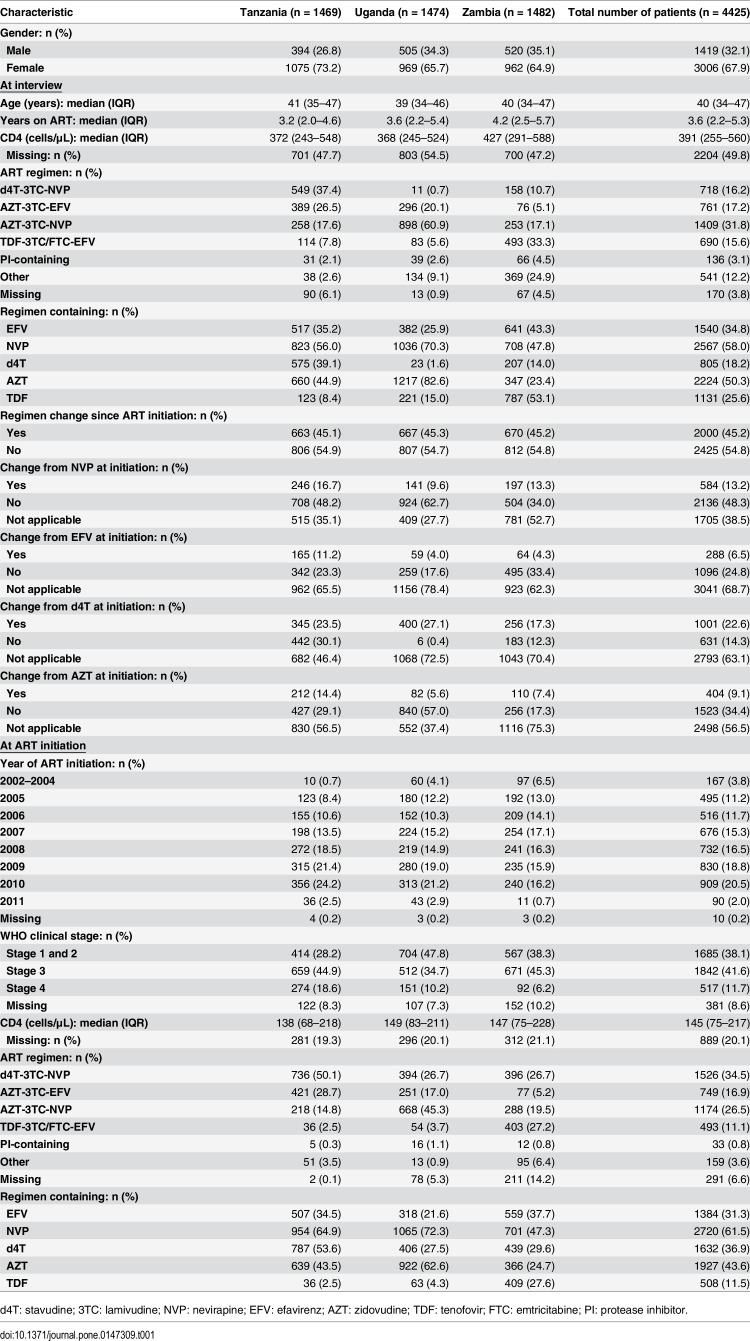
Secondary analysis of data collected during a cross-sectional study that examined ART adherence among adults from 18 purposefully selected sites in Tanzania, Uganda, and Zambia. We interviewed 250 systematically selected patients per facility (≥18 years) on reasons for missing ART and symptoms they had experienced (using the HIV Symptom Index). We abstracted clinical data from the patients’ medical, pharmacy, and laboratory records. Incomplete adherence was defined as having missed ART for at least 48 consecutive hours during the past 3 months.
Results
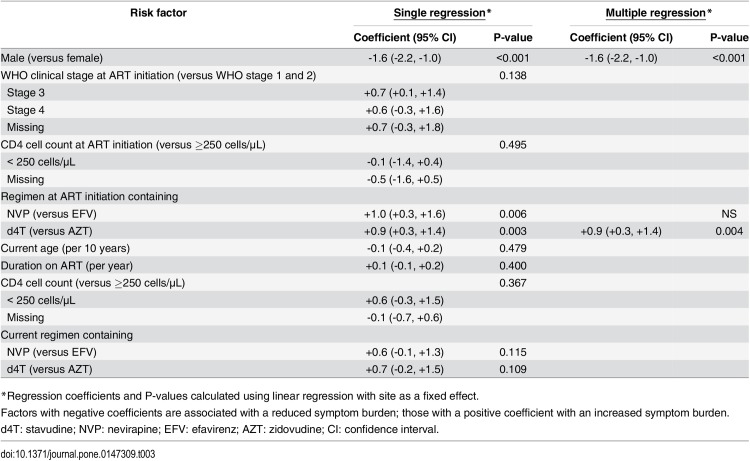
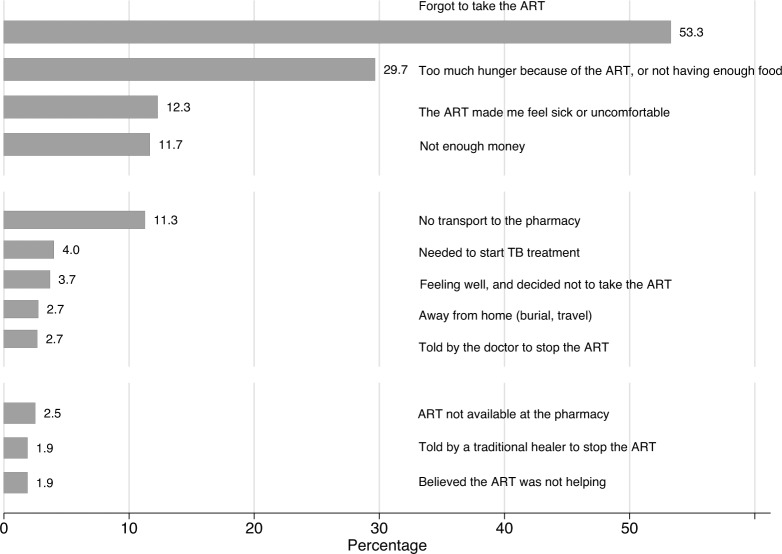
Twenty-nine percent of participants reported at least one reason for having ever missed ART (1278/4425). The most frequent reason was simply forgetting (681/1278 or 53%), followed by ART-related hunger or not having enough food (30%), and symptoms (12%). The median number of symptoms reported by participants was 4 (IQR: 2–7). Every additional symptom increased the odds of incomplete adherence by 12% (OR: 1.1, 95% CI: 1.1–1.2). Female participants and participants initiated on a regimen containing stavudine were more likely to report greater numbers of symptoms.
Conclusions
Symptoms were a common reason for missing ART, together with simply forgetting and food insecurity. A combination of ART regimens with fewer side effects, use of mobile phone text message reminders, and integration of food supplementation and livelihood programmes into HIV programmes, have the potential to decrease missed ART and hence to improve adherence and the outcomes of ART programmes.
-
Subjects:
-
Source:PLoS One. 11(1).
-
DOI:
-
Pubmed ID:26788919
-
Pubmed Central ID:PMC4720476
-
Document Type:
-
Funding:
-
Name as Subject:
-
Place as Subject:
-
Volume:11
-
Issue:1
-
Collection(s):
-
Main Document Checksum:urn:sha-512:e4b3be4d4005b6c907ee336a1e26a05c5290438c3ba9282b40eacabfb678a593193267356329116e875d3bfc4d5e65a7bf8307a9d2eb0702546c4527b071b12f
-
Download URL:
-
File Type:
 [PDF
- 294.24 KB
]
[PDF
- 294.24 KB
]
Supporting Files


File Language:
English
ON THIS PAGE




CDC STACKS serves as an archival repository of CDC-published products including
scientific findings,
journal articles, guidelines, recommendations, or other public health information authored or
co-authored by CDC or funded partners.
As a repository, CDC STACKS retains documents in their original published format to ensure public access to scientific information.
As a repository, CDC STACKS retains documents in their original published format to ensure public access to scientific information.
You May Also Like
COLLECTION
CDC Public Access