



Pulmonary Fibrotic Response to Aspiration of Multi-Walled Carbon Nanotubes
Supporting Files
Public Domain
Peer Reviewed

-
2011/07/22
File Language:
English
Details
-
Journal Article:Particle and Fibre Toxicology
-
Personal Author:
-
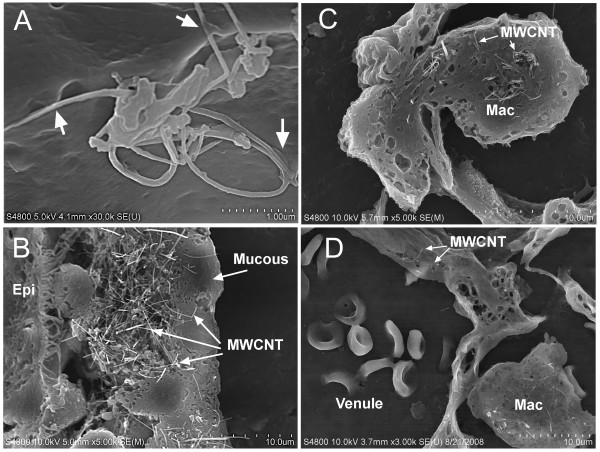
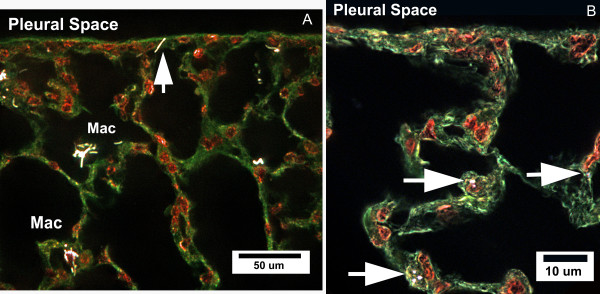
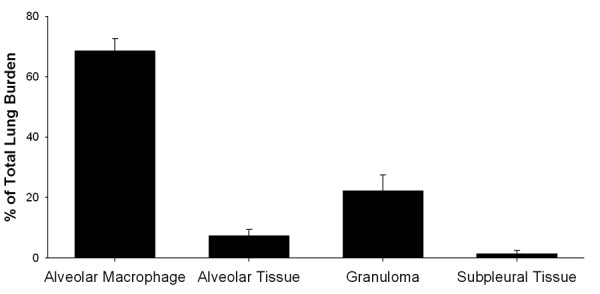
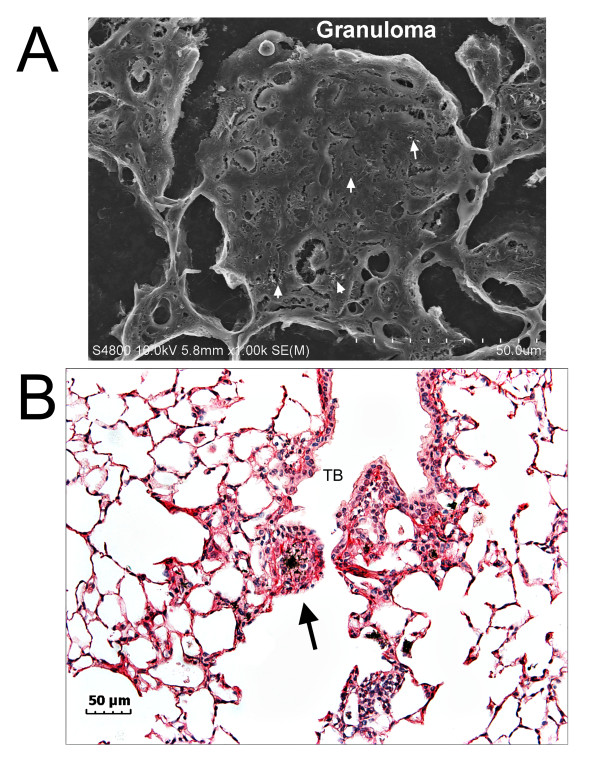
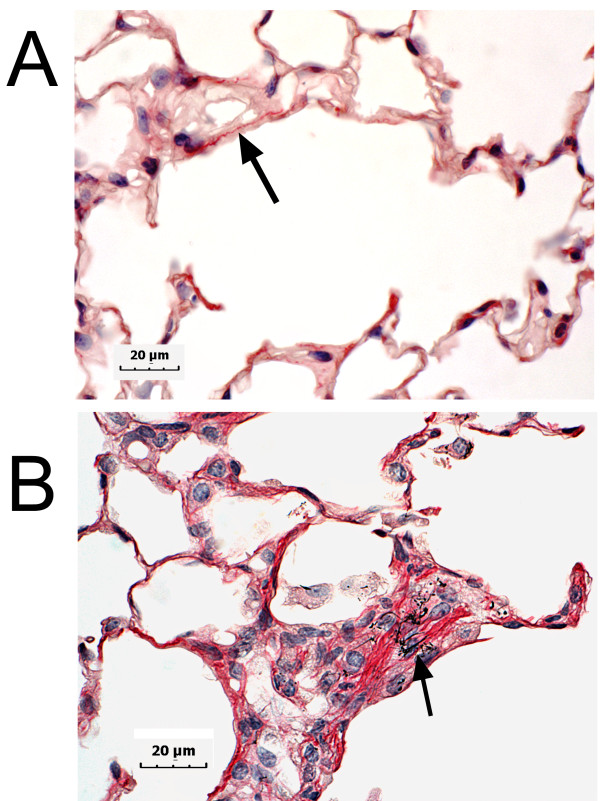
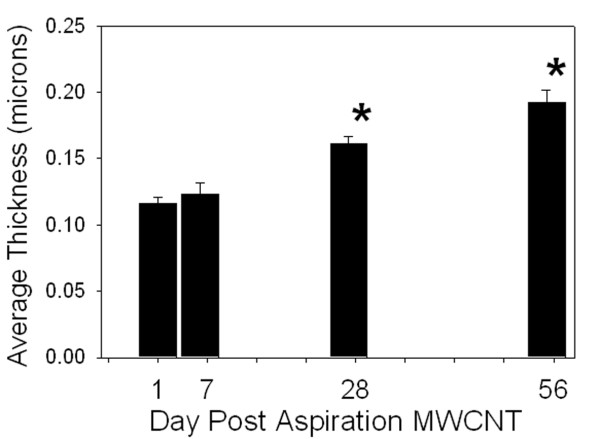
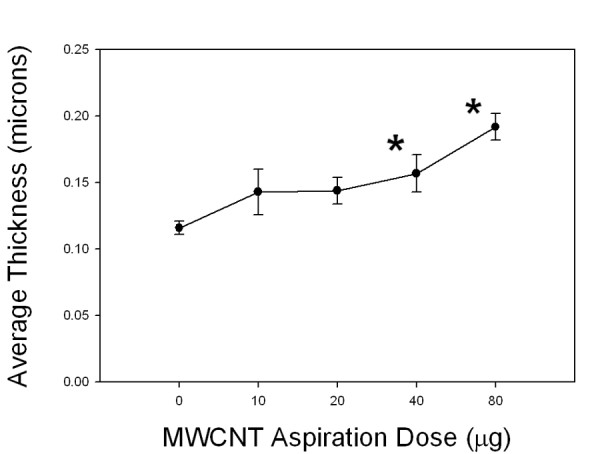
Description:Background: Multi-walled carbon nanotubes (MWCNTs) are new manufactured nanomaterials with a wide spectrum of commercial applications. To address the hypothesis that MWCNTs cause persistent pulmonary pathology, C57BL/6J mice were exposed by pharyngeal aspiration to 10, 20, 40 or 80 mu g of MWCNTs (mean dimensions of 3.9 mu m x 49 nm) or vehicle. Lungs were preserved at 1, 7, 28 and 56 days postexposure to determine the potential regions and target cells for impact by MWCNT lung burden. Morphometric measurement of Sirius Red staining was used to assess the connective tissue response. Results: At 56 days post-exposure, 68.7+/-3.9, 7.5+/-1.9 and 22.0+/-5.1 percent (mean+/-SE, N=8) of the MWCNT lung burden were in alveolar macrophages, alveolar tissue and granulomatous lesions, respectively. The subpleural tissues contained 1.6% of the MWCNT lung burden. No MWCNTs were found in the airways at 7, 28 or 56 days after aspiration The connective tissue in the alveolar interstitium demonstrated a progressive increase in thickness over time in the 80 ug exposure group (0.12+/-0.01, 0.12 +/-0.01, 0.16+/-0.01 and 0.19+/-0.01 um for 1, 7, 28 and 56 days post-exposure (mean+/-SE, N=8)). Dose-response determined at 56 days post-exposure for the average thickness of connective tissue in alveolar septa was 0.11+/-0.01, 0.14+/-.02, 0.14 +/-0.01, 0.16+/-0.01 and 0.19+/-0.01 um (mean+/-SE, N=8) for vehicle, 10, 20, 40 and 80 ug dose groups, respectively. Conclusions: The distribution of lung burden was predominately within alveolar macrophages with approximately 8% delivery to the alveolar septa, and a smaller but potentially significant burden to the subpleural tissues. Despite the relatively low fraction of the lung burden being delivered to the alveolar tissue, the average thickness of connective tissue in the alveolar septa was increased over vehicle control by 45% in the 40 ug and 73% in the 80 mu g exposure groups. The results demonstrate that MWCNTs have the potential to produce a progressive, fibrotic response in the alveolar tissues of the lungs. However, the increases in connective tissue per mu g dose of MWCNTs to the interstitium are significantly less than those previously found for single-walled carbon nanotubes (SWCNTs). Description provided by NIOSH
-
Subjects:
- Administration, Inhalation
- Air Pollutants, Occupational
- Animals
- Dose-Response Relationship, Drug
- Dust
- Environmental Monitoring
- Granuloma
- Hazardous Substances
- Irritants
- Laboratories
- Lung
- Mice
- Mice, Inbred C57BL
- Microbiology
- Nanotubes, Carbon
- Occupational Health
- Particulate Matter
- Pulmonary Fibrosis
- Respiratory Hypersensitivity
- Respiratory System
- Respiratory Tract Diseases
- Safety
-
Keywords:
-
Source:Part Fibre Toxicol 2011 Jul; 8:21
-
ISSN:1743-8977
-
Document Type:
-
Genre:
-
Place as Subject:
-
CIO:
-
Division:
-
Topic:
-
Location:
-
Pages in Document:12 pdf pages
-
Volume:8
-
NIOSHTIC Number:nn:20039133
-
CAS Registry Number:
-
Federal Fiscal Year:2011
-
NORA Priority Area:
-
Peer Reviewed:True
-
Download URL:
-
File Type:
 [PDF - 3.75 MB]
 -
Collection(s):
-
Main Document Checksum:urn:sha-512:779e91d65e7a6498bcbd5f5308a489f940e64317d1c6dd0c7f72eaa243a7aa3a02ebf1feed5599224ae640f22c7a8cb5243036e88998f136eb57290cf963fa2f
Supporting Files


File Language:
English
 Was this page helpful?
 Found an issue?



CDC STACKS serves as an archival repository of CDC-published products including
scientific findings, journal articles, guidelines, recommendations, or other public health information authored or
co-authored by CDC or funded partners.
As a repository, CDC STACKS retains documents in their original published format to ensure public access to scientific information.
As a repository, CDC STACKS retains documents in their original published format to ensure public access to scientific information.
You May Also Like