



Excretion Profiles and Half-Lives of Ten Urinary Polycyclic Aromatic Hydrocarbon Metabolites after Dietary Exposure
Supporting Files

-
7 16 2012 ; 7-16-
-
Available in CDC Stacks on 2015-10-24T00:00:00Z
File Language:
English
Details
-
Alternative Title:Chem Res Toxicol
-
Personal Author:
-
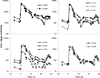
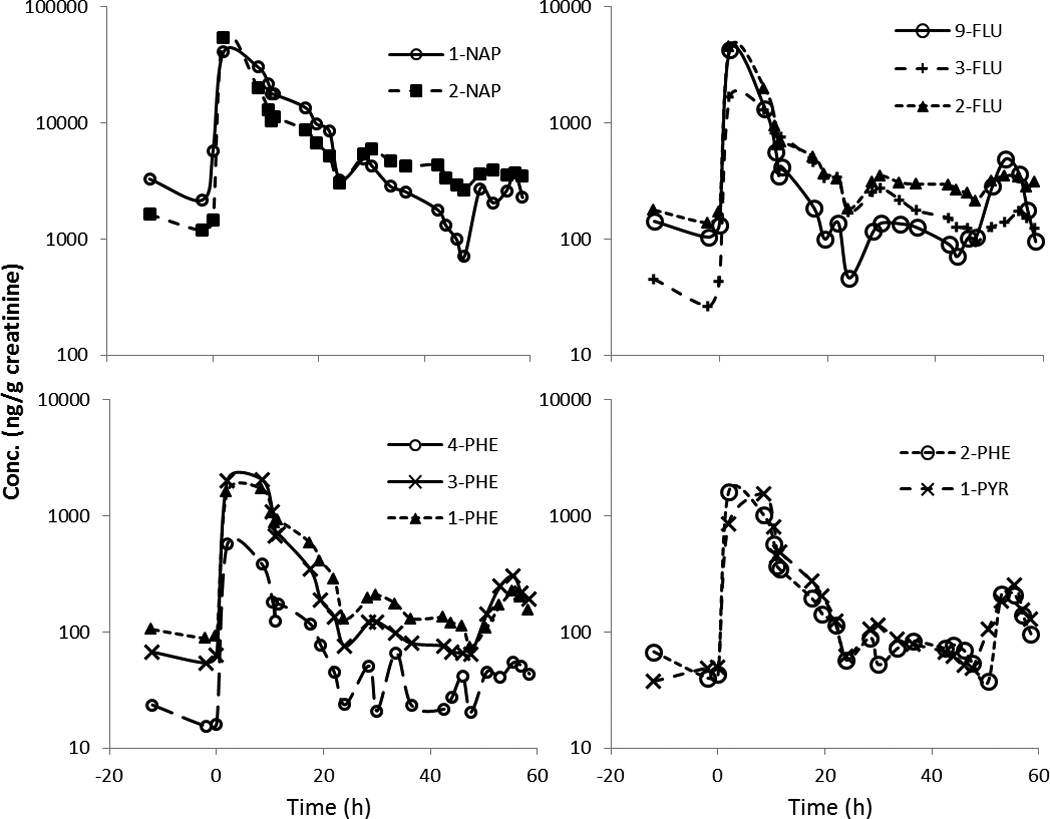
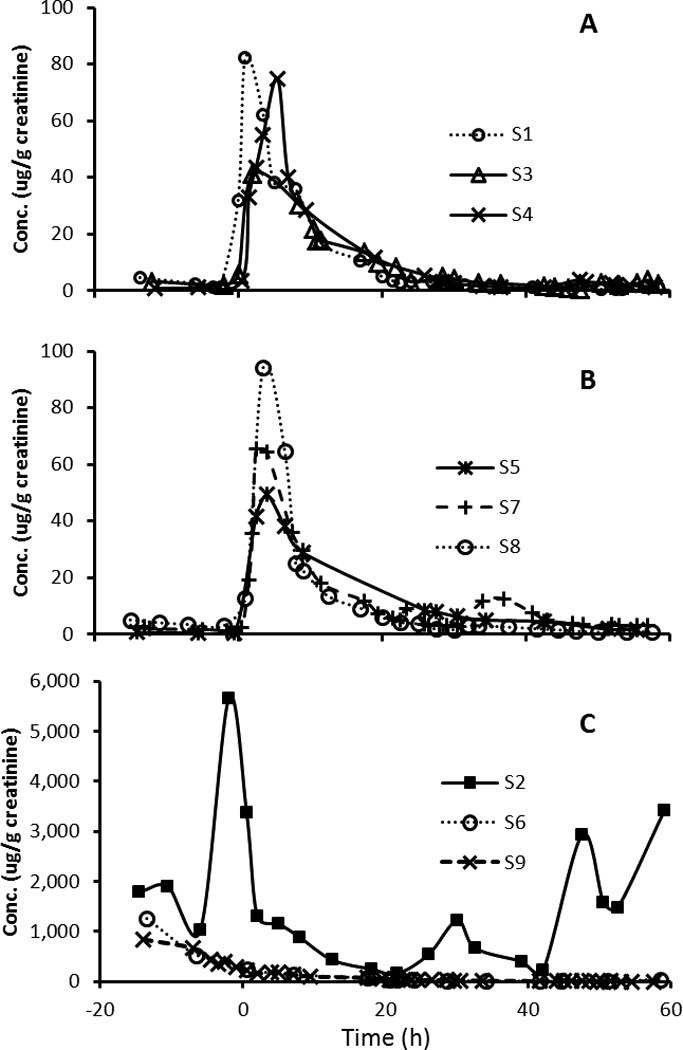
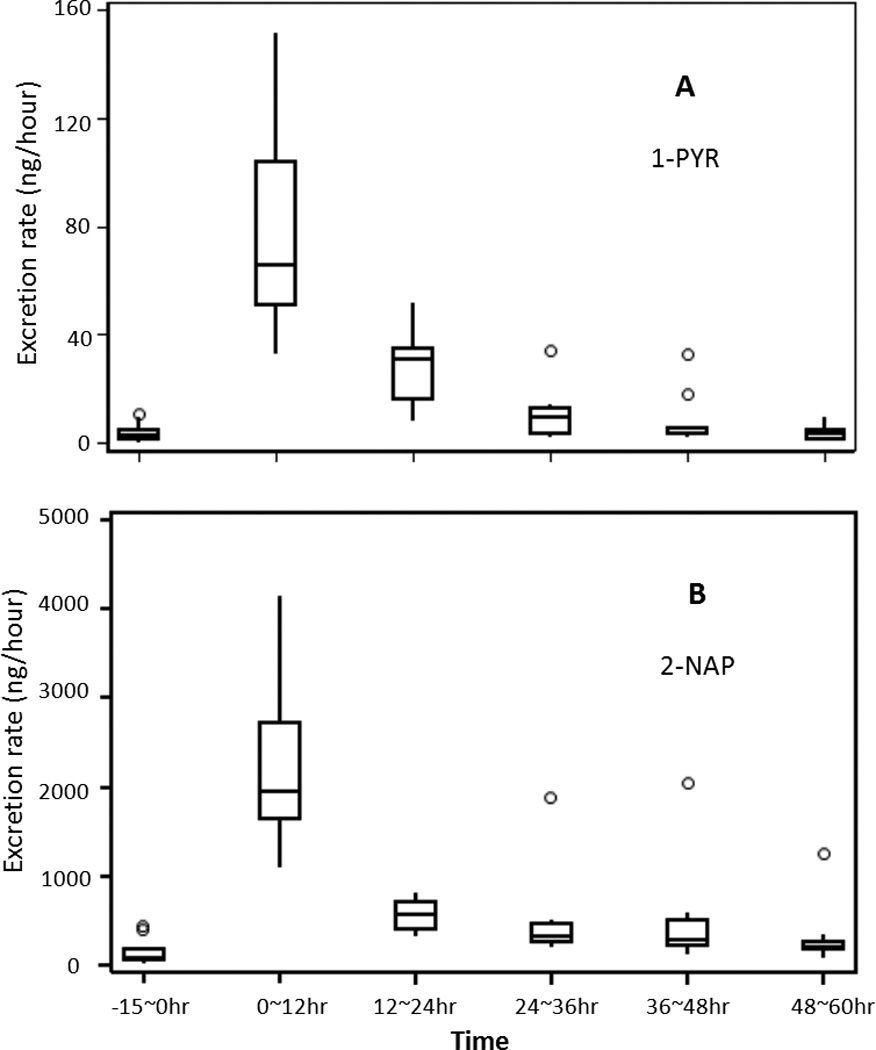
Description:Human exposure to polycyclic aromatic hydrocarbons (PAHs) can be assessed by biomonitoring of their urinary monohydroxylated metabolites (OH-PAHs). Limited information exists on the human pharmacokinetics of OH-PAHs. This study aimed to investigate the excretion half-life of 1-hydroxypyrene (1-PYR), the most used biomarker for PAH exposure, and 9 other OH-PAHs following a dietary exposure in 9 nonsmoking volunteers with no occupational exposure to PAHs. Each person avoided food with known high PAH-content during the study period, except for a high PAH-containing lunch (barbecued chicken) on the first day. Individual urine samples (n = 217) were collected from 15 h before to 60 h following the dietary exposure. Levels of all OH-PAHs in all subjects increased rapidly by 9-141-fold after the exposure, followed by a decrease consistent with first-order kinetics, and returned to background levels 24-48 h after the exposure. The average time to reach maximal concentration ranged from 3.1 h (1-naphthol) to 5.5 h (1-PYR). Creatinine-adjusted urine concentrations for each metabolite were analyzed using a nonlinear mixed effects model including a term to estimate background exposure. The background-adjusted half-life estimate was 3.9 h for 1-PYR and ranged 2.5-6.1 h for the other 9 OH-PAHs, which in general, were shorter than those previously reported. The maximum concentrations after barbecued chicken consumption were comparable to the levels found in reported occupational settings with known high PAH exposures. It is essential to consider the relatively short half-life, the timing of samples relative to exposures, and the effect of diet when conducting PAH exposure biomonitoring studies.
-
Subjects:
-
Keywords:
-
Source:Chem Res Toxicol. 25(7):1452-1461
-
Pubmed ID:22663094
-
Pubmed Central ID:PMC4618384
-
Document Type:
-
Funding:
-
Volume:25
-
Issue:7
-
Download URL:
-
File Type:
 [PDF - 499.16 KB]
 -
Collection(s):
-
Main Document Checksum:urn:sha-512:bc0a6f96f74f2eaf9fdc660ffc5533ffef36e72678e8319a3d90d56050cba6cd894b525022396dca6b5d6f849dcaf16a94bae6b9a1f522716f15a3aa036dfc48
Supporting Files


File Language:
English
 Was this page helpful?
 Found an issue?


CDC STACKS serves as an archival repository of CDC-published products including
scientific findings, journal articles, guidelines, recommendations, or other public health information authored or
co-authored by CDC or funded partners.
As a repository, CDC STACKS retains documents in their original published format to ensure public access to scientific information.
As a repository, CDC STACKS retains documents in their original published format to ensure public access to scientific information.
You May Also Like
COLLECTION
CDC Public Access