



Bioconcentration, Metabolism and Excretion of Triclocarban in larval Qurt Medaka (Oryzias latipes)
Supporting Files

-
August 04 2011 ; 10-2011
-
Available in CDC Stacks on 2012-10-01T00:00:00Z
File Language:
English
Details
-
Alternative Title:Aquat Toxicol
-
Personal Author:
-
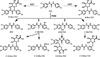
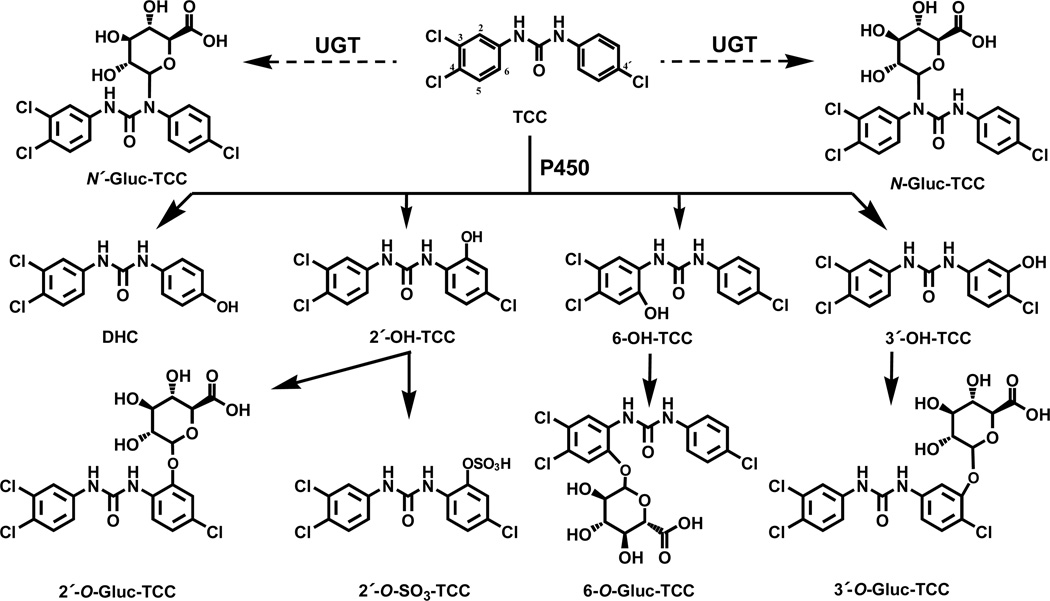
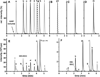
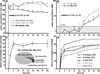
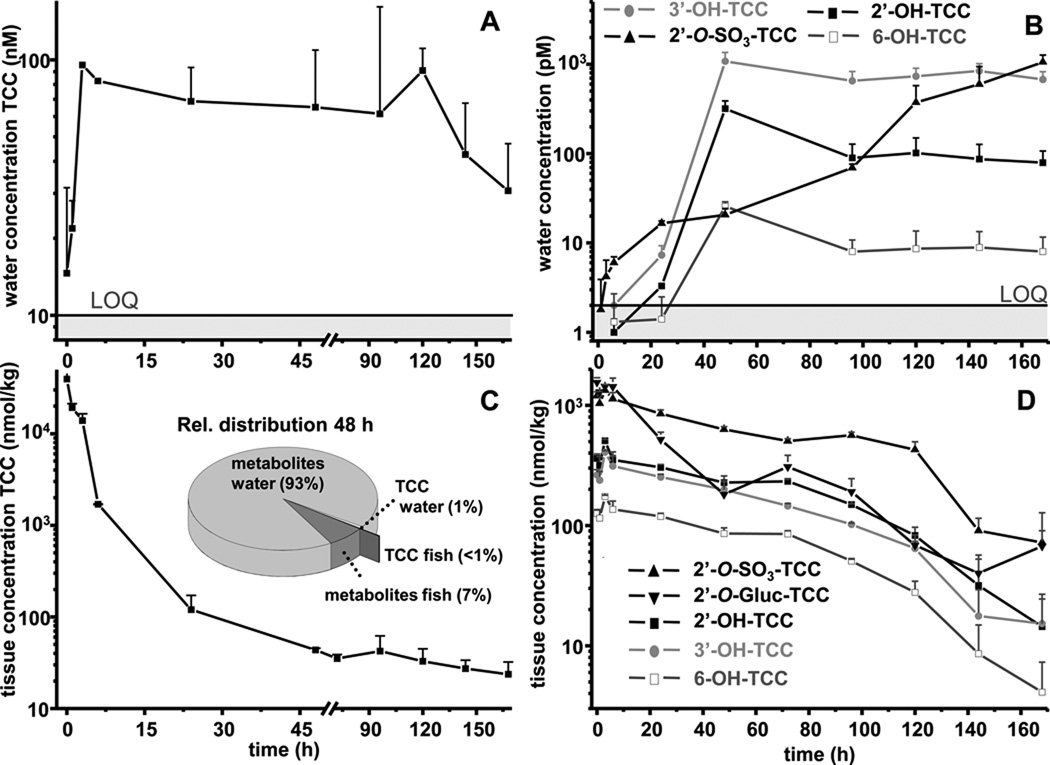
Description:The antimicrobial triclocarban (TCC) is frequently found in personal care products and commonly observed in surface waters and sediments. Due to its long environmental persistence TCC accumulates in sewage sludge. It also shows a high unintended biological activity as a potent inhibitor of the soluble epoxide hydrolase (sEH) and may be an endocrine disruptor. In this study, we investigated bioconcentration, metabolism and elimination of TCC in fish using medaka (Oryzias latipes) as a model. Medaka larvae (7 ± 1 days post hatching) were exposed to 63 nM (20 μg/L) TCC water for 24h. The LC-MS/MS analysis of water and tissues provided bioconcentration of TCC and its metabolites in fish body and rapid excretion into culture water. Results from tissue samples showed a tissue concentration of 34 μmol/kg and a log bioconcentration factor (BCF) of 2.86. These results are slightly lower than previous findings in snails and algae. A significant portion of the absorbed TCC was oxidatively metabolized by the fish to hydroxylated products. These metabolites underwent extensive phase II metabolism to yield sulfate and glucuronic acid conjugates. The most abundant metabolite in fish tissue was the glucuronide of 2'-OH-TCC. Elimination of TCC after transferring the fish to fresh water was rapid, with a half-life of 1h. This study shows that larval medaka metabolize TCC similarly to mammals. The rapid rate of metabolism results in a lower bioconcentration than calculated from the octanol-water coefficient of TCC.
-
Subjects:
- Article
- Triclocarban
- triclocarban metabolites
- Qurt medaka (Oryzias latipes)
- online-solid phase extraction
- liquid chromatography electrospray tandem mass spectrometry
- bioconcentration
- Animals
- Body Burden
- Carbanilides
- Chromatography, Liquid
- Female
- Half-Life
- Inactivation, Metabolic
- Larva
- Male
- Metabolic Detoxication, Phase II
- Oryzias
- Solid Phase Extraction
- Tandem Mass Spectrometry
- Water Pollutants, Chemical
-
Source:Aquat Toxicol. 105(3-4):448-454
-
Pubmed ID:21872556
-
Pubmed Central ID:PMC3236035
-
Document Type:
-
Funding:U50 OH007550/OH/NIOSH CDC HHS/United States ; P42 ES004699-26/ES/NIEHS NIH HHS/United States ; R01 ES002710/ES/NIEHS NIH HHS/United States ; P42 ES004699/ES/NIEHS NIH HHS/United States ; R01 ES002710-31/ES/NIEHS NIH HHS/United States ; U54 OH007550/OH/NIOSH CDC HHS/United States ; OH07550/OH/NIOSH CDC HHS/United States ; U54OH007550/ACL/ACL HHS/United States
-
Volume:105
-
Download URL:
-
File Type:
 [PDF - 1.14 MB]
 -
Collection(s):
-
Main Document Checksum:urn:sha256:8013cef084faed4062e6e6ac22756ac6a7ed227de49fc299c748a38bc6e3c85d
Supporting Files


File Language:
English
 Was this page helpful?
 Found an issue?



CDC STACKS serves as an archival repository of CDC-published products including
scientific findings, journal articles, guidelines, recommendations, or other public health information authored or
co-authored by CDC or funded partners.
As a repository, CDC STACKS retains documents in their original published format to ensure public access to scientific information.
As a repository, CDC STACKS retains documents in their original published format to ensure public access to scientific information.
You May Also Like
COLLECTION
CDC Public Access