


Context Influences on TALE-DNA Binding Revealed by Quantitative Profiling
Supporting Files

-
June 11 2015
-
File Language:
English
Details
-
Alternative Title:Nat Commun
-
Personal Author:
-
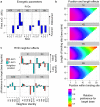
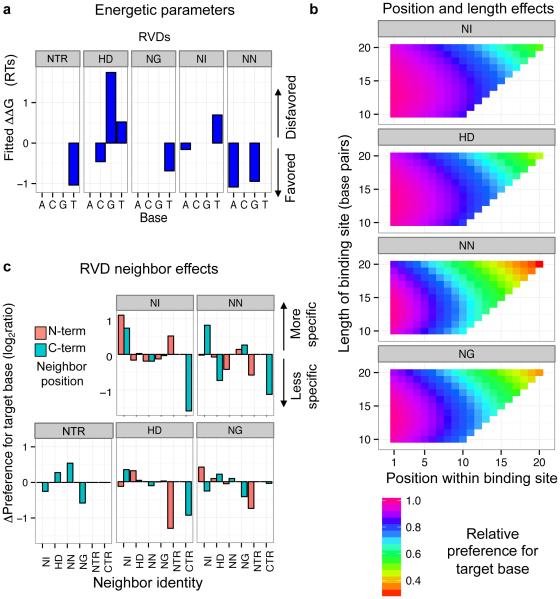
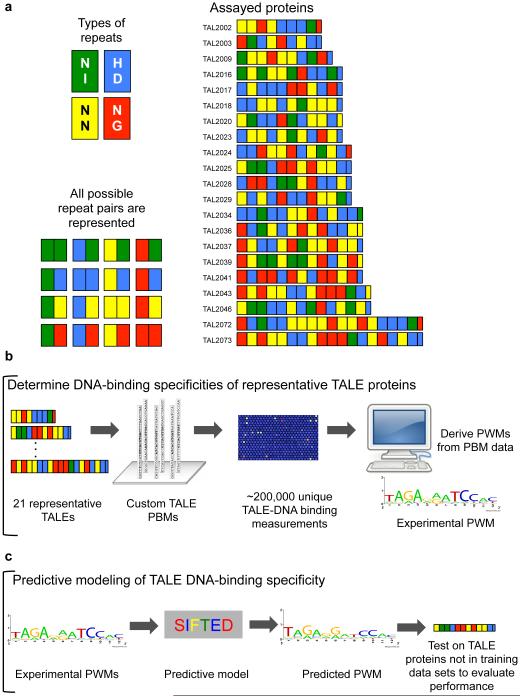
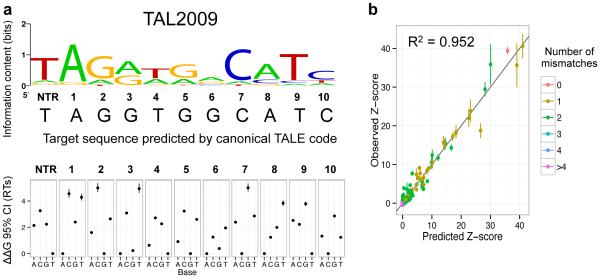
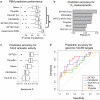
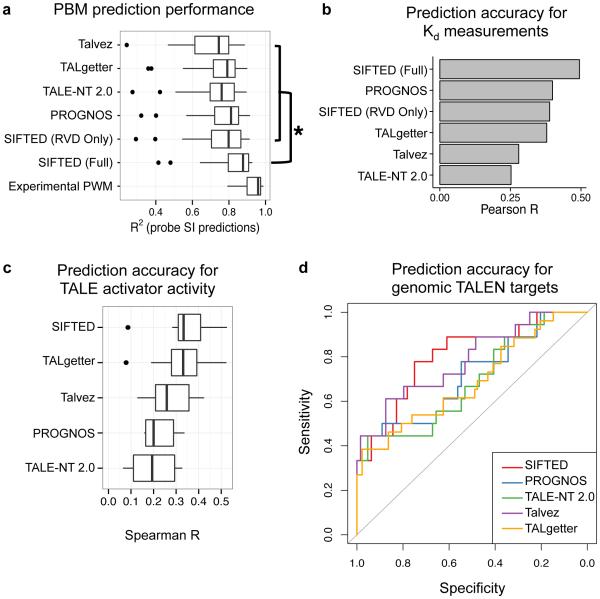
Description:Transcription activator-like effector (TALE) proteins recognize DNA using a seemingly simple DNA-binding code, which makes them attractive for use in genome engineering technologies that require precise targeting. Although this code is used successfully to design TALEs to target specific sequences, off-target binding has been observed and is difficult to predict. Here we explore TALE-DNA interactions comprehensively by quantitatively assaying the DNA-binding specificities of 21 representative TALEs to ∼5,000-20,000 unique DNA sequences per protein using custom-designed protein-binding microarrays (PBMs). We find that protein context features exert significant influences on binding. Thus, the canonical recognition code does not fully capture the complexity of TALE-DNA binding. We used the PBM data to develop a computational model, Specificity Inference For TAL-Effector Design (SIFTED), to predict the DNA-binding specificity of any TALE. We provide SIFTED as a publicly available web tool that predicts potential genomic off-target sites for improved TALE design.
-
Subjects:
-
Source:Nat Commun. 6:7440
-
Pubmed ID:26067805
-
Pubmed Central ID:PMC4467457
-
Document Type:
-
Funding:
-
Volume:6
-
Collection(s):
-
Main Document Checksum:urn:sha256:92eb033ae5355565f346c449b3dbabc1b044053ac3354e79f90be9041b3526a3
-
Download URL:
-
File Type:
 [PDF
- 923.03 KB
]
[PDF
- 923.03 KB
]
Supporting Files


File Language:
English
ON THIS PAGE




CDC STACKS serves as an archival repository of CDC-published products including
scientific findings,
journal articles, guidelines, recommendations, or other public health information authored or
co-authored by CDC or funded partners.
As a repository, CDC STACKS retains documents in their original published format to ensure public access to scientific information.
As a repository, CDC STACKS retains documents in their original published format to ensure public access to scientific information.
You May Also Like
COLLECTION
CDC Public Access