


Occupational Exposure to Dromedaries and Risk for MERS-CoV Infection, Qatar, 2013–2014
Supporting Files
Public Domain

-
Aug 2015
File Language:
English
Details
-
Alternative Title:Emerg Infect Dis
-
Personal Author:Reusken, Chantal B.E.M. ; Farag, Elmoubasher A.B.A. ; Haagmans, Bart L. ; Mohran, Khaled A. ; Godeke, Gert-Jan ; Raj, Stalin ; Alhajri, Farhoud ; Al-Marri, Salih A. ; Al-Romaihi, Hamad E. ; Al-Thani, Mohamed ; Bosch, Berend-Jan ; van der Eijk, Annemiek A. ; El-Sayed, Ahmed M. ; Ibrahim, Adel K. ; Al-Molawi, N. ; Müller, Marcel A. ; Pasha, Syed K. ; Drosten, Christian ; AlHajri, Mohd M. ; Koopmans, Marion P.G.
-
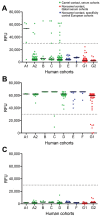
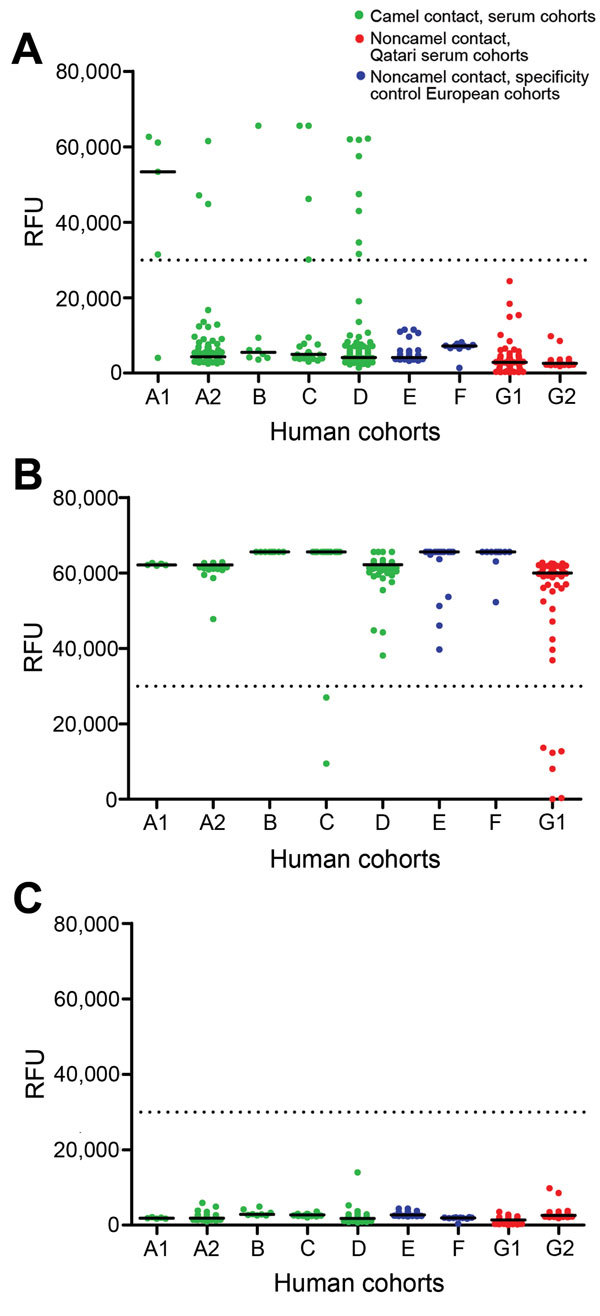
Description:We determined the presence of neutralizing antibodies to Middle East respiratory syndrome coronavirus in persons in Qatar with and without dromedary contact. Antibodies were only detected in those with contact, suggesting dromedary exposure as a risk factor for infection. Findings also showed evidence for substantial underestimation of the infection in populations at risk in Qatar.
-
Subjects:
-
Source:Emerg Infect Dis. 21(8):1422-1425.
-
Pubmed ID:26196891
-
Pubmed Central ID:PMC4517733
-
Document Type:
-
Place as Subject:
-
Volume:21
-
Issue:8
-
Collection(s):
-
Main Document Checksum:urn:sha256:3d358224927e15bf766aa7f708182e2292d3cfbdca1084b8944ffa783905d032
-
Download URL:
-
File Type:
 [PDF
- 1.04 MB
]
[PDF
- 1.04 MB
]
Supporting Files


File Language:
English
ON THIS PAGE

CDC STACKS serves as an archival repository of CDC-published products including
scientific findings,
journal articles, guidelines, recommendations, or other public health information authored or
co-authored by CDC or funded partners.
As a repository, CDC STACKS retains documents in their original published format to ensure public access to scientific information.
As a repository, CDC STACKS retains documents in their original published format to ensure public access to scientific information.
You May Also Like
COLLECTION
Emerging Infectious Diseases