



Biphasic MERS-CoV Incidence in Nomadic Dromedaries with Putative Transmission to Humans, Kenya, 2022–2023
Supporting Files
Public Domain

-
3 2024
File Language:
English
Details
-
Alternative Title:Emerg Infect Dis
-
Personal Author:Ogoti, Brian Maina ; Riitho, Victor ; Wildemann, Johanna ; Mutono, Nyamai ; Tesch, Julia ; Rodon, Jordi ; Harichandran, Kaneemozhe ; Emanuel, Jackson ; Möncke-Buchner, Elisabeth ; Kiambi, Stella ; Oyugi, Julius ; Mureithi, Marianne ; Corman, Victor M. ; Drosten, Christian ; Thumbi, Samuel M. ; Müller, Marcel A.
-
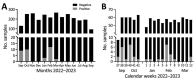
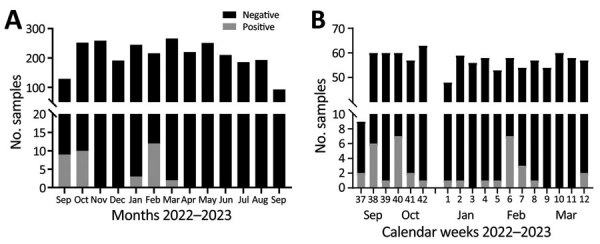
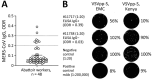
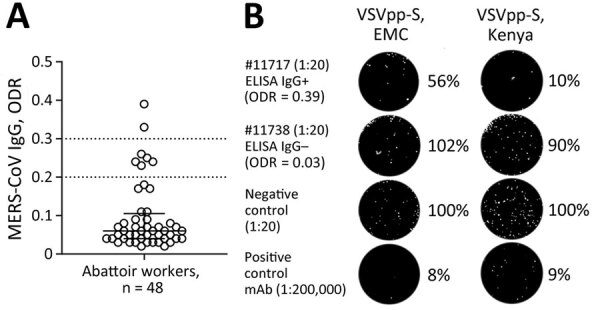
Description:Middle East respiratory syndrome coronavirus (MERS-CoV) is endemic in dromedaries in Africa, but camel-to-human transmission is limited. Sustained 12-month sampling of dromedaries in a Kenya abattoir hub showed biphasic MERS-CoV incidence; peak detections occurred in October 2022 and February 2023. Dromedary-exposed abattoir workers (7/48) had serologic signs of previous MERS-CoV exposure.
-
Subjects:
-
Keywords:
-
Source:Emerg Infect Dis. 2024; 30(3):581-585
-
Pubmed ID:38407189
-
Pubmed Central ID:PMC10902546
-
Document Type:
-
Place as Subject:
-
Volume:30
-
Issue:3
-
Download URL:
-
File Type:
 [PDF - 955.76 KB]
 -
Collection(s):
-
Main Document Checksum:urn:sha256:f47d192fe46524a2dbcbfbca91fcd4664cbffa6321cf9c823a39b36cba4674a8
Supporting Files


File Language:
English
 Was this page helpful?
 Found an issue?

CDC STACKS serves as an archival repository of CDC-published products including
scientific findings, journal articles, guidelines, recommendations, or other public health information authored or
co-authored by CDC or funded partners.
As a repository, CDC STACKS retains documents in their original published format to ensure public access to scientific information.
As a repository, CDC STACKS retains documents in their original published format to ensure public access to scientific information.
You May Also Like
COLLECTION
Emerging Infectious Diseases