



Susceptibility of Carrion Crows to Experimental Infection with Lineage 1 and 2 West Nile Viruses
Supporting Files
Public Domain

-
Aug 2015
File Language:
English
Details
-
Alternative Title:Emerg Infect Dis
-
Personal Author:
-
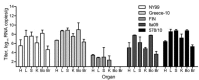
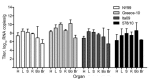
Description:West Nile virus (WNV) outbreaks in North America have been characterized by substantial die-offs of American crows (Corvus brachyrhynchos). In contrast, a low incidence of bird deaths has been observed during WNV epidemic activity in Europe. To examine the susceptibility of the western European counterpart of American crows, we inoculated carrion crows (Corvus corone) with WNV strains isolated in Greece (Gr-10), Europe (FIN and Ita09), and Hungary (578/10) and with the highly virulent North American genotype strain (NY99). We also inoculated American crows with a selection of these strains to examine the strains' virulence in a highly susceptible bird species. Infection with all strains, except WNV FIN, resulted in high rates of death and high-level viremia in both bird species and virus dissemination to several organs. These results suggest that carrion crows are highly susceptible to WNV and may potentially be useful as part of dead bird surveillance for early warning of WNV activity in Europe.
-
Subjects:
-
Source:Emerg Infect Dis. 21(8):1357-1365.
-
Pubmed ID:26197093
-
Pubmed Central ID:PMC4517732
-
Document Type:
-
Volume:21
-
Issue:8
-
Download URL:
-
File Type:
 [PDF - 1.19 MB]
 -
Collection(s):
-
Main Document Checksum:urn:sha256:22ddadb2403c2370a575012e3352b1760fa1e6c60e9e69975e2fcb981592e0eb
Supporting Files


File Language:
English
 Was this page helpful?
 Found an issue?









CDC STACKS serves as an archival repository of CDC-published products including
scientific findings, journal articles, guidelines, recommendations, or other public health information authored or
co-authored by CDC or funded partners.
As a repository, CDC STACKS retains documents in their original published format to ensure public access to scientific information.
As a repository, CDC STACKS retains documents in their original published format to ensure public access to scientific information.
You May Also Like
COLLECTION
Emerging Infectious Diseases