


Social disparities in heart disease risk and survivor bias among autoworkers: an examination based on survival models and g-estimation
Supporting Files

-
Nov 21 2014
-
File Language:
English
Details
-
Alternative Title:Occup Environ Med
-
Personal Author:
-
Description:Objectives
To examine gender and racial disparities in ischaemic heart disease (IHD) mortality related to metalworking fluid exposures and in the healthy worker survivor effect.
Methods
A cohort of white and black men and women autoworkers in the USA was followed from 1941 to 1995 with quantitative exposure to respirable particulate matter from water-based metalworking fluids. Separate analyses used proportional hazards models and g-estimation.
Results
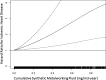
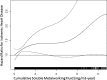
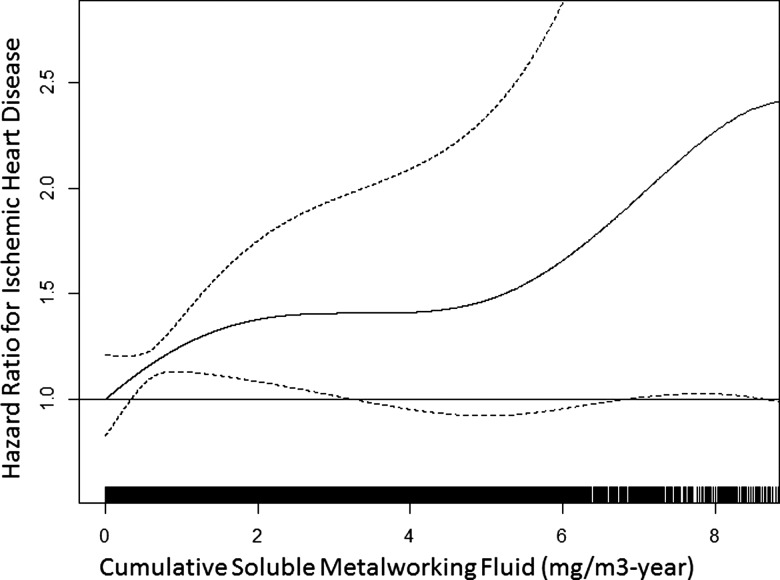
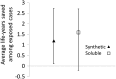
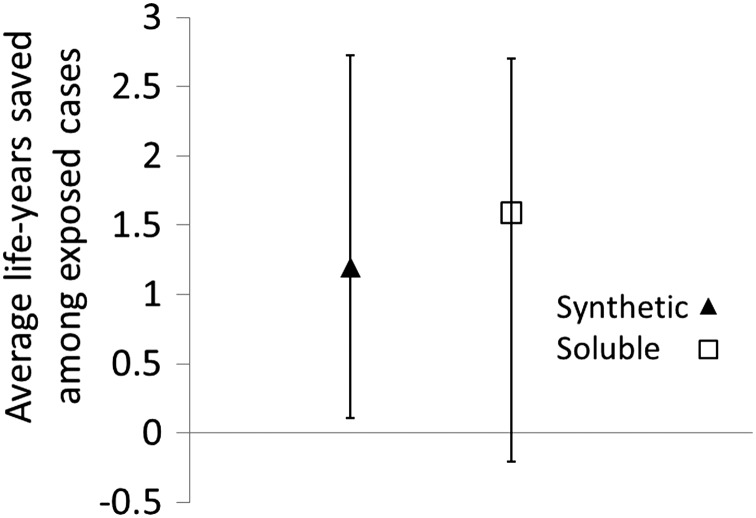
The HR for IHD among black men was 3.29 (95% CI 1.49 to 7.31) in the highest category of cumulative synthetic fluid exposure. The HR for IHD among white women exposed to soluble fluid reached 2.44 (95% CI 0.96 to 6.22). However, no increased risk was observed among white men until we corrected for the healthy worker survivor effect. Results from g-estimation indicate that if white male cases exposed to soluble or synthetic fluid had been unexposed to that fluid type, then 1.59 and 1.20 years of life would have been saved on average, respectively.
Conclusions
We leveraged the strengths of two different analytic approaches to examine the IHD risks of metalworking fluids. All workers may have the same aetiological risk; however, black and female workers may experience more IHD from water-based metalworking fluid exposure because of a steeper exposure–response or weaker healthy worker survivor effect.
-
Subjects:
-
Source:Occup Environ Med. 2015; 72(2):138-144.
-
Pubmed ID:25415971
-
Pubmed Central ID:PMC4316942
-
Document Type:
-
Funding:
-
Place as Subject:
-
Volume:72
-
Issue:2
-
Collection(s):
-
Main Document Checksum:urn:sha256:e8d7354b19108f0c9a4ab341a91494aa18fb797d5351190aa72e449b50bd39ce
-
Download URL:
-
File Type:
 [PDF
- 566.29 KB
]
[PDF
- 566.29 KB
]
Supporting Files


File Language:
English
ON THIS PAGE


CDC STACKS serves as an archival repository of CDC-published products including
scientific findings,
journal articles, guidelines, recommendations, or other public health information authored or
co-authored by CDC or funded partners.
As a repository, CDC STACKS retains documents in their original published format to ensure public access to scientific information.
As a repository, CDC STACKS retains documents in their original published format to ensure public access to scientific information.
You May Also Like
COLLECTION
CDC Public Access