



A novel mechanism for regulating the activity of proliferating cell nuclear antigen by a small protein
Supporting Files

-
Apr 11 2014
-
Available in CDC Stacks on April 11, 2014, 12:00 AM
Details
-
Alternative Title:Nucleic Acids Res
-
Personal Author:
-
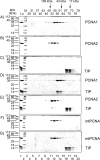
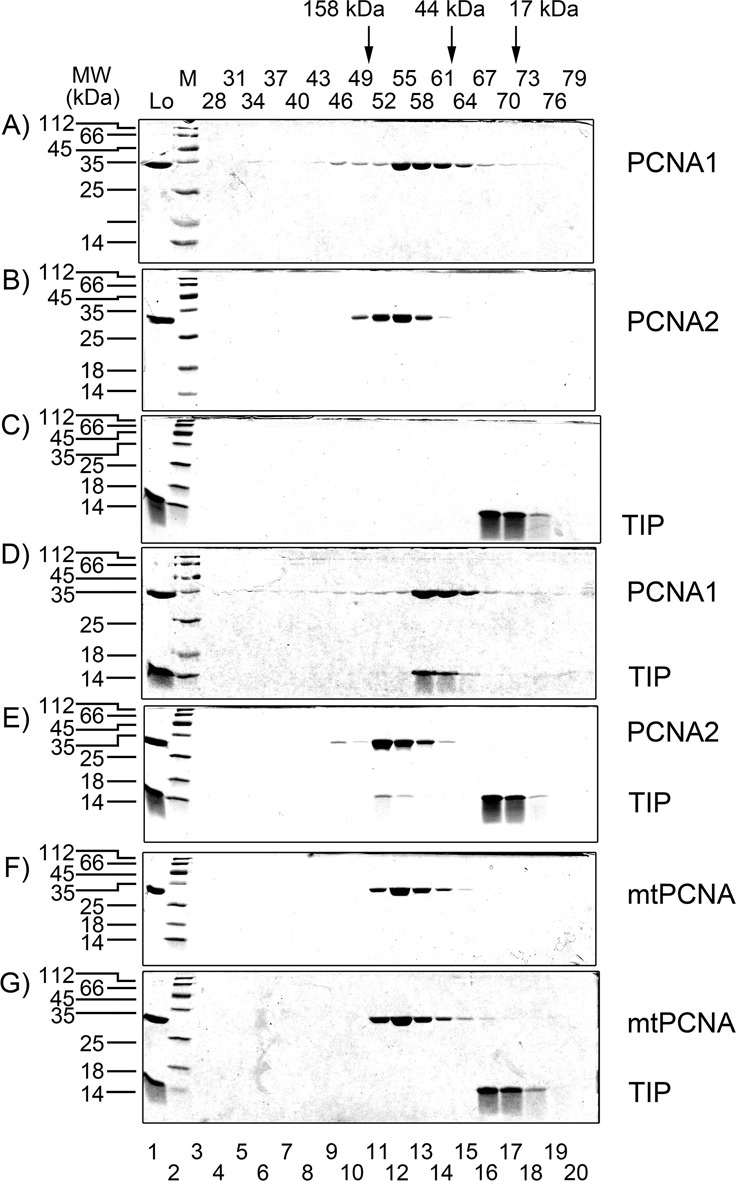
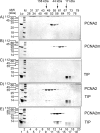
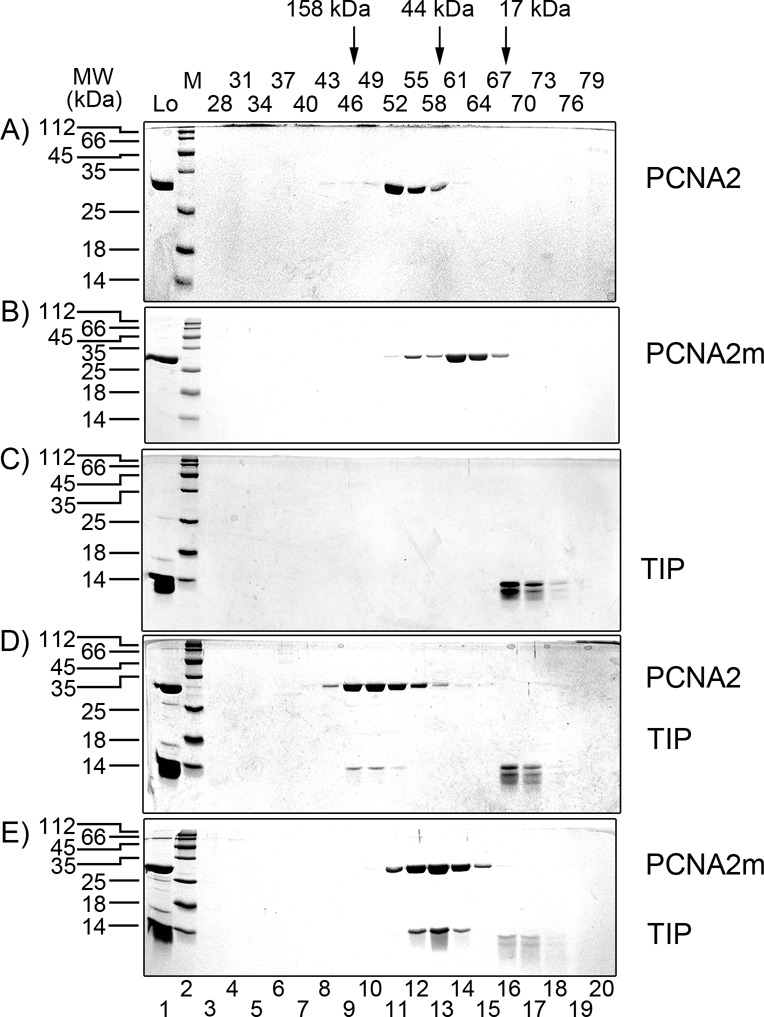
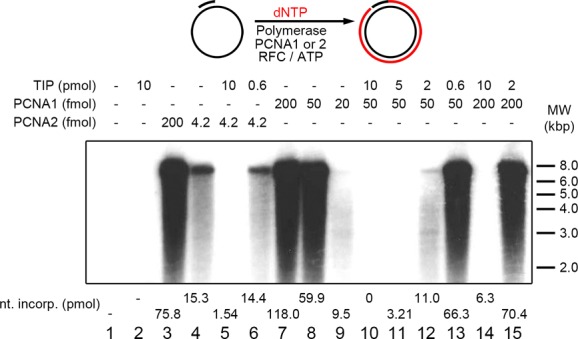
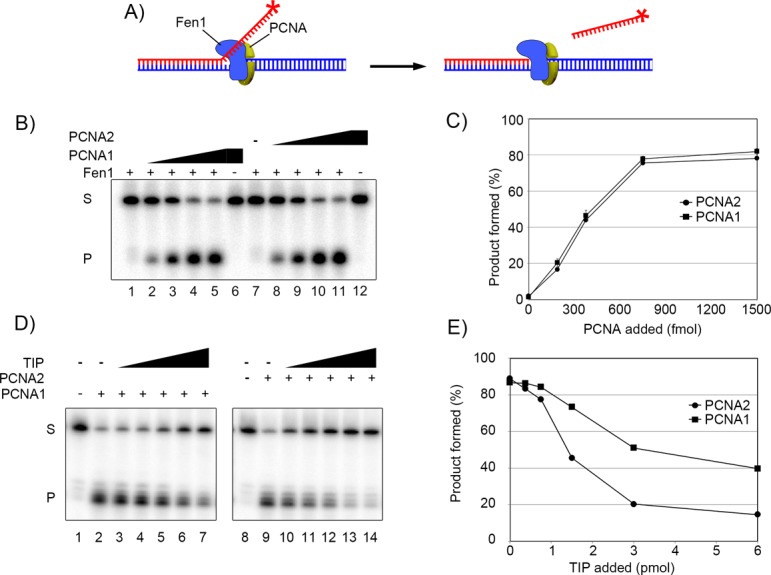
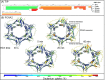
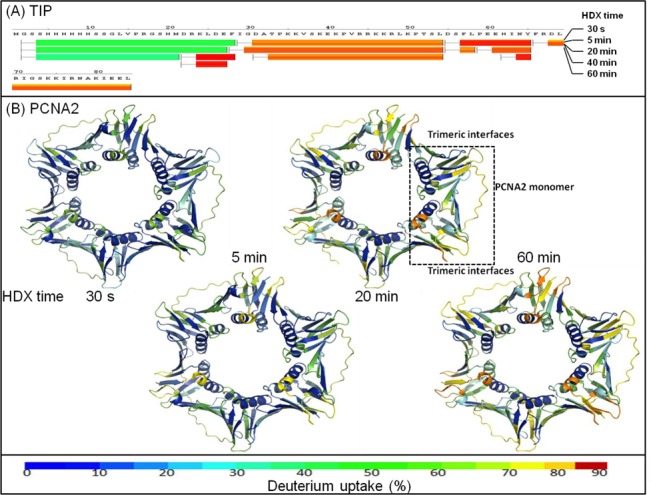
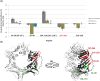
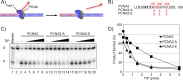
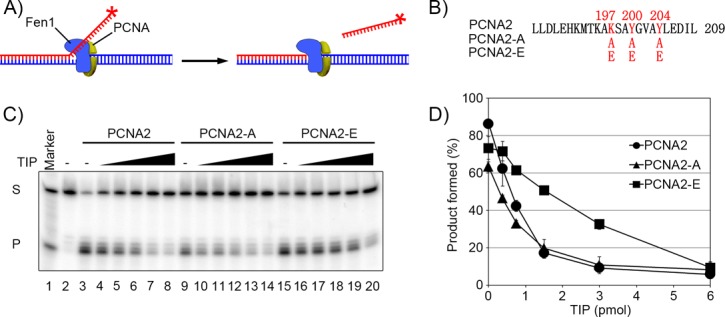
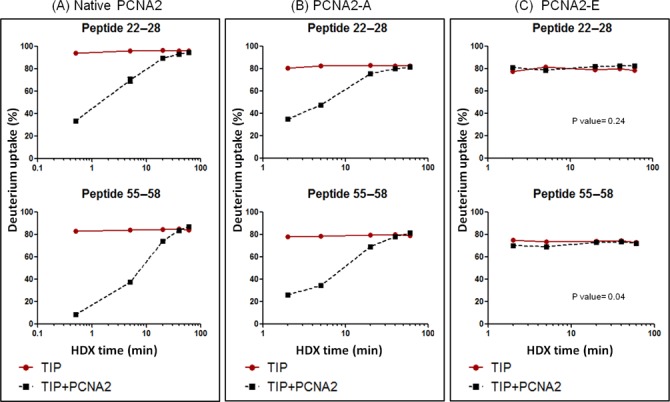
Description:Proliferating cell nuclear antigen (PCNA) forms a trimeric ring that associates with and influences the activity of many proteins participating in DNA metabolic processes and cell cycle progression. Previously, an uncharacterized small protein, encoded by TK0808 in the archaeon Thermococcus kodakarensis, was shown to stably interact with PCNA in vivo. Here, we show that this protein, designated Thermococcales inhibitor of PCNA (TIP), binds to PCNA in vitro and inhibits PCNA-dependent activities likely by preventing PCNA trimerization. Using hydrogen/deuterium exchange mass spectrometry and site-directed mutagenesis, the interacting regions of PCNA and TIP were identified. Most proteins bind to PCNA via a PCNA-interacting peptide (PIP) motif that interacts with the inter domain connecting loop (IDCL) on PCNA. TIP, however, lacks any known PCNA-interacting motif, suggesting a new mechanism for PCNA binding and regulation of PCNA-dependent activities, which may support the development of a new subclass of therapeutic biomolecules for inhibiting PCNA.
-
Subjects:
- Molecular Biology
- Amino Acid Substitution
- Archaeal Proteins
- DNA Polymerase II
- Deuterium Exchange Measurement
- Flap Endonucleases
- Kinetics
- Microbial Viability
- Models, Molecular
- Mutagenesis, Site-Directed
- Proliferating Cell Nuclear Antigen
- Protein Binding
- Protein Interaction Domains and Motifs
- Protein Multimerization
- Thermococcus
-
Source:Nucleic Acids Res. 2014; 42(9):5776-5789.
-
Pubmed ID:24728986
-
Pubmed Central ID:PMC4027161
-
Document Type:
-
Funding:
-
Volume:42
-
Issue:9
-
Download URL:
-
File Type:
 [PDF - 3.83 MB]
 -
Collection(s):
-
Main Document Checksum:urn:sha256:0458a572d7cd0e94b8d928c9f96dca35f681b65997779658b3c04842cea60c6f
Supporting Files
-
html


 Was this page helpful?
 Found an issue?





CDC STACKS serves as an archival repository of CDC-published products including
scientific findings, journal articles, guidelines, recommendations, or other public health information authored or
co-authored by CDC or funded partners.
As a repository, CDC STACKS retains documents in their original published format to ensure public access to scientific information.
As a repository, CDC STACKS retains documents in their original published format to ensure public access to scientific information.
You May Also Like
COLLECTION
CDC Public Access