


RECOVERY OF VASCULAR FUNCTION AFTER EXPOSURE TO A SINGLE BOUT OF SEGMENTAL VIBRATION
Supporting Files

-
2014
-
Details
-
Alternative Title:J Toxicol Environ Health A
-
Personal Author:
-
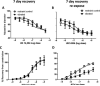
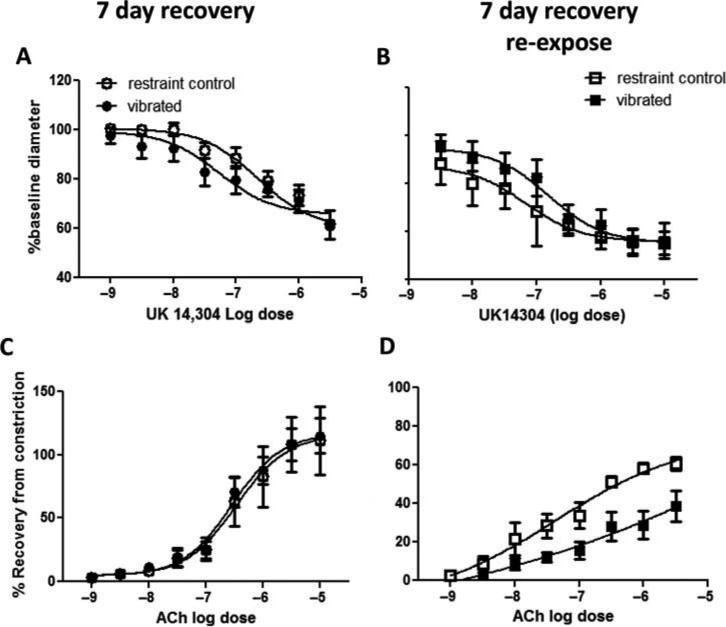
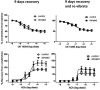
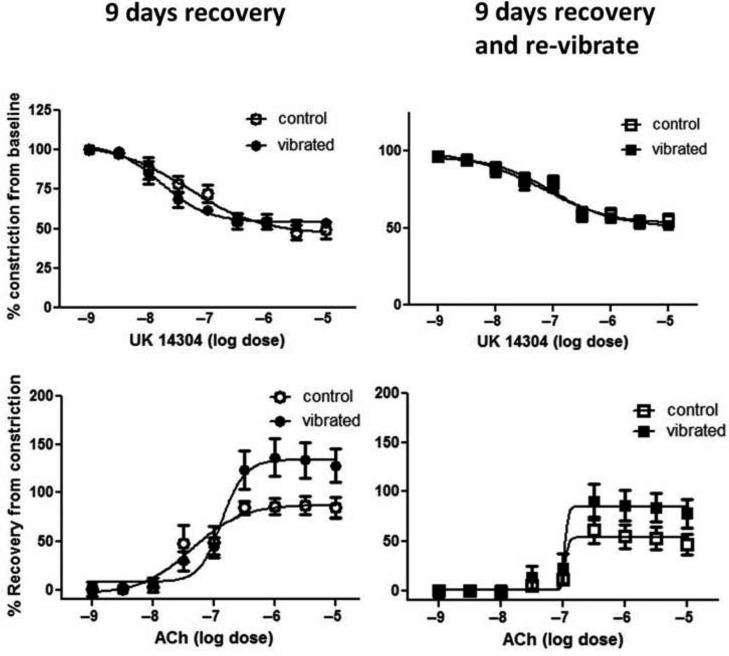
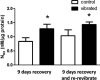
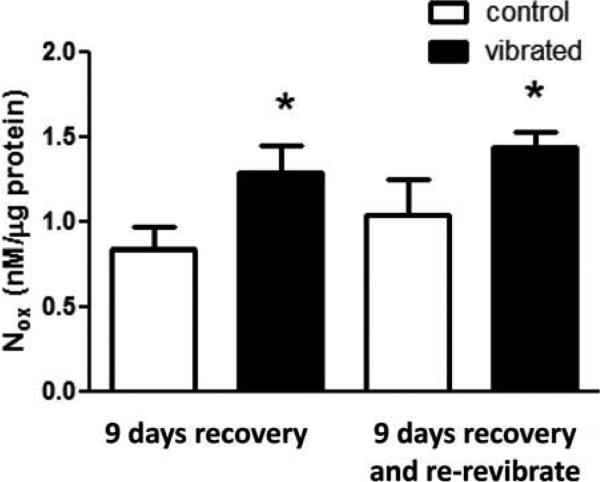
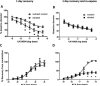
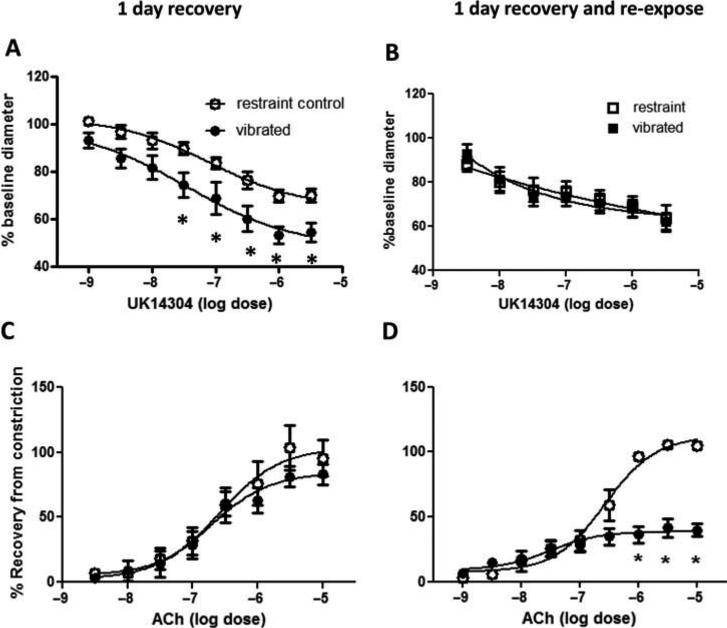
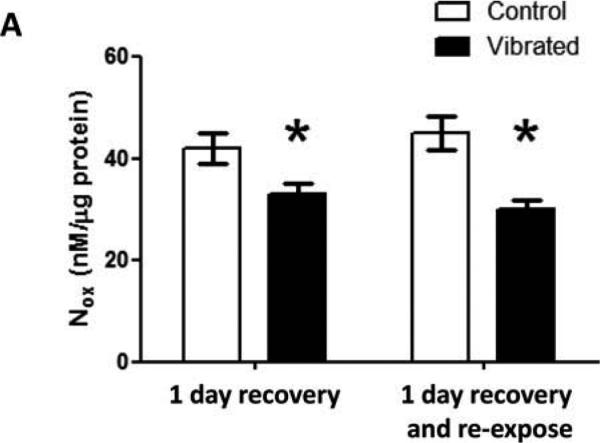
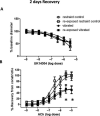
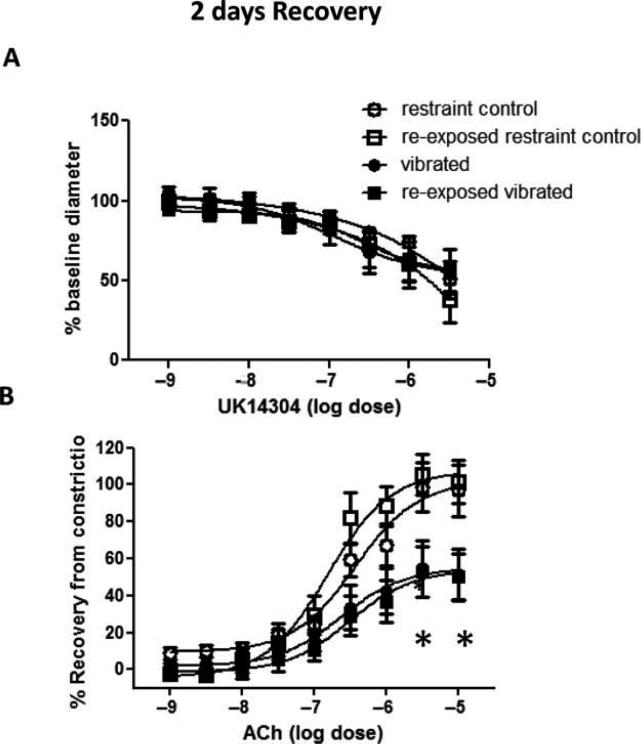
Description:Work rotation schedules may be used to reduce the negative effects of vibration on vascular function. This study determined how long it takes vascular function to recover after a single exposure to vibration in rats (125 Hz, acceleration 5 g). The responsiveness of rat-tail arteries to the vasoconstricting factor UK14304, an α2C-adrenoreceptor agonist, and the vasodilating factor acetylcholine (ACh) were measured ex vivo 1, 2, 7, or 9 d after exposure to a single bout of vibration. Vasoconstriction induced by UK14304 returned to control levels after 1 d of recovery. However, re-dilation induced by ACh did not return to baseline until after 9 d of recovery. Exposure to vibration exerted prolonged effects on peripheral vascular function, and altered vascular responses to a subsequent exposure. To optimize the positive results of work rotation schedules, it is suggested that studies assessing recovery of vascular function after exposure to a single bout of vibration be performed in humans.
-
Subjects:
-
Source:J Toxicol Environ Health A. 77(17):1061-1069.
-
Pubmed ID:25072825
-
Pubmed Central ID:PMC4505626
-
Document Type:
-
Funding:
-
Volume:77
-
Issue:17
-
Collection(s):
-
Main Document Checksum:urn:sha256:b8208514a10a7740487ad049285d1a30254aebfae1a8eaae7920f1fa792c5d31
-
Download URL:
-
File Type:
 [PDF
- 1.87 MB
]
[PDF
- 1.87 MB
]
Supporting Files


ON THIS PAGE


CDC STACKS serves as an archival repository of CDC-published products including
scientific findings,
journal articles, guidelines, recommendations, or other public health information authored or
co-authored by CDC or funded partners.
As a repository, CDC STACKS retains documents in their original published format to ensure public access to scientific information.
As a repository, CDC STACKS retains documents in their original published format to ensure public access to scientific information.
You May Also Like
COLLECTION
CDC Public Access