



Malaria Prevalence among Young Infants in Different Transmission Settings, Africa
Supporting Files

-
Jul 2015
File Language:
English
Details
-
Alternative Title:Emerg Infect Dis
-
Personal Author:Ceesay, Serign J. ; Koivogui, Lamine ; Nahum, Alain ; Taal, Makie Abdoulie ; Okebe, Joseph ; Affara, Muna ; Kaman, Lama Eugène ; Bohissou, Francis ; Agbowai, Carine ; Tolno, Benoit Gniouma ; Amambua-Ngwa, Alfred ; Bangoura, NFaly ; Ahounou, Daniel ; Muhammad, Abdul Khalie ; Duparc, Stephan ; Hamed, Kamal ; Ubben, David ; Bojang, Kalifa ; Achan, Jane ; D’Alessandro, Umberto
-
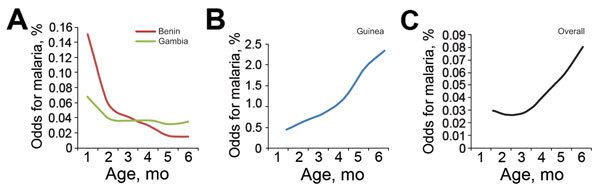
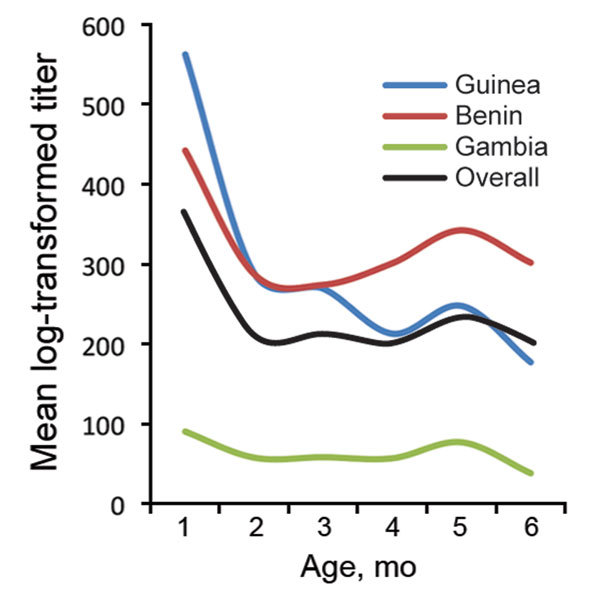
Description:The prevalence and consequences of malaria among infants are not well characterized and may be underestimated. A better understanding of the risk for malaria in early infancy is critical for drug development and informed decision making. In a cross-sectional survey in Guinea, The Gambia, and Benin, countries with different malaria transmission intensities, the overall prevalence of malaria among infants <6 months of age was 11.8% (Guinea, 21.7%; The Gambia, 3.7%; and Benin, 10.2%). Seroprevalence ranged from 5.7% in The Gambia to 41.6% in Guinea. Mean parasite densities in infants were significantly lower than those in children 1-9 years of age in The Gambia (p<0.0001) and Benin (p = 0.0021). Malaria in infants was significantly associated with fever or recent history of fever (p = 0.007) and anemia (p = 0.001). Targeted preventive interventions, adequate drug formulations, and treatment guidelines are needed to address the sizeable prevalence of malaria among young infants in malaria-endemic countries.
-
Subjects:
-
Source:Emerg Infect Dis. 21(7):1114-1121
-
Pubmed ID:26079062
-
Pubmed Central ID:PMC4480393
-
Document Type:
-
Funding:
-
Place as Subject:
-
Location:
-
Volume:21
-
Issue:7
-
Download URL:
-
File Type:
 [PDF - 904.13 KB]
 -
Collection(s):
-
Main Document Checksum:urn:sha256:e702143d16f5393c30c5969e9634bc022bf8dbb1daa69668938145dd0c395ed7
Supporting Files


File Language:
English
 Was this page helpful?
 Found an issue?



CDC STACKS serves as an archival repository of CDC-published products including
scientific findings, journal articles, guidelines, recommendations, or other public health information authored or
co-authored by CDC or funded partners.
As a repository, CDC STACKS retains documents in their original published format to ensure public access to scientific information.
As a repository, CDC STACKS retains documents in their original published format to ensure public access to scientific information.
You May Also Like
COLLECTION
Emerging Infectious Diseases