


Early-Pregnancy Vitamin D Deficiency and Risk of Preterm Birth Subtypes
Supporting Files

-
2 2015
File Language:
English
Details
-
Alternative Title:Obstet Gynecol
-
Personal Author:
-
Description:Objective
To estimate the association between maternal hydroxyvitamin D (25-hydroxyvitamin D) concentrations and risk of preterm birth subtypes.
Methods
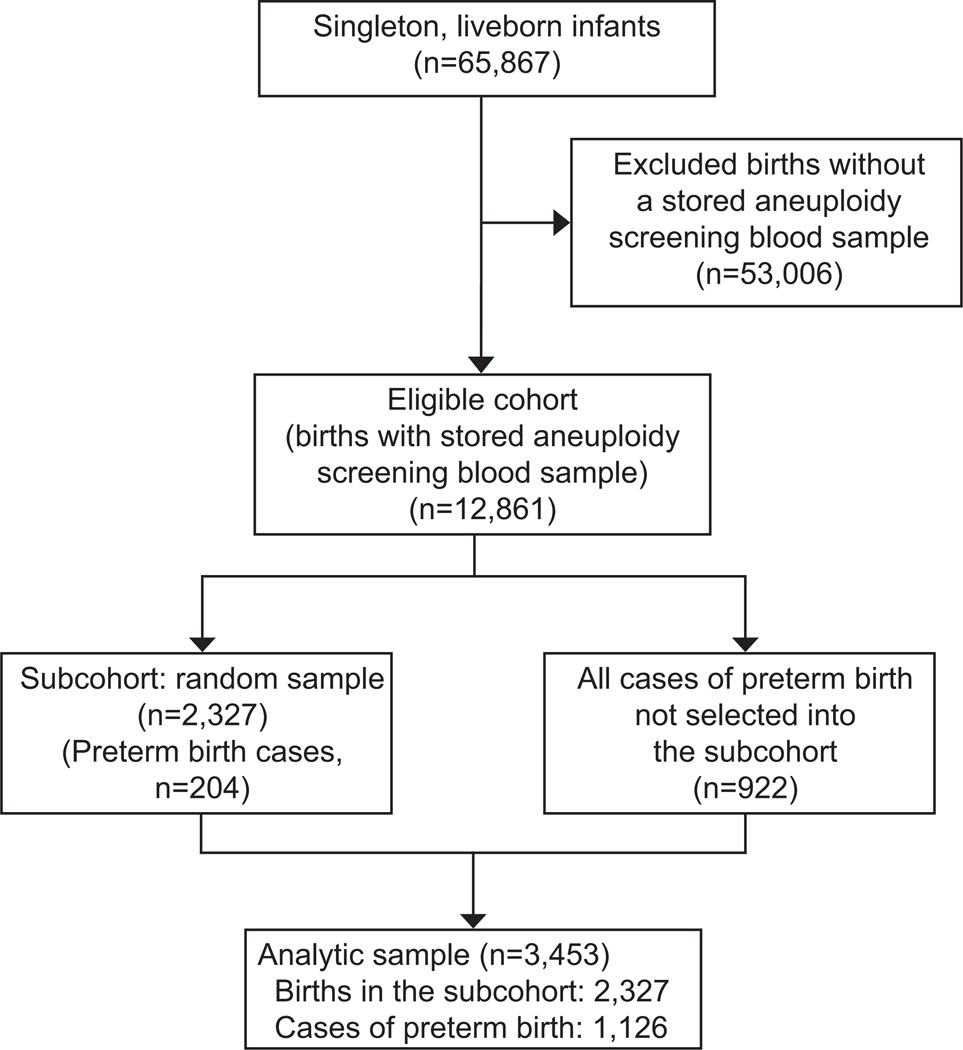
We performed a case-cohort study using data and banked samples from patients at a teaching hospital in Pittsburgh, Pennsylvania. Eligible participants were women with a prenatal aneuploidy screening serum sample at or before 20 weeks of gestation who subsequently delivered a singleton, live-born infant. Of the n=12,861 eligible women, we selected n=2327 at random as well as all remaining preterm birth cases for a total of n=1126 cases. Serum 25-hydroxyvitamin D was measured using liquid chromatography–tandem mass spectrometry. Multivariable log-binomial regression models were used to estimate associations between maternal vitamin D status and preterm birth <37 weeks (separately by spontaneous or indicated) and preterm birth <34 weeks.
Results
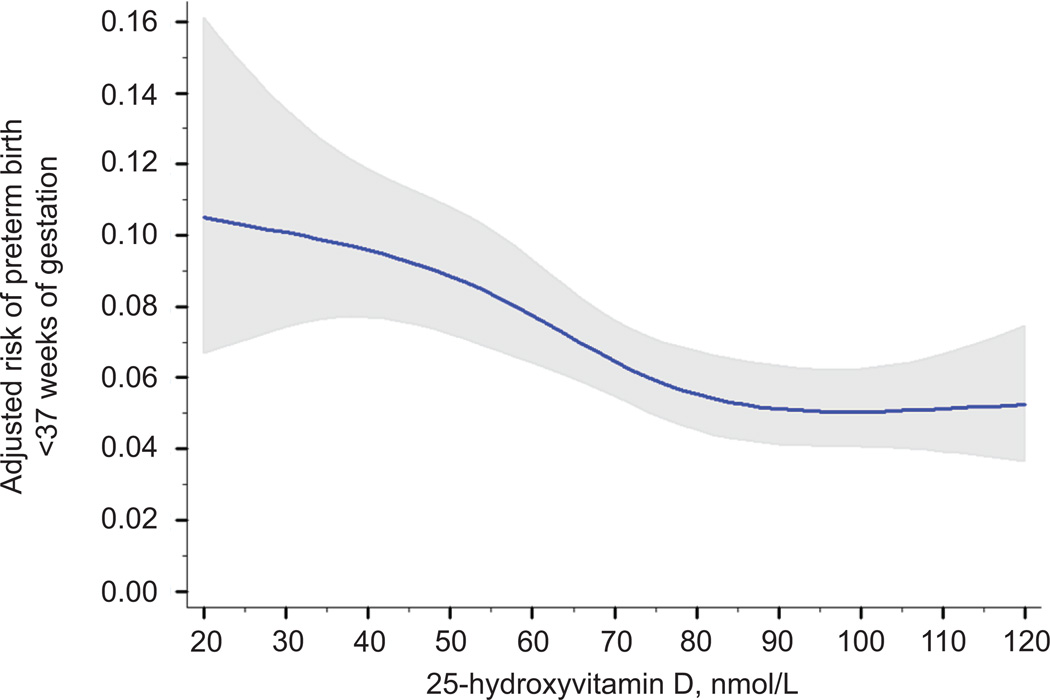
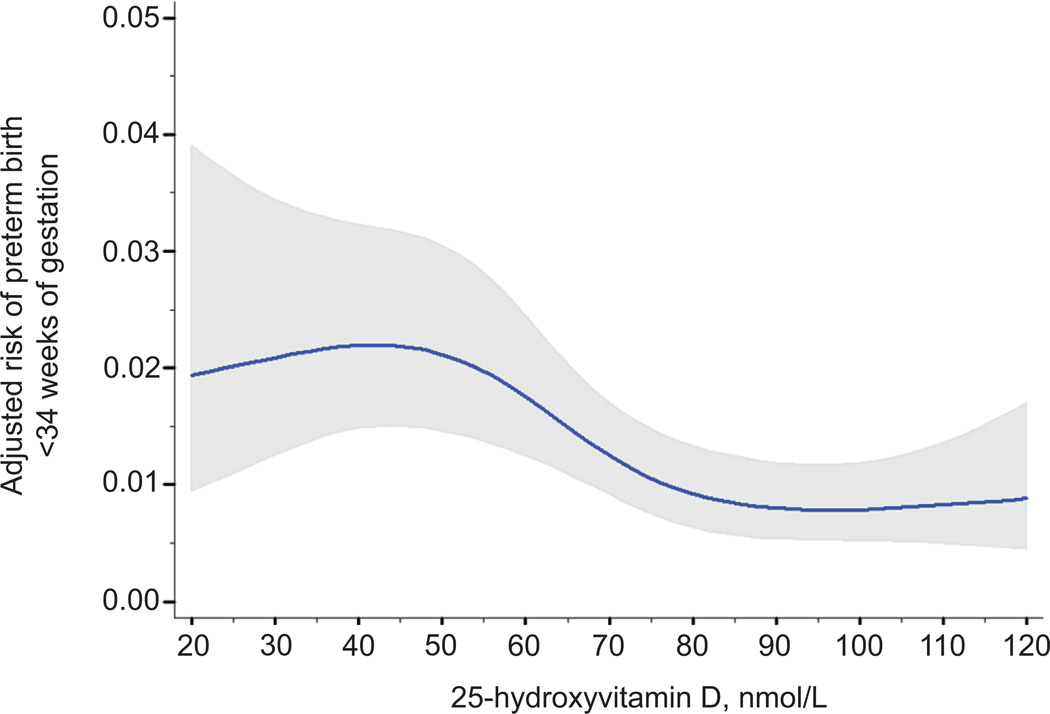
The incidence of preterm birth <37 weeks was 8.6% overall and 11.3%, 8.6%, and 7.3% among mothers with serum 25-hydroxyvitamin D<50, 50–74.9, and ≥75nmol/L, respectively (p<0.01). After adjustment for maternal race and ethnicity, prepregnancy BMI, season, smoking, and other confounders, the risk of preterm birth <37 weeks significantly decreased as 25-hydroxyvitamin D increased to approximately 90 nmol/L and then plateaued (test of nonlinearity p<0.01). Results were similar when limiting to cases that were medically indicated or occurred spontaneously and cases occurring at <34 weeks of gestation.
Conclusions
Our data support a protective association maternal vitamin D sufficiency and preterm birth that combined with extant epidemiologic data may provide justification for a randomized clinical trial of maternal vitamin D replacement or supplementation to prevent preterm birth.
-
Subjects:
-
Source:Obstet Gynecol. 125(2):439-447
-
Pubmed ID:25569002
-
Pubmed Central ID:PMC4304969
-
Document Type:
-
Funding:
-
Volume:125
-
Issue:2
-
Collection(s):
-
Main Document Checksum:urn:sha256:b5e07c71fb493f87b4f0a4d628fe952ddad09757fcffec52a71ab765d1af948e
-
Download URL:
-
File Type:
 [PDF
- 800.39 KB
]
[PDF
- 800.39 KB
]
Supporting Files


File Language:
English
ON THIS PAGE

CDC STACKS serves as an archival repository of CDC-published products including
scientific findings,
journal articles, guidelines, recommendations, or other public health information authored or
co-authored by CDC or funded partners.
As a repository, CDC STACKS retains documents in their original published format to ensure public access to scientific information.
As a repository, CDC STACKS retains documents in their original published format to ensure public access to scientific information.
You May Also Like
COLLECTION
CDC Public Access